
Less air at the vent. More clues to follow.
For AC airflow problems, Coastal Carolina Comfort can help you plan a diagnostic visit. Weak AC airflow can come from a restricted filter, blocked return, duct problem, blower fault or iced coil. Start by comparing rooms and checking accessible grilles and the specified filter. Persistent low airflow needs a system diagnosis, not a guess at the part.
Reference: ENERGY STAR; Carrier.
First published 2025-09-07 · Content revised September 7, 2026 · About 13 minutes to read
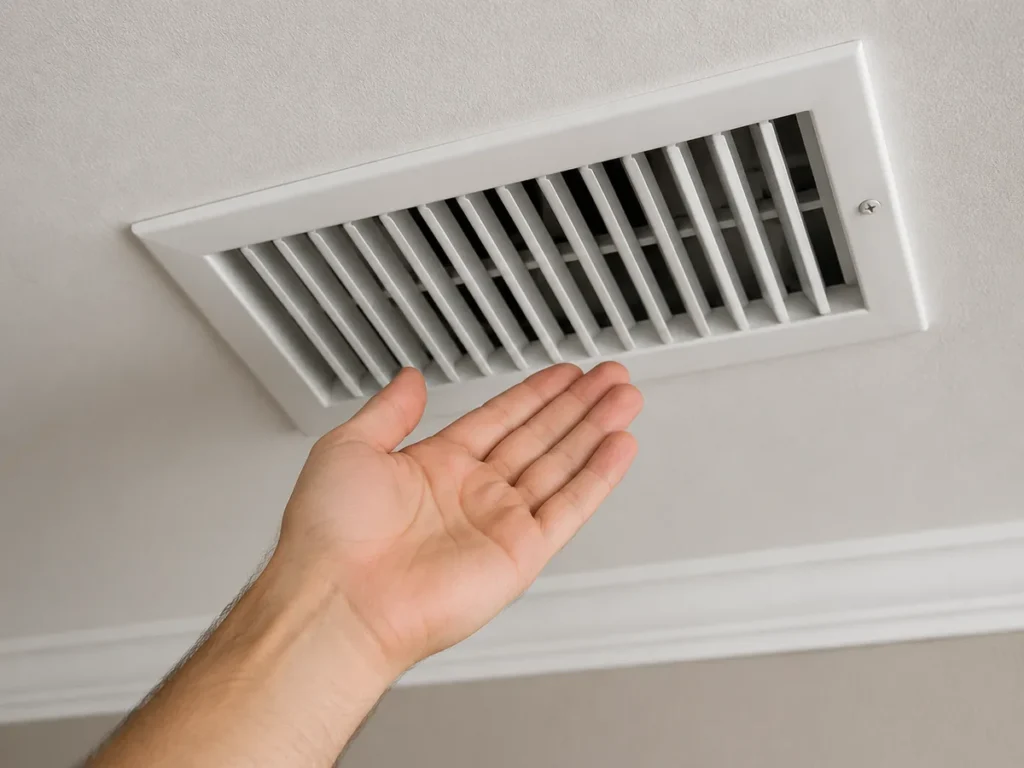
Air volume and air temperature are different clues. Notice both.
ENERGY STAR’s cited efficiency effect of airflow problems; not your measured loss. ENERGY STAR.
Typical-house duct air loss estimate; not a measurement of your home. ENERGY STAR.
ENERGY STAR recommends preseason professional HVAC checkups. ENERGY STAR.
ENERGY STAR’s filter inspection and care reminder; follow equipment instructions. ENERGY STAR.
“The AC is not working” can describe two different problems. A clear observation helps narrow the inspection.
Only a little air reaches the room, even though you hear the system running. Note whether every vent feels weak or just one area.
Air volume may be normal while cooling performance has changed. Use the AC blowing warm air guide when temperature is the main concern.
The return brings room air back to the equipment. The filter, blower, coil and ducts all influence how much air returns to the rooms. Equipment order varies by installation.
Reference: U.S. Department of Energy.
Room air enters the return path and passes through the system filter.
Reference: U.S. Department of Energy.
The fan moves air through the indoor equipment and duct system.
Reference: U.S. Department of Energy.
Air passes over the cooling coil; ice or buildup can restrict the path.
Reference: Carrier.
The duct branches and supply grilles deliver air back to each room.
Reference: U.S. Department of Energy.
Dust buildup or an unsuitable filter can increase resistance. Use the size and type specified for the equipment; do not run the system without its filter.
Reference: ENERGY STAR.
Furniture and rugs can obstruct accessible openings. Clear the space without opening equipment or reaching into ducts.
A damaged, disconnected or restricted duct branch may affect one area more than the others. Inaccessible ducts belong on the technician’s inspection list.
Reference: ENERGY STAR.
An indoor fan fault or an iced coil can reduce flow throughout the home. Read about air handler components and report any visible ice from a safe location.
Reference: Carrier.
An airflow inspection can compare the filter and return path, blower operation, coil condition and duct distribution. Measurements help distinguish a restriction from a fan or cooling-system fault before work is proposed.
Reference: ENERGY STAR; ENERGY STAR.
Reference: Trane.
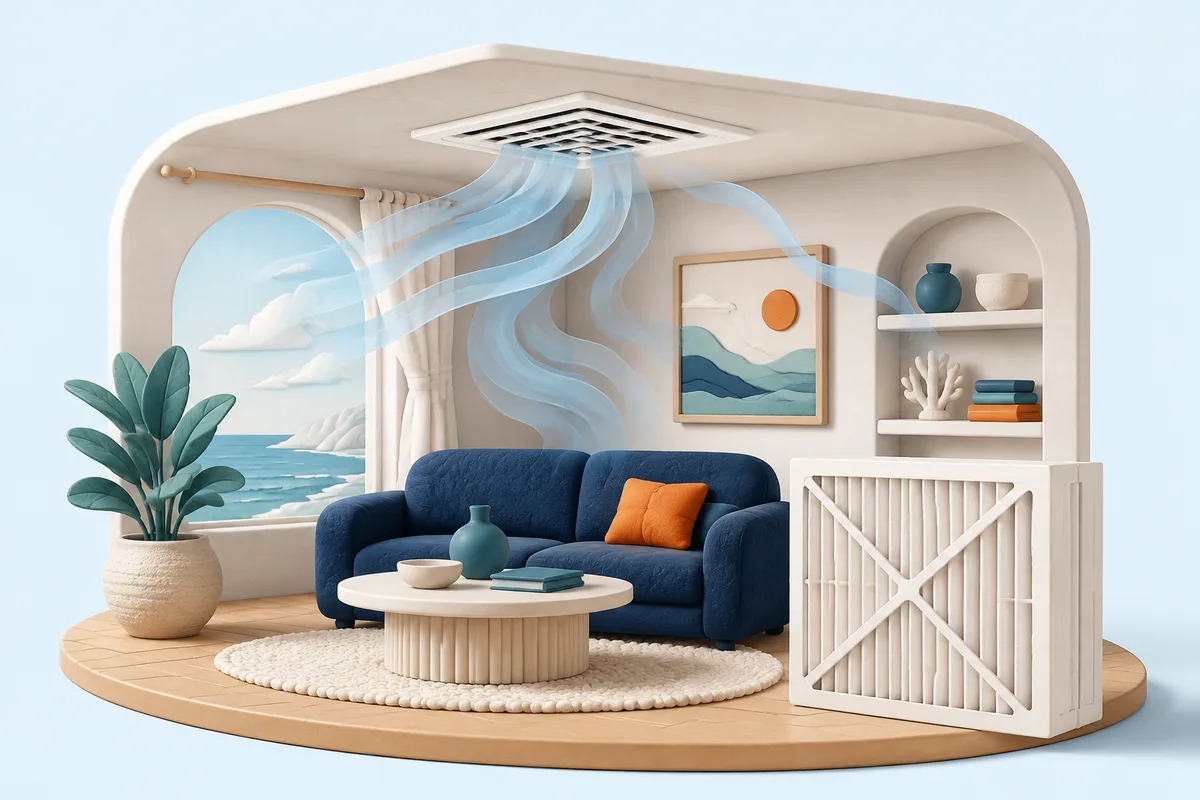
ENERGY STAR identifies rooms that are difficult to heat or cool as one sign of duct problems. That makes a room-by-room comparison a useful starting point. Compare accessible vents while the system runs in its normal cooling mode. You are describing a pattern for the technician; you do not need to measure duct pressure or open any equipment. Source: ENERGY STAR.
Begin with the room that feels least comfortable. Write down whether the vent moves a little air, no noticeable air, or air that feels warm. Then compare a nearby room and a room on another part of the house. Include the thermostat reading and the time. Avoid calling all three observations “not cooling” if the airflow feels different in each room.
For example, a note could read: “At 3 p.m., the living-room vent felt strong and cool, the back bedroom vent felt weak, and the thermostat showed 78 with a 74-degree setting.” This is an example of useful reporting, not a customer case study. Your own notes should describe what happened in your home, including any uncertainty.
Coastal Carolina Comfort’s diagnostic approach starts with the filter, coils, drain line and electrical connections before recommending a repair. Bring your room comparison to that visit. Ask the technician to connect the findings to the rooms you identified and explain whether the restriction is shared by the system or confined to part of the air-distribution path.
ENERGY STAR includes blower adjustment, coil cleaning and filter care in its HVAC maintenance guidance. Those are useful inspection categories when several rooms have weak airflow. An observation at a vent cannot separate a dirty coil from a blower problem, and changing the thermostat setting does not identify either condition. The inspection needs to follow the air path. Source: ENERGY STAR.
Tell the technician whether the decline was sudden or gradual. Include a recent filter change, renovation, moved furniture or prior repair if it happened before the problem. Present those events in order without assuming one caused the other. If you cannot remember the timing, say so; a rough recollection should not become a definite service history.
If the change followed a storm or outage, use our HVAC power-surge and outage guide to record that timing.
ENERGY STAR’s duct guidance lists leaks, holes and poorly connected ducts as ways conditioned air can escape. A difficult room deserves a look at the delivery path as well as the equipment. Note visible grille obstructions and room layout. Leave attic, crawlspace and concealed-duct inspection to the technician when access is unsafe or requires disturbing building materials. Source: ENERGY STAR.
When you call Coastal Carolina Comfort, name the room and explain what a comfortable comparison room feels like. Ask whether the inspection will consider the supply route and return-air route for the affected space. If the room has never been comfortable, make that clear. A long-standing comfort complaint and a sudden loss of airflow need different questions.
ENERGY STAR recommends monthly filter inspection, cleaning or replacement as appropriate, plus annual preseason professional checkups. Follow your system and filter instructions for the actual maintenance procedure. A calendar reminder helps you remember the inspection; it does not establish that every filter should be replaced on the same schedule or that a clean-looking filter suits every system. Source: ENERGY STAR.
Keep a photo of the filter label or its packaging when you replace it. Record its dimensions, product name and installation date. If airflow changed after a different filter went in, share that detail instead of ordering another product at random. Ask the technician which filter specification suits the equipment and whether the installed filter matches that recommendation.
The Department of Energy’s Home Cooling 101 guide connects restricted airflow with reduced cooling performance. Its cooling-system diagram also distinguishes the evaporator, blower and outdoor equipment. This helps explain why the part nearest the symptom is not always the failed part. Weak air at a bedroom vent can require checks farther back along the system’s air path. Source: U.S. Department of Energy.
Use the diagram on this page as a conversation aid. Ask the technician to mark where the restriction was found and what observation supports that finding. A useful explanation identifies the affected component, the condition observed and the proposed correction. Keep the explanation with your service record so a later visit can start from the work already completed.
ENERGY STAR estimates that a typical house loses about 20–30% of the air moving through its duct system through leaks, holes and poor connections. That is a general reference figure. It is not a measurement of your Charleston home, a promised savings percentage, or proof that your ducts need replacement. Your system needs its own assessment. Source: ENERGY STAR.
If someone uses that figure in a repair recommendation, ask what they found in your ducts. Request an explanation of the affected locations and why the proposed work addresses your complaint. Compare that explanation with your room notes. Coastal Carolina Comfort’s service discussion should help you understand the finding before you decide whether to approve the work.
Choose a guide based on the symptom you can describe. If air moves but stays warm, tell the service team that airflow remains present. If almost no air reaches the vents, focus your notes on that loss. You can have more than one symptom, so there is no need to force the problem into a single category.
ENERGY STAR treats airflow, thermostat settings, refrigerant charge, coils and control operation as separate inspection items. A fan that runs confirms only the observation you made at that moment. It does not prove that the rest of the cooling cycle works. Keep the airflow description separate from the room temperature and thermostat display in your service notes. Source: ENERGY STAR.
Read our AC not blowing air guide when the vents have little or no flow. For cabinet noise or a problem at the indoor unit, use the air handler troubleshooting guide. These paths help you prepare for a visit without requiring you to select a replacement part.
A blank thermostat or an indoor leak deserves its own description. The thermostat guide explains display and response observations. The drain-pan guide covers water around indoor equipment. Mention both concerns when booking so the inspection can consider the connected symptoms.
Share the symptom and ask about the next available diagnostic visit for your Charleston home.

Coastal Carolina Comfort’s diagnostic process includes showing the homeowner photographs and getting approval before repair work. Use that opportunity to ask where airflow is restricted and how the proposed work addresses it. A photograph supports the explanation of a visible condition; the technician should also explain any test result needed to establish the fault.
Ask Coastal Carolina Comfort what the quote covers, which observations will be rechecked after the repair, and whether another issue remains unresolved. Keep maintenance work, a diagnosed repair and an optional improvement separate in your notes. You can then compare the scope with the complaint you called about and decide which work you want to authorize.
Before the visit ends, ask how to monitor the affected room during ordinary use. Record the agreed next step if the symptom returns. Avoid asking for a guaranteed temperature difference based on a hand-at-the-vent comparison. The useful outcome is a clear account of the diagnosis, the work completed and the follow-up for your actual comfort concern.
For the wider decision, return to our Charleston HVAC diagnostic guide. If you want to discuss a visit, use Charleston AC repair service. Homes with a heating-mode complaint can start with Charleston heating repair; identify the operating mode when you call.
Keep this note with your equipment information. Record uncertainty rather than guessing at a component or cause.
Billy Webb, owner
Author profile
At Coastal Carolina Comfort, we start with the basic checks before recommending a repair: the filter, coils, drain line and electrical connections. Our service process includes showing you photographs of findings and getting your approval before repair work.
Bring the symptom notes from this guide to the visit. Ask how the findings connect to the problem you reported and what the proposed correction covers.
Review the diagnosis and proposed work before you authorize a repair. Keep the explanation and any photographs supplied with your service records.
For the service conversation, visit Charleston AC repair. Bring your symptom notes so we can discuss the next available diagnostic visit. For heating-mode concerns, see Charleston heating repair.
Not necessarily. A filter must suit the equipment and installation. A more restrictive filter can reduce flow in a system that is not designed for it. Follow the equipment guidance or ask your technician. Discuss your observations with Coastal Carolina Comfort before authorizing a repair.
Reference: ENERGY STAR.
A blocked grille, duct branch issue, return-air path or room load may be involved. Compare that room with nearby rooms before assuming the central equipment has failed. Discuss your observations with Coastal Carolina Comfort before authorizing a repair.
Reference: ENERGY STAR.
No. Several repairable restrictions or component issues can reduce airflow. A diagnosis should establish the cause and the condition of the equipment before replacement is discussed. Discuss your observations with Coastal Carolina Comfort before authorizing a repair.
Tell Coastal Carolina Comfort which rooms have weak vents and whether the air feels warm or cool. Include the thermostat reading and any recent filter change. Your observations guide the inspection; they do not identify the failed part.
No. ENERGY STAR’s 20–30% figure describes a typical house, not a measurement of your ductwork. Ask Coastal Carolina Comfort what the inspection found in your system before approving duct work.
Reference: ENERGY STAR.
By Billy Webb, owner. Coastal Carolina Comfort publishes this guide for homeowners using our Charleston HVAC services. Company-process guidance uses CCC’s documented diagnostic workflow.
This guide explains observable symptoms. It does not replace equipment-specific instructions or an on-site diagnosis.
Read the equipment guidance and source notes below. This article explains observations and service decisions; it does not replace the instructions for your installed equipment.
ENERGY STAR. (n.d.). Maintenance Checklist. Accessed September 7, 2026.
U.S. Department of Energy. (n.d.). Home Cooling 101. Accessed September 7, 2026.
Carrier. (n.d.). Why Is My AC Leaking Water?. Accessed September 7, 2026.
ENERGY STAR. (n.d.). Duct Sealing. Accessed September 7, 2026.
Trane. (n.d.). AC Leaking Water. Accessed September 7, 2026.
Company-process statements use Coastal Carolina Comfort’s approved diagnostic guidance. This guide includes original homeowner observation tools; examples do not describe actual customer jobs.

Read the symptom checks and service questions for AC thermostat troubleshooting.

Read the symptom checks and service questions for AC drain pan overflow.
Read the symptom checks and service questions for Air handler problems.
Tell Coastal Carolina Comfort which rooms feel different and when the airflow changed. We can help arrange a Charleston AC diagnostic visit.