
Meet the indoor half of your comfort system.
For air handler problems, Coastal Carolina Comfort can help you plan a diagnostic visit. An air handler is the indoor equipment that moves air through the duct system and contains components such as a blower and coil. Weak airflow, unusual cabinet noise, water or an unexpected shutdown can point toward the air handler, but testing must establish the actual cause.
Reference: Carrier.
First published 2025-07-06 · Content revised September 7, 2026 · About 13 minutes to read

The indoor blower and duct system help deliver conditioned air to the rooms you use.
Reference: U.S. Department of Energy.
ENERGY STAR’s cited efficiency effect of airflow problems; not your measured loss. ENERGY STAR.
Typical-house duct air loss estimate; not a measurement of your home. ENERGY STAR.
ENERGY STAR recommends preseason professional HVAC checkups. ENERGY STAR.
ENERGY STAR’s filter inspection and care reminder; follow equipment instructions. ENERGY STAR.
The terms are sometimes mixed together. Knowing the distinction helps explain which equipment needs attention.
Commonly pairs with an air conditioner or heat pump. It contains a blower and coil, and some models include electric resistance heat. The arrangement depends on the system.
Reference: Carrier.
Produces heat and has its own blower. A cooling coil may be installed with it. A home can have an indoor blower without a separate air handler.
Reference: Carrier.
This is a functional map, not an instruction to open the cabinet. Component positions and optional accessories vary.
Moves air through the indoor equipment and duct system.
Reference: U.S. Department of Energy.
Transfers heat between the refrigerant and the passing air.
Reference: U.S. Department of Energy.
Collects and carries away moisture produced during cooling.
Reference: U.S. Department of Energy.
Coordinate operation and respond to installed protective devices.
Reference: RectorSeal.
The technician may inspect the filter, blower, coil and duct path together. The airflow guide helps you describe whether the problem is local or widespread.
Reference: ENERGY STAR.
Note whether the sound begins at startup, continues during the cycle or appears as the system stops. Do not remove a cabinet panel to locate it.
The coil, pan, drain line, pump and overflow controls may need attention. Use the drain-pan guide to understand the water path.
Reference: ENERGY STAR; Little Giant.
A power or control issue can affect operation, as can some protective shutdowns. The thermostat guide explains what you can check without handling wiring.
Reference: Resideo; RectorSeal.
The diagnostic work may include airflow measurements, blower and motor checks, coil condition, drainage and electrical controls. Finding one visible symptom does not establish that the entire air handler needs replacement.
Reference: ENERGY STAR.
Reference: Trane.
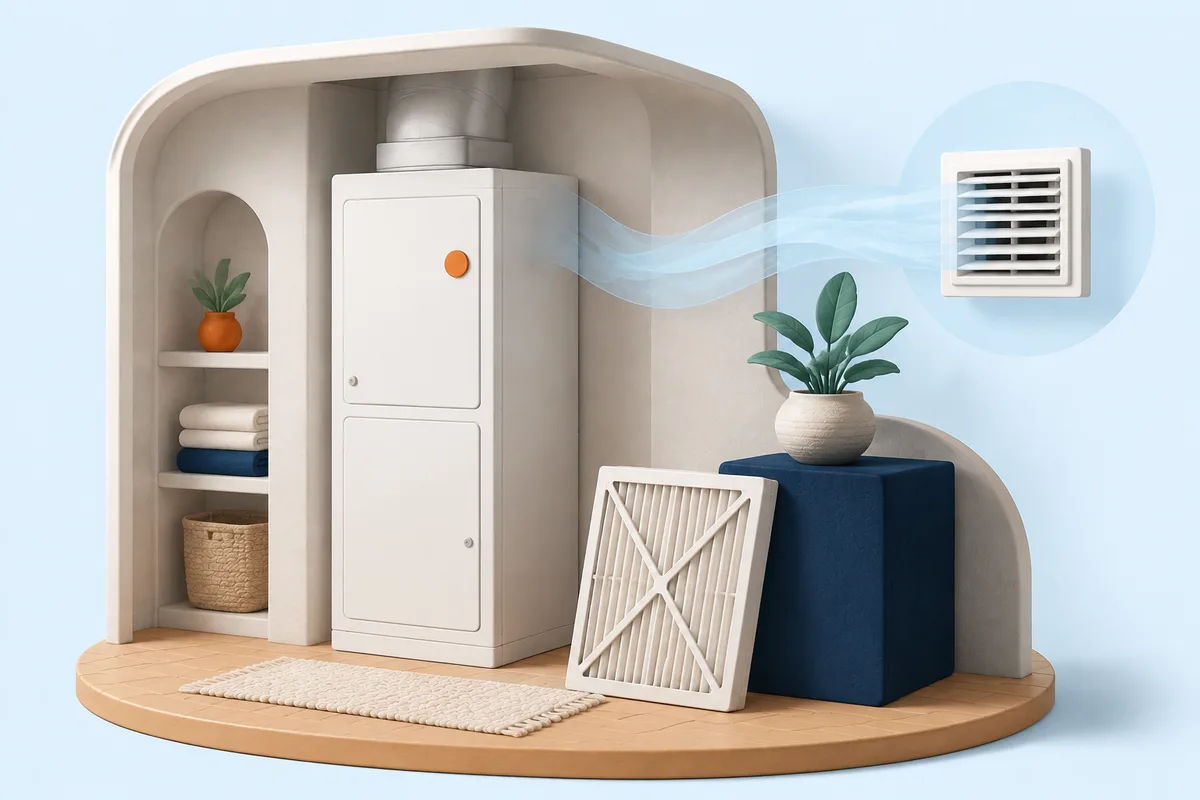
Carrier describes an air handler as the indoor equipment that circulates conditioned air through a home, often paired with a heat pump or air conditioner. A furnace can also contain a blower, so an indoor cabinet is not automatically an air handler. Give the technician the model information if you can read it without removing a cover. Source: Carrier.
Start with where the equipment is located: a closet, utility area, attic, crawlspace or another space. Explain whether access is clear and safe. Do not enter a difficult space just to confirm the equipment name. An old invoice, installation document or accessible equipment label may provide the model without requiring you to approach the cabinet.
Describe the symptom separately from the equipment label. “A rattling sound comes from the indoor cabinet” is useful even if you do not know which assembly it is. Include whether the noise happens at startup, continues through operation or occurs as the system stops. Record airflow and thermostat behavior as separate observations.
If the change followed a storm or outage, use our HVAC power-surge and outage guide to record that timing.
Coastal Carolina Comfort’s diagnostic workflow starts with basic checks of the filter, coils, drain line and electrical connections. Bring your equipment information and symptoms to that visit. Ask the technician to identify the indoor assembly and explain which finding connects to your complaint before recommending a component replacement.
Carrier’s component guide identifies the blower, coil, filter, drainage and controls as related parts of indoor air handling. The page’s system map organizes those relationships for a homeowner conversation. It is an explanation of functions, not a picture of every cabinet layout. Your technician should use the model’s documentation to identify the actual configuration. Source: Carrier.
When reviewing a repair proposal, ask the technician to point out the affected assembly on a photograph or diagram. Ask Coastal Carolina Comfort what the component does, what was observed and why the recommended correction fits the symptom. You should not need to memorize abbreviations or accept an unexplained part name in order to understand the decision.
ENERGY STAR includes blower cleaning and adjustment, coil care and filter maintenance in its HVAC checklist. These are useful inspection categories for weak airflow from an indoor unit. A hand at a vent provides an observation, not a measurement of blower performance. Leave electrical testing, airflow measurement and cabinet access to the technician. Source: ENERGY STAR.
Compare the room with the strongest airflow to the room that feels weakest. Record the operating mode and thermostat reading at the same time. If the problem appears only in heating or only in cooling, mention that distinction. Do not switch through repeated test cycles to collect a perfect record; describe what you have already observed.
ENERGY STAR lists difficult-to-condition rooms and leaky or poorly connected ducts among the signs and causes of duct performance problems. That makes the delivery path relevant to an air handler complaint. Ask Coastal Carolina Comfort whether the inspection should include the ducts serving the affected space. Replacing an indoor component should follow a diagnosis of that component. Source: ENERGY STAR.
Tell Coastal Carolina Comfort if a filter change, renovation or prior HVAC visit preceded the symptom. Keep the sequence factual. If weak airflow existed before the change, include that too. The AC airflow troubleshooting guide provides a room-comparison method, and the AC not blowing air guide covers little or no flow at the vents.

Use familiar words for the sound: rattling, scraping, humming, a repeated click or a new vibration. State where you heard it and whether it appears with fan operation. If you have an existing recording from a safe location, keep it. Do not run damaged equipment again solely to capture audio or get closer to a moving part.
ENERGY STAR’s checklist includes motor electrical connections, moving parts and the equipment’s start/run/stop cycle. Those categories show why a sound description should lead to an inspection rather than a remote part diagnosis. The same everyday description can cover more than one condition. Ask the technician what observation or test established the source of your particular noise. Source: ENERGY STAR.
If a sound began after service, provide the date and invoice along with the current symptoms. Avoid deciding that the prior work caused the noise before the inspection. Ask the technician to compare the present findings with the recorded work and explain what remains uncertain. A clear follow-up record helps you understand the next proposed correction.
Keep people clear of exposed wiring, moving parts, smoke or wet electrical equipment. Stop homeowner checks when safe access is in doubt. You can request service with an incomplete equipment description. The technician can gather the missing details; reaching into a cabinet to improve your report is not part of the homeowner observation process.

ENERGY STAR warns that a plugged condensate drain can cause water damage and includes drain inspection in routine HVAC maintenance. If water appears around indoor equipment, record the location from a safe position. Do not treat a wet cabinet as a routine noise or airflow check. Tell the service team about the water at the start of the call. Source: ENERGY STAR.
RectorSeal’s SS2 illustrates a condensate-protection device that can stop the system when it detects a clogged drain condition. This is one possible connection between indoor water and shutdown. It does not identify the device on your system. A technician needs to inspect the installed protection and drainage route before drawing that conclusion. Source: RectorSeal.
Use the drain-pan overflow guide to organize water observations. If the thermostat also goes blank or stops responding, use the thermostat guide for the display details. Do not bridge a switch or change wiring to make the system run. Describe the connected symptoms and leave the cause to the inspection.
Share the symptom and ask about the next available diagnostic visit for your Charleston home.
Ask Coastal Carolina Comfort whether the proposed work replaces a component, repairs a drainage problem or replaces the whole indoor assembly. Those are different scopes. Request the diagnosed condition, the proposed correction and the price before deciding. If more than one option is offered, ask which option addresses the immediate symptom and what any additional work is intended to achieve.
Coastal Carolina Comfort’s process includes photos of findings and homeowner approval before repair. Use that discussion to ask which condition can be shown in a photograph and which conclusion depends on testing. Keep the explanation and service record together. A useful decision separates documented equipment condition from an optional preference for a newer product.
If age enters the discussion, consider it alongside repair history, present condition and the quote. Our repair-or-replace guide supports that broader conversation. Avoid treating a general lifespan estimate as the date your system must be replaced. The decision should address the equipment and options in front of you.
ENERGY STAR recommends monthly filter inspection and annual preseason professional checkups. Ask Coastal Carolina Comfort how to apply that guidance to your equipment, including safe filter access and the correct replacement specification. Leave covers closed unless the manufacturer’s homeowner instructions expressly describe the task. A maintenance reminder is useful after a repair, but it does not resolve an active fault. Source: ENERGY STAR.
Return to the Charleston HVAC diagnostic guide for the complete repair process. To discuss a cooling visit, use Charleston AC repair. For a heating-mode concern, see heating repair or heat pump repair and describe how the indoor equipment responds.
Keep this note with your equipment information. Record uncertainty rather than guessing at a component or cause.
Billy Webb, owner
Author profile
At Coastal Carolina Comfort, we start with the basic checks before recommending a repair: the filter, coils, drain line and electrical connections. Our service process includes showing you photographs of findings and getting your approval before repair work.
Bring the symptom notes from this guide to the visit. Ask how the findings connect to the problem you reported and what the proposed correction covers.
Review the diagnosis and proposed work before you authorize a repair. Keep the explanation and any photographs supplied with your service records.
For the service conversation, visit Charleston AC repair. Bring your symptom notes so we can discuss the next available diagnostic visit. For heating-mode concerns, see Charleston heating repair.
No. The air handler is indoors and moves air through the home. The outdoor unit performs a different part of the refrigeration cycle. Both must work with the rest of the system. Discuss your observations with Coastal Carolina Comfort before authorizing a repair.
Reference: Carrier.
No. Heating depends on the system it serves and any installed heat components. Some air handlers work with heat pumps or optional electric heat. Discuss your observations with Coastal Carolina Comfort before authorizing a repair.
Sometimes. The diagnosis, component availability and condition of the equipment determine the options. Review the specific fault and proposed work before deciding on replacement. Discuss your observations with Coastal Carolina Comfort before authorizing a repair.
Reference: Carrier.
Tell Coastal Carolina Comfort where you heard it and whether it occurs at startup, during operation or at shutdown. Use familiar sound descriptions instead of choosing a motor or part name. Keep clear of moving parts and do not run damaged equipment to make a recording.
Ask which condition supports replacement and what the proposal includes. Give Coastal Carolina Comfort the existing equipment information and warranty documents if available. Request an explanation of indoor/outdoor compatibility rather than choosing equipment by cabinet size alone.
By Billy Webb, owner. Coastal Carolina Comfort publishes this guide for homeowners using our Charleston HVAC services. Company-process guidance uses CCC’s documented diagnostic workflow.
This guide explains observable symptoms. It does not replace equipment-specific instructions or an on-site diagnosis.
Read the equipment guidance and source notes below. This article explains observations and service decisions; it does not replace the instructions for your installed equipment.
ENERGY STAR. (n.d.). Maintenance Checklist. Accessed September 7, 2026.
U.S. Department of Energy. (n.d.). Home Cooling 101. Accessed September 7, 2026.
Carrier. (n.d.). What Is an Air Handler and How Does it Work?. Accessed September 7, 2026.
RectorSeal. (n.d.). Safe-T-Switch SS2 (New). Accessed September 7, 2026.
Little Giant. (2023, June 6). Resolve Condensate Pump Issues with Confidence. Accessed September 7, 2026.
Resideo. (n.d.). VisionPRO Series with RedLINK: User Guide (69-2761EFS). Accessed September 7, 2026.
Trane. (n.d.). AC Leaking Water. Accessed September 7, 2026.
ENERGY STAR. (n.d.). Duct Sealing. Accessed September 7, 2026.
Company-process statements use Coastal Carolina Comfort’s approved diagnostic guidance. This guide includes original homeowner observation tools; examples do not describe actual customer jobs.
Read the symptom checks and service questions for AC airflow problems.

Read the symptom checks and service questions for AC thermostat troubleshooting.
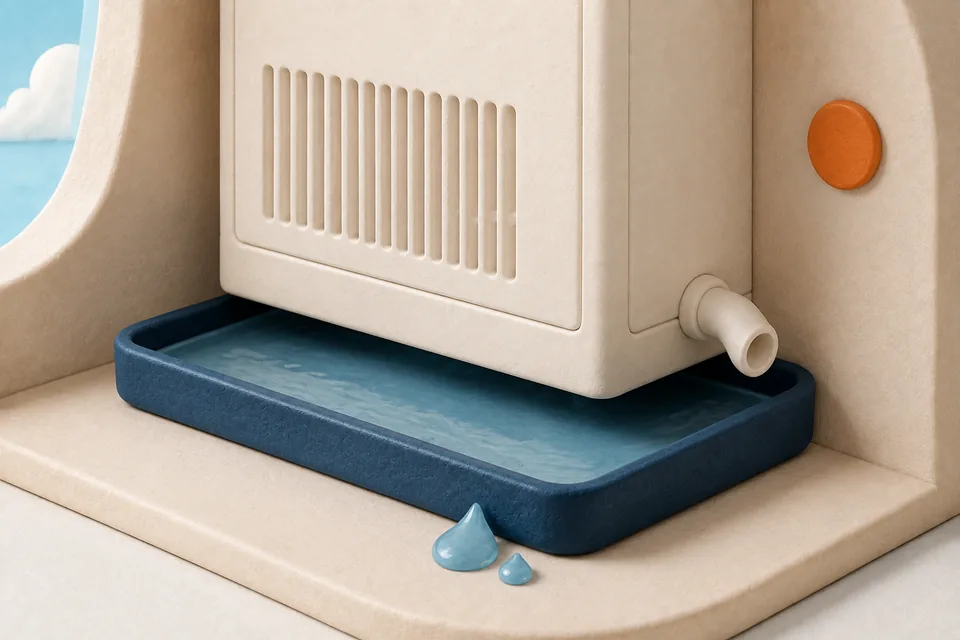
Read the symptom checks and service questions for AC drain pan overflow.
Describe the airflow, sound or water you noticed to Coastal Carolina Comfort. Ask about a diagnostic visit for your Charleston home.