
Why Is My AC Running But Not Cooling the House?
When your AC runs continuously but your home isn’t reaching the set temperature, the system is either failing to produce adequate cooling or losing that cooling before it reaches your living spaces. The most common causes are low refrigerant charge from a leak, a dirty evaporator or condenser coil restricting heat transfer, leaking ductwork that dumps conditioned air into unconditioned spaces, or a system that is undersized for your home’s actual cooling load.
Coastal Carolina Comfort diagnoses why your AC isn’t cooling effectively across Summerville, Charleston, Columbia, and every community we serve in the South Carolina Lowcountry and Midlands. Our NATE-certified technicians identify the root cause — not just the symptom — and provide upfront pricing before any repair begins. Call (843) 708-8735.
First: Understanding the Difference Between “Not Cooling” and “Blowing Warm Air”
These two problems overlap but aren’t identical, and the distinction affects the diagnostic path.
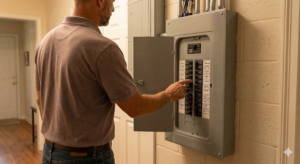
AC blowing warm air means the air from your vents is noticeably warm — room temperature or warmer. This typically points to a complete failure of the cooling cycle: dead compressor, severely depleted refrigerant, tripped outdoor breaker, or a heat pump stuck in heating mode. If this describes your situation, our guide on AC blowing warm air covers those specific causes.
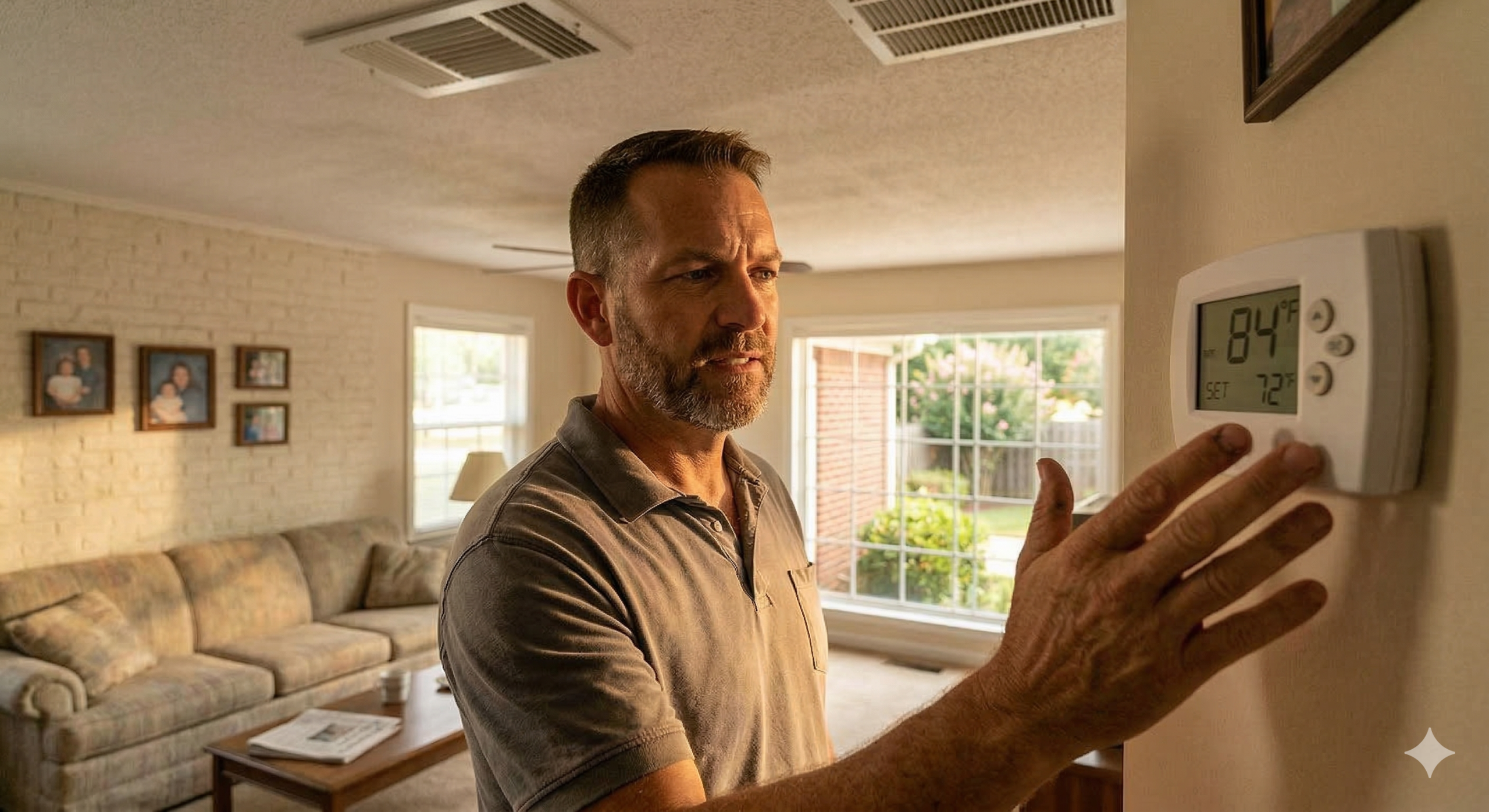
AC running but not cooling means the system produces some cool air — you can feel it at the vent — but your home never reaches the set temperature, or takes far too long to get there. The system runs for hours without cycling off. This is a subtler problem with a wider range of possible causes, and it’s what this article addresses.
In South Carolina’s climate, the distinction matters more than in cooler regions. A system that’s “almost cooling” but falls 5°F short can leave your home at 80°F with 70% humidity — which feels miserable even though the AC is technically doing something.
The 7 Most Common Reasons Your AC Runs But Doesn’t Cool
1. Dirty Condenser Coil (Outdoor Unit)
The condenser coil is where your system releases the heat it absorbed from inside your home. When the coil’s aluminum fins become coated with dirt, pollen, grass clippings, or pet hair, heat transfer drops dramatically. Your system still runs — the compressor works, the fan spins, cool air reaches the vents — but the system can’t reject enough heat to keep up with the load.
In South Carolina, condenser coils take a beating. Spring pollen coats them heavily by April. Summer storms blow debris into the fins. And the combination of heat and humidity creates ideal conditions for biological growth between the fins.
This is one of the most common — and most fixable — reasons an AC runs all day without cooling adequately. A professional coil cleaning restores heat transfer capacity and is typically included in regular maintenance that prevents costly repairs.
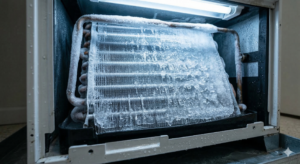
2. Dirty or Restricted Evaporator Coil (Indoor Unit)
The evaporator coil absorbs heat from your indoor air. When it becomes coated with dust, mold, or biological growth — which happens faster in South Carolina’s humidity than in drier climates — its ability to absorb heat decreases. The air passing over a dirty evaporator coil cools less effectively, which means the air reaching your vents is cooler than room temperature but not cold enough to overcome the heat gain in your home.
A dirty evaporator coil also increases humidity in your home because the coil can’t properly dehumidify the air passing over it. This is why a home might be at 74°F but feel clammy and uncomfortable — the AC is partially cooling but failing to adequately remove moisture. Learn more about what South Carolina humidity does to your cooling system.
3. Low Refrigerant Charge
A partially depleted refrigerant charge produces exactly this symptom — the system runs, cool air reaches the vents, but the cooling capacity isn’t enough to match the heat load. Unlike a completely empty system (which blows warm air), a slow leak creates a gradual decline in performance that homeowners often attribute to “the system getting old” or “it’s just really hot outside.”
The temperature differential between the supply air and return air tells the story. A properly charged system in South Carolina should produce a 15–20°F differential. If your supply air is only 8–12°F cooler than your return air, low refrigerant is a prime suspect.
4. Ductwork Leaks
This is the hidden culprit that no amount of AC repair will fix, because the AC itself is working correctly. If your ductwork has gaps, disconnected joints, or deteriorated flex connections — especially where it runs through an unconditioned attic — cooled air escapes before it reaches your rooms.
In a Lowcountry attic during summer, ambient temperatures regularly exceed 140°F. A duct leak in that environment doesn’t just lose cooled air — it actively pulls superheated attic air into the duct system, warming the conditioned air as it travels to your vents.
Ductwork problems are especially common in older homes across Summerville’s Historic District, Charleston’s peninsula, and Columbia’s Shandon and Forest Acres neighborhoods where original ductwork may be 30–50+ years old.
5. Undersized or Improperly Sized System
If your AC system was sized incorrectly for your home’s actual cooling load, it will run continuously on hot days without ever reaching the set temperature. This is more common than you’d expect, particularly in South Carolina where cooling loads are exceptionally high.
An undersized system literally cannot produce enough cooling capacity to overcome the heat gain from walls, windows, attic, and South Carolina’s relentless humidity. Oversized systems create a different problem — short cycling — but undersized systems simply run all day, every day, wearing themselves out faster and costing more to operate.
Sizing problems are especially prevalent in new construction where builder-grade systems may have been selected for cost rather than performance, and in homes that have been renovated or had additions built without upgrading the HVAC system to match the increased square footage.
6. Thermostat Location or Calibration Issues
If your thermostat is mounted on a wall that receives direct afternoon sun, near a heat-producing appliance, or in a room that doesn’t represent the average temperature of your home, it may read the temperature inaccurately — either running the system too little or cycling it off before the rest of the house reaches a comfortable temperature.
A thermostat that’s calibrated 3°F too low will think the house is cooler than it actually is, reducing run time and leaving you warm. A technician can check thermostat accuracy with a calibrated thermometer in under five minutes.
7. Failing Compressor (Partial Failure)
Compressors don’t always fail catastrophically. A compressor that’s losing efficiency — due to internal wear, valve leaks, or weakened windings — may continue to run but produce significantly less cooling capacity than when it was new. The system operates normally by every visible metric, but it simply can’t pump enough refrigerant to meet the demand.
This is a more advanced diagnosis that requires measuring the compressor’s amperage draw and comparing it to manufacturer specifications. A compressor operating at 60% capacity on a mild 85°F day might cool your home adequately, but on a 95°F day with South Carolina humidity, it falls short.
What to Do Before Calling for Service
These steps won’t fix a mechanical problem, but they can improve your system’s performance while you wait for a technician — or occasionally resolve the issue entirely.
Replace the air filter if it’s more than 30 days old during summer. Ensure all supply and return vents in your home are fully open and unblocked by furniture, rugs, or curtains. Clear any debris, vegetation, or obstructions within 2 feet of the outdoor condenser unit. Close blinds on sun-facing windows to reduce heat gain. Verify the thermostat is set correctly and the battery (if applicable) isn’t low.
If these steps don’t improve cooling within an hour, the problem requires professional diagnosis.
How Coastal Carolina Comfort Diagnoses the Problem
Our technicians don’t guess. We follow a systematic diagnostic process that identifies the actual root cause.
We measure supply and return air temperatures to calculate the temperature differential. We check refrigerant charge and pressures against manufacturer specifications. We inspect both the evaporator and condenser coils for dirt, damage, or ice. We test the compressor’s amperage draw and compare it to its rated capacity. We evaluate ductwork condition and pressure in accessible sections. And we verify the system’s capacity against your home’s square footage and insulation characteristics.
This approach ensures we find the real problem — which may be different from the obvious one. A system that appears to have a refrigerant issue might actually have a duct leak that’s masking a properly functioning AC. Coastal Carolina Comfort provides a clear diagnosis and upfront pricing before any work starts.
For homes in the Summerville area, contact us for AC repair in Summerville, SC. Charleston-area homeowners can reach us for AC repair in Charleston, SC. Columbia and Midlands residents, we provide AC repair in Columbia and the Midlands.
Frequently Asked Questions
Q: Why does my AC run all day but never reach 72°F?
The most common reasons are a dirty condenser coil reducing heat rejection, low refrigerant reducing cooling capacity, duct leaks losing conditioned air to unconditioned spaces, or a system undersized for your home. On extreme South Carolina summer days (95°F+), even a properly functioning system may struggle to maintain more than a 20°F differential between indoor and outdoor temperatures. If your system consistently falls more than 5°F short of the set temperature, it needs professional evaluation.
Q: Is it normal for my AC to run all day in South Carolina summer?
During peak heat — July and August with temperatures above 95°F — it’s normal for a correctly sized system to run for extended periods, even most of the day. What’s not normal is running continuously for 24+ hours without ever reaching the set temperature, or running all day on a milder 85°F day when it previously cycled normally. The first scenario is likely a hot day pushing your system’s limits. The second indicates a developing problem.
Q: Can I fix an AC that’s not cooling myself?
You can address the homeowner-level causes: replace the air filter, clear debris from the outdoor unit, open blocked vents, and verify thermostat settings. Beyond that, the causes of inadequate cooling — low refrigerant, dirty coils, duct leaks, compressor issues — all require professional tools, training, and in the case of refrigerant, EPA certification. See our full list of signs your AC needs professional repair.
Q: How much does it cost to fix an AC that’s running but not cooling?
Costs range widely depending on the cause. A condenser coil cleaning might be $100–$200. A refrigerant leak repair and recharge typically costs $400–$1,000+. Ductwork repair can range from $200 for a simple reconnection to $1,500+ for significant duct replacement. A compressor replacement runs $1,500–$3,000+. Coastal Carolina Comfort provides an exact quote after diagnosis. Our complete AC repair cost guide for South Carolina breaks down every common repair.
Q: Does humidity make my AC less effective?
Yes — significantly. South Carolina’s humidity means your AC works double duty: cooling the air AND removing moisture. Dehumidification consumes a substantial portion of your system’s capacity. On a day that’s 93°F with 85% humidity, your system may use 30–40% of its capacity just removing moisture, leaving less capacity for actual temperature reduction. This is why properly sized systems and regular maintenance matter more here than in drier climates.
Related Reading
- Signs Your AC Needs Repair (And When to Call a Pro) — The complete diagnostic checklist.
- AC Blowing Warm Air? What South Carolina Homeowners Should Check First — If the air from your vents is warm, not just insufficiently cool.
- AC Frozen Evaporator Coil: Why Your AC Ices Up in Humid SC Weather — A common cause of reduced cooling capacity.
- The Lowcountry Climate and Your AC System — How humidity and heat uniquely affect your cooling system.
- Why Regular AC Maintenance Prevents Costly Repairs — Most “not cooling” issues are preventable.
AC running all day without cooling? Coastal Carolina Comfort finds the real cause — and fixes it with honest, upfront pricing.
Call (843) 708-8735 for same-day diagnosis across Summerville, Charleston, Columbia, and every community we serve.
Last Updated: March 2026