AC Keeps Turning On and Off? A Lowcountry Short-Cycling Diagnostic
[AUTHOR — Coastal Carolina Comfort technician, credentials TBD] · Updated for the 2026 cooling season · ~8 minute read
Short cycling is when an AC turns on, runs for a few minutes, shuts off, and repeats — without reaching the thermostat setpoint. The seven most common causes: an oversized AC unit (the original installation was specced too large), thermostat placement near a heat source, a clogged air filter, a frozen evaporator coil, a refrigerant leak, electrical issues (capacitor or contactor), or a tripped low-pressure switch from refrigerant loss. Coastal Carolina Comfort resolves most short-cycling diagnoses in a single visit — but the longer short cycling continues, the more wear it puts on the compressor. Schedule the call early, not late.
Every short-cycle event is a hard start for the compressor. The compressor is the most expensive single component in an AC system. Letting short cycling continue trades a routine repair today for a compressor replacement (or system replacement) sooner than the system would otherwise need it.
Short cycling also makes the system meaningfully less efficient — it runs more often, in shorter bursts, with worse dehumidification. The electric bill goes up; the house stays humid even when "cooled."
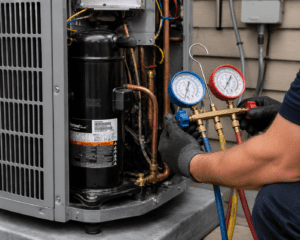
The diagnostic below is the order a Coastal Carolina Comfort tech checks on a short-cycling service call. The first three causes are homeowner-checkable; the rest require a tech with a multimeter, a refrigerant gauge set, or both.
Why an AC short-cycles
Two underlying conditions cause short cycling, even though seven different specific causes can trigger them:
- The system reaches its target too quickly. An oversized unit cools the space faster than it can dehumidify it, the thermostat hits setpoint, the system shuts off, the temperature rises, the system kicks on again. This is the chronic-design cause — it was true the day the system was installed and it will be true until the system is replaced.
- A safety switch shuts the system down before it reaches setpoint. A frozen coil's safety, the low-pressure switch from a refrigerant leak, an overheating capacitor, or a high-pressure switch from a dirty condenser all trip safeties that interrupt the cooling cycle. This is the failure-mode cause — the system was designed correctly, but a component or operating condition is forcing the safety to engage.
The diagnostic separates the two. The first three checks (thermostat location, filter, vents) address the failure-mode causes. Checks 4 through 7 address the rest. Cause #1 (oversized unit) is identified by exclusion — if no other cause explains the symptom, the original installation specs are the explanation.
The 7 most common causes of AC short cycling
1. Oversized AC unit (the design cause)
The least homeowner-fixable cause and the most common in homes where every other diagnostic comes back clean. An AC that's larger than the home's actual cooling load reaches the thermostat setpoint quickly — the air gets cold before the system has had time to dehumidify it. The thermostat shuts the compressor off, the temperature climbs, the cycle repeats.
This is most common in homes where the original installer specced from a rough rule of thumb (square footage × a multiplier) rather than running a Manual J load calculation. It's also common when a home has been upgraded since the system was sized — new insulation, new windows, sealing improvements all reduce cooling load and effectively oversize the existing AC.
The fix is system replacement with correctly-sized equipment, often a variable-speed system that adjusts capacity to actual load. Coastal Carolina Comfort runs Manual J load calculations on replacement quotes to make sure the next system doesn't recreate the same problem.
2. Thermostat in the wrong location
A thermostat installed near a supply vent, in direct sunlight, on an exterior wall that absorbs afternoon heat, or near a heat source (kitchen, electronics, lamps) will read temperatures that don't reflect the actual room temperature. The system overcools to satisfy a misleading reading, then short-cycles as the thermostat oscillates between the real and apparent temperatures.
Move the thermostat to an interior wall, away from supply vents and heat sources, ideally near the center of the home's living level. Re-mounting a thermostat is a moderate-effort homeowner job; running new wiring through the wall is a tech job.
3. Clogged air filter
A clogged filter restricts return airflow, which causes the evaporator coil to drop below freezing, which triggers a safety shutdown. The cycle: AC starts → coil freezes → safety trips → AC shuts off → coil thaws → AC starts again → freeze repeats.
This is the first thing to check because it's the easiest fix. Pull the filter. Replace if gray, matted, or older than 60 days. In Lowcountry pollen seasons (late February through May), the interval shortens — Coastal Carolina Comfort recommends every 30 to 45 days during peak pollen weeks.
4. Frozen evaporator coil
If the filter looks fine but the coil is freezing anyway, the root cause is one of: dirty coil (reduced heat transfer), blocked return vents (reduced airflow), failing blower motor (reduced airflow), or low refrigerant (pressure drops the coil below freezing). The short cycling is the symptom; the freeze is the cause; one of those four is the root.
Shut the system off and allow the coil to fully thaw before further diagnostics. The frozen-coil walk-through covers the deeper diagnostic.
5. Refrigerant leak
Low refrigerant charge drops the coil's operating pressure, which drops its temperature below freezing or trips the low-pressure safety switch on the outdoor unit. Either path produces short cycling.
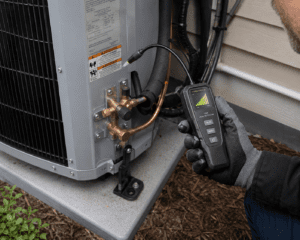
Refrigerant leak detection is a tech job — EPA Section 608 certification is required to purchase and handle refrigerant, and the leak itself usually requires electronic leak detection or dye tracing to locate. Refrigerant systems don't "use up" refrigerant in normal operation; if a system needs more, something is leaking and the leak has to be located and sealed before recharge.
6. Electrical issues: capacitor or contactor
A weakened capacitor can start the compressor but can't sustain the load — the compressor runs briefly then shuts off as the capacitor fails to hold the run charge. A worn contactor can lose contact under load, dropping the system mid-cycle.
Both are tech-diagnosed with a multimeter and a clamp meter. Both are routine repairs once identified — parts stocked on the truck for the most common platforms.
7. Dirty outdoor condenser coil
The outdoor condenser dumps heat from the refrigerant cycle into the outside air. When the coil is fouled with dirt, leaves, grass clippings, pollen, or salt-air corrosion, heat rejection is reduced. The system runs hotter than design, eventually trips the high-pressure safety, and shuts off. The system tries again after pressure normalizes, repeats.
Coastal Carolina Comfort cleans the outdoor coil as part of every spring tune-up. In coastal SC homes, the salt-air variation on this failure mode is faster than in inland systems — pollen plus salt residue builds up on the coil fins on a tighter timeline.
Should you try to fix it yourself, or call?
- Keep going: filter replacement, thermostat relocation (if you're comfortable with the wiring), visual check of return and supply vents, visual check of the outdoor unit for visible fouling.
- Stop and call: coil cleaning (chemical, requires care), capacitor or contactor diagnosis, refrigerant pressure or leak diagnosis, oversized-unit confirmation via Manual J load calculation.
Short cycling is wearing your compressor with every cycle.
Don't wait this one out. Same-day Summerville and Charleston routing.
Past the filter? Tell us what's happening.
The information that helps the tech route the right truck:
How often the system cycles (every 5 minutes? every 15?). Whether you've replaced the filter recently. Whether the outdoor unit fan is spinning when the indoor unit kicks on. Whether the air coming out of the vents is cold or just lukewarm. Whether the system has ever frozen before. Tell the dispatcher these and the tech will arrive with the parts that match your symptom.
Call (843) 708-8735.
What a short-cycling repair involves
Repair scope follows the diagnosed cause. Coastal Carolina Comfort scopes after the tech reaches the home — there's enough variance across the seven causes that flat-rate pricing doesn't fit. General scope by cause:
Oversized unit (replacement, not repair)
The largest-scope outcome. If the existing system is genuinely oversized, no repair fixes the underlying problem — the system will continue to short-cycle until it's replaced with correctly-sized equipment. The conversation becomes repair-versus-replace based on the existing system's age, refrigerant type, remaining warranty, and your timeline. Variable-speed replacement systems handle the "oversized for most loads, sized correctly for peak load" problem better than single-stage replacements.
Thermostat relocation or replacement
A moderate-scope repair involving new wiring to the thermostat's new location and a thermostat reconfiguration. Smart thermostats with remote sensors can sometimes solve a poor-thermostat-location problem without physical relocation.
Filter, vent, and condenser cleaning
The lightest-scope set. Often resolved during a tune-up visit.
Capacitor or contactor replacement
Single-visit repair with parts stocked on the truck.
Refrigerant leak repair plus recharge
Variable scope. Leak detection comes first, then sealing or component replacement at the leak point, then refrigerant recharge. Refrigerant is EPA Section 608 regulated — only certified technicians can purchase or handle it. Systems on R-22 (phased out for new equipment) carry meaningfully higher recharge costs than R-410A or R-454B systems and may shift the conversation toward replacement.
Frozen coil — see the frozen-evaporator walk-through
Same scope as a standalone frozen-coil repair. The short cycling is incidental; the freeze cause is the real repair.
Why Lowcountry AC systems short-cycle more often
Two reasons coastal SC homes see short cycling more often than inland systems:
- Humidity changes the oversizing math. An AC that's correctly sized for sensible cooling load can still be oversized for the dehumidification load it actually needs to handle. In a humid climate, the system needs to run longer cycles to pull moisture out of the air; an oversized unit hits temperature setpoint before it can do the dehumidification work. The space feels clammy even when "cool," and the system short-cycles.
- Salt-air corrosion accelerates outdoor-unit fouling. The outdoor condenser coil in coastal SC accumulates corrosion plus pollen plus salt residue faster than inland systems. The high-pressure safety trips earlier in the season, and short cycling shows up earlier in the system's life.
Coastal Carolina Comfort sizes replacement systems on Manual J load calculations that account for both sensible and latent (dehumidification) loads. The conversation about replacement vs repair for an oversized unit usually starts with the load calculation — that number tells you whether the existing system was wrong-sized from day one or whether the home has changed since installation.
Get this fixed in your area — same-day repair
Short cycling is the symptom that hurts the system most while you wait. Coastal Carolina Comfort runs same-day short-cycling repair across Summerville, Charleston, and the surrounding Lowcountry. Most cases finish in a single visit once the cause is identified.
Summerville and Berkeley County
Same-day short-cycling repair across Nexton, Cane Bay, Carnes Crossroads, Knightsville, Wescott Plantation, Historic Downtown, and Summers Corner.
Summerville AC repair →Charleston and the Lowcountry
Mount Pleasant, Daniel Island, James Island, West Ashley, Johns Island, North Charleston, and the surrounding Lowcountry communities.
Charleston AC repair →Related diagnostic guides
-
AC frozen evaporator coil
When the short cycling is downstream of a coil freeze — the safety trip is the cycling, the freeze is the root cause.
-
AC not cooling
When short cycling has progressed to insufficient cooling — the system runs more, but the house doesn't drop temperature.
-
AC won't turn on
The diagnostic when short cycling has progressed to a no-start, usually after the capacitor or contactor has fully failed.
Frequently asked questions
How often is "too often" for an AC to cycle on and off?
A healthy AC runs in cycles that typically last 15 to 20 minutes during moderate cooling load, with longer cycles in peak heat. If your system is cycling on and off every 5 to 10 minutes, it's short cycling. Coastal Carolina Comfort sees calls most often when cycle length drops below 10 minutes — at that point the compressor wear and electric bill impact start showing up quickly.
Can short cycling damage my AC permanently?
Yes. The compressor — the most expensive single component in an AC system — wears with every start. Short cycling multiplies starts per day by a meaningful factor; over a season of unaddressed short cycling, the compressor can lose months or years of remaining service life. Capacitors and contactors also degrade faster under short-cycle conditions. Catching short cycling early is meaningfully cheaper than letting it run for a season.
Is short cycling an emergency?
It's not a same-night emergency in most cases, but it's not something to wait out for weeks. The right framing: schedule a service call within a few days. Coastal Carolina Comfort's same-day Lowcountry routing handles short-cycling calls during regular hours. Every day of continued short cycling adds compressor wear; the call gets cheaper the sooner it happens.
Can I tell if my AC is oversized without a tech visit?
Indirect signs: the house cools quickly but feels clammy; humidity stays high even when temperature reads "cool"; the system short-cycles consistently across multiple seasons regardless of filter changes, thermostat moves, or cleaning. The direct check is a Manual J load calculation, which Coastal Carolina Comfort runs on replacement quotes to confirm the next system is sized correctly.
Will replacing the thermostat fix short cycling?
Sometimes. If the thermostat is in a poor location (near a vent, in direct sun, on an exterior wall, near a heat source), replacing it with a smart thermostat plus a remote temperature sensor placed correctly can resolve the location problem without rewiring. If the cause is anything other than thermostat behavior, a new thermostat won't change anything — Coastal Carolina Comfort recommends starting with diagnostic before assuming a thermostat replacement is the fix.
Why does my AC short-cycle worse during the most humid days?
Two reasons. First, on the most humid days, dehumidification load is highest — and an oversized unit hits temperature setpoint faster than it can dehumidify. Second, high humidity often correlates with high outdoor temperature, which stresses the outdoor condenser coil; if the coil is fouled, the high-pressure safety trips sooner on hot days. Both push short cycling toward the worst-case end of the spectrum exactly when you most need the system running normally.
Same-day Summerville and Charleston routing for short-cycling diagnostics.
Call (843) 708-8735When the cycling will not stop, Coastal Carolina Comfort handles Summerville air conditioner repair and Charleston AC repair. Call (843) 708-8735 for a real person and a stocked truck.