

AC Frozen Evaporator Coil: Why Your Air Conditioner Ices Up in Humid SC Weather
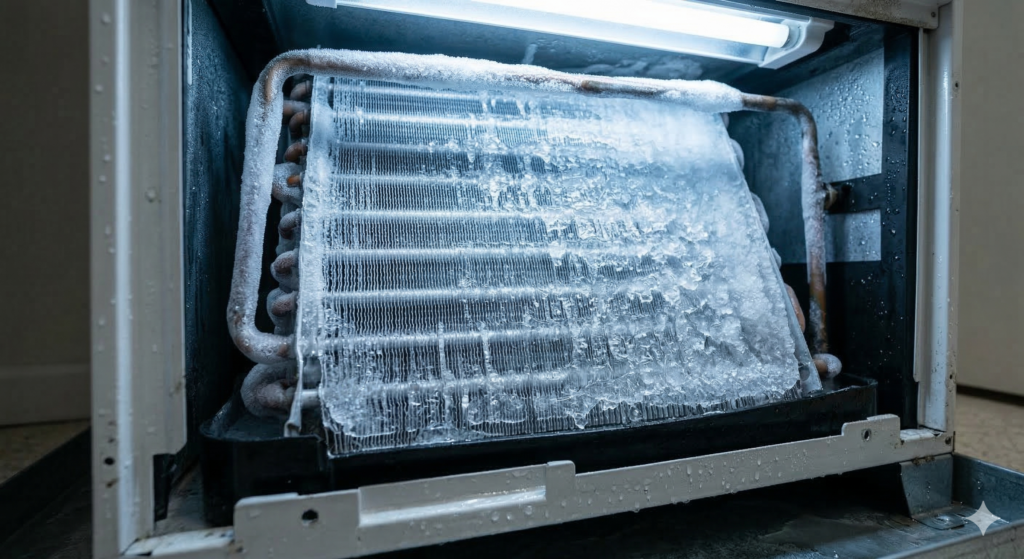
AC Frozen Evaporator Coil: Why Your Air Conditioner Ices Up in Humid SC Weather A frozen evaporator coil occurs when the coil’s surface temperature drops below 32°F and moisture from your indoor air freezes on contact, building a layer of ice that blocks airflow and prevents heat absorption. The most common causes are restricted airflow from a clogged filter or dirty coil, low refrigerant charge from a leak, and blower motor failure that reduces air volume across the coil. In South Carolina’s high-humidity environment, frozen coils are both more common and more damaging than in drier climates — the heavy moisture content in Lowcountry and Midlands air means ice builds faster and produces more water when it melts. Coastal Carolina Comfort diagnoses and repairs frozen evaporator coils across Summerville, Charleston, Columbia, and all of South Carolina. Our NATE-certified technicians identify the root cause — not just thaw the ice — and provide upfront pricing before any repair begins. Call (843) 708-8735. How a Frozen Coil Damages Your AC System A frozen evaporator coil isn’t just a temporary inconvenience — it creates a cascade of problems that can damage multiple components if the system continues running. The compressor is at greatest risk. Under normal operation, liquid refrigerant enters the evaporator coil, absorbs heat, and exits as a gas before returning to the compressor. When the coil freezes, this heat exchange stops. Liquid refrigerant passes through the coil without vaporizing and reaches the compressor in liquid form. Compressors are designed to pump gas, not liquid. Liquid refrigerant entering the compressor — called liquid slugging — can crack valves, damage pistons, and cause catastrophic compressor failure. A compressor replacement typically costs $1,500–$3,000+. Water damage when the ice melts. A frozen coil accumulates a surprising amount of ice. When the system shuts off or the ice begins to melt, the resulting water can easily overwhelm the drain pan — especially if the drain line is also partially clogged (a common combination in South Carolina). Water overflows onto floors, into ceilings, or through walls. Read our guide on AC leaking water inside your house for immediate steps if you’re already dealing with water. Reduced system life. Repeated freeze-thaw cycles stress the coil fins, degrade the coil’s protective coating, and can eventually cause refrigerant leaks in the coil itself — one of the most expensive AC repairs. The 5 Causes of Frozen Evaporator Coils in South Carolina 1. Clogged Air Filter This is the most common cause — and the most preventable. A clogged filter restricts the volume of warm air passing over the evaporator coil. Without sufficient warm air, the coil’s temperature drops below the freezing point. Moisture in the air freezes on contact, and the ice layer further restricts airflow, accelerating the freeze. In South Carolina, where pet dander, pollen, dust, and high humidity all contribute to faster filter loading, a filter that might last 90 days in a drier climate may need replacement every 30 days during peak cooling season. The fix: Replace the filter, turn the system off for 2–3 hours to allow complete thawing, then restart. If the system runs normally and doesn’t refreeze, the filter was the sole cause. If ice returns within 24 hours, there’s an additional underlying issue. 2. Low Refrigerant From a Leak Low refrigerant charge causes the evaporator coil’s temperature to drop below normal operating range. When the coil is too cold, moisture freezes on its surface instead of condensing into liquid and draining away. The ice insulates the coil, making it even colder, and the freeze accelerates until the coil is completely encased. This is the most common mechanical cause of frozen coils, and it requires professional repair. A technician will thaw the coil, test for leaks, repair the leak source, and recharge the system to manufacturer specifications. Simply adding refrigerant without fixing the leak guarantees the problem will return. In South Carolina’s coastal environment, refrigerant line corrosion from salt air is a significant contributor to leaks — particularly on homes within a few miles of Charleston Harbor, James Island, or the Isle of Palms. 3. Dirty Evaporator Coil Even with regular filter changes, the evaporator coil accumulates dust, biological growth, and particulate matter over time — especially in South Carolina’s humid environment where mold and mildew thrive on the constantly damp coil surface. A dirty coil insulates itself from the warm air passing over it. The coil can’t absorb enough heat, its temperature drops, and the same freeze cycle begins. The difference is that a dirty-coil freeze develops more gradually than a low-refrigerant freeze — you might notice declining performance for weeks before ice becomes visible. The fix: Professional coil cleaning. This requires access to the indoor unit, coil-specific cleaning solution, and careful handling to avoid damaging the delicate aluminum fins. Coil cleaning is typically included in comprehensive maintenance visits that prevent frozen coils and costs $150–$300 as a standalone service. 4. Blower Motor Failure or Reduction The blower motor moves air across the evaporator coil. If it fails entirely, airflow stops completely and the coil freezes rapidly. A partially failing motor — running at reduced speed due to worn bearings, a failing capacitor, or a winding issue — moves insufficient air, causing a slower but equally damaging freeze. In multi-speed systems, a motor stuck on low speed may provide enough airflow for mild days but insufficient volume on high-demand days, creating intermittent freezing that’s harder to diagnose. 5. Collapsed or Blocked Return Ductwork If the return duct — the large duct that carries warm room air back to the air handler — is crushed, disconnected, or severely blocked, the volume of air reaching the evaporator coil drops below the minimum threshold. This can happen when stored items are placed on flex duct in an attic, when a duct joint separates due to age or poor installation, or when a return vent is blocked by furniture or closed. This cause is more common in homes with ductwork routed through attics — a standard
AC Blowing Warm Air? What South Carolina Homeowners Should Check First
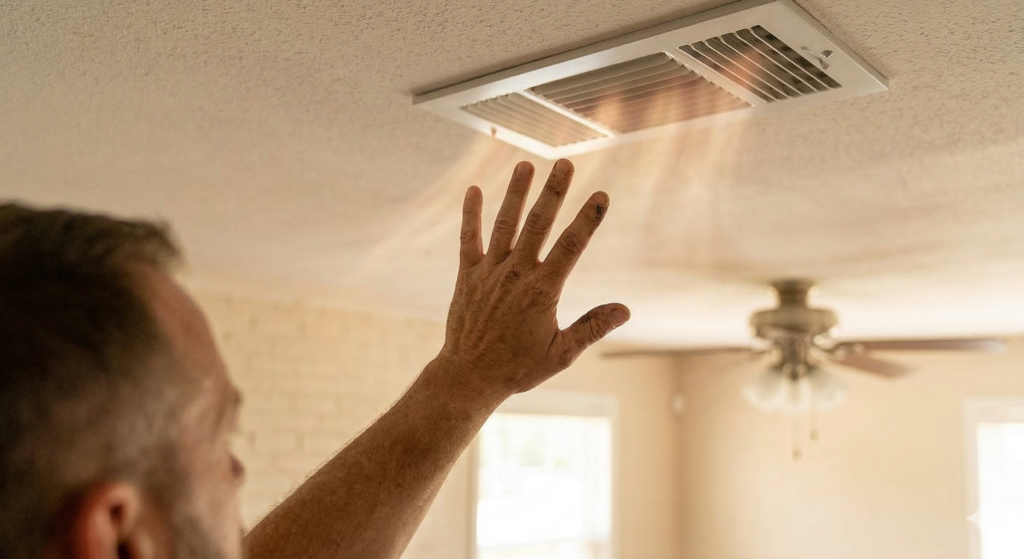
AC Blowing Warm Air? What South Carolina Homeowners Should Check First An AC system blowing warm air is most commonly caused by low refrigerant from a leak, a failed or failing compressor, a thermostat set incorrectly, or a frozen evaporator coil that has thawed and re-frozen in a cycle that prevents proper cooling. In South Carolina’s climate — where indoor temperatures can climb past 85°F within hours of losing cooling — identifying the cause quickly matters both for comfort and for preventing secondary damage to your system. Coastal Carolina Comfort’s NATE-certified technicians diagnose the root cause of warm air from AC vents across Summerville, Charleston, Columbia, and the entire South Carolina Lowcountry and Midlands. Most warm-air issues can be diagnosed and repaired in a single same-day visit. Call (843) 708-8735 to schedule your diagnostic. Quick Checks Before You Call a Technician Before scheduling a service call, run through these homeowner-safe checks. They take less than five minutes and resolve the problem roughly 15% of the time. Check your thermostat settings. It sounds basic, but it’s the first thing our technicians verify on every call. Make sure the thermostat is set to “cool” (not “heat” or “fan only”) and that the set temperature is at least 3–5°F below the current room temperature. If someone in the household accidentally bumped the setting — or if a smart thermostat entered a scheduling mode — the system may be functioning exactly as programmed, just not as you expected. Check the air filter. A severely clogged air filter restricts airflow across the evaporator coil. When airflow drops below the minimum threshold, the coil temperature plummets, moisture on the coil freezes, and ice builds up until the coil can no longer absorb heat from your indoor air. The result: your system runs, but the air coming from the vents is room temperature or warmer. Pull the filter out. If you can’t see light through it, replace it and give the system 2–3 hours to thaw before restarting. Check the outdoor unit. Walk outside and look at the condenser unit. Is the fan spinning? If the outdoor unit is completely silent or humming but the fan isn’t moving, the system can’t release heat — which means it can’t cool your home. A non-spinning fan usually points to a failed capacitor or burned-out fan motor. Do not attempt to manually spin the fan blade — call for professional repair. Check the circuit breakers. Your AC system typically runs on two breakers — one for the indoor air handler and one for the outdoor condenser. If the outdoor breaker has tripped but the indoor breaker hasn’t, the air handler will continue to blow air through your vents, but without the outdoor unit running, that air won’t be cooled. Reset the breaker once. If it trips again immediately, stop — that indicates an electrical fault that requires professional diagnosis. If none of these checks resolve the issue, the problem is internal to the system and requires a trained technician. The 6 Most Common Causes of an AC Blowing Warm Air 1. Low Refrigerant From a Leak This is the most frequent cause of warm air from AC vents in South Carolina. Your air conditioning system doesn’t consume refrigerant — it circulates the same charge in a sealed loop. If the charge is low, there’s a leak somewhere in the system. Low refrigerant reduces the evaporator coil’s ability to absorb heat from your indoor air. As the charge drops, the temperature differential between supply air and return air narrows until the air coming from your vents feels lukewarm or warm. In South Carolina’s high-humidity environment, low refrigerant also causes the evaporator coil to operate below the dew point in unpredictable ways, leading to inconsistent cooling and excessive condensation or ice formation. Coastal Carolina Comfort performs a leak check, locates the source, repairs it, and recharges the system to manufacturer specifications. Simply adding refrigerant without finding the leak is a temporary fix that will fail again — often within weeks in the Lowcountry’s demanding climate. Learn more about what South Carolina’s climate does to your cooling system. 2. Compressor Failure The compressor is the component that pressurizes refrigerant and drives the entire cooling cycle. When it fails — partially or completely — the system loses its ability to transfer heat from inside your home to the outside. Your air handler will still blow air through the vents, but that air won’t be cooled. Compressor failures in South Carolina are often caused by extended run times during sustained summer heat, chronic low refrigerant that forces the compressor to work harder, electrical issues from power surges, or simple age-related wear. The outdoor unit may hum without starting, make a clicking sound as it tries repeatedly to engage, or trip the circuit breaker. Compressor replacement is one of the most expensive AC repairs — typically $1,500–$3,000+ depending on the system. For systems over 10 years old, this repair often triggers a conversation about whether to repair or replace your AC system. 3. Frozen Evaporator Coil A frozen evaporator coil can’t absorb heat. When ice builds up on the coil, airflow drops further, the ice gets worse, and your system enters a downward spiral where it runs constantly but cools poorly or not at all. The most common causes are restricted airflow (clogged filter, closed vents, dirty coil) and low refrigerant. In South Carolina’s humid climate, frozen coils are particularly problematic because the ice melts and refreezes in cycles that can flood your condensate pan and overflow onto floors. Read our full guide on frozen evaporator coils in humid South Carolina weather. 4. Thermostat Malfunction A thermostat that reads the wrong temperature, loses its connection to the system, or has a dead battery in a wireless sensor can cause the AC to behave erratically — including blowing air without activating the cooling cycle. Modern smart thermostats with multiple sensors, scheduling features, and Wi-Fi connectivity have more potential failure points than older mechanical models. If your