

AC Frozen Evaporator Coil: Why Your Air Conditioner Ices Up in Humid SC Weather
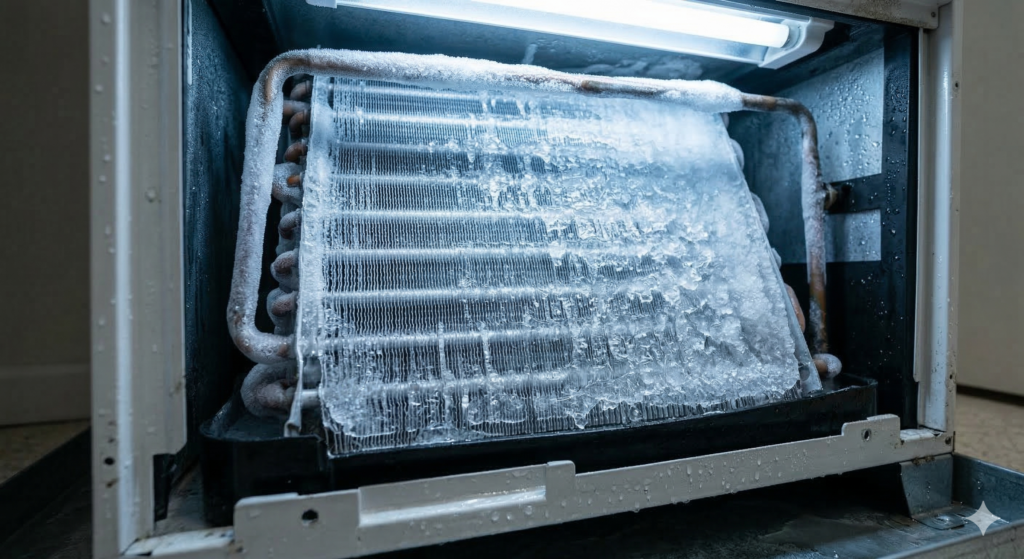
AC Frozen Evaporator Coil: Why Your Air Conditioner Ices Up in Humid SC Weather A frozen evaporator coil occurs when the coil’s surface temperature drops below 32°F and moisture from your indoor air freezes on contact, building a layer of ice that blocks airflow and prevents heat absorption. The most common causes are restricted airflow from a clogged filter or dirty coil, low refrigerant charge from a leak, and blower motor failure that reduces air volume across the coil. In South Carolina’s high-humidity environment, frozen coils are both more common and more damaging than in drier climates — the heavy moisture content in Lowcountry and Midlands air means ice builds faster and produces more water when it melts. Coastal Carolina Comfort diagnoses and repairs frozen evaporator coils across Summerville, Charleston, Columbia, and all of South Carolina. Our NATE-certified technicians identify the root cause — not just thaw the ice — and provide upfront pricing before any repair begins. Call (843) 708-8735. How a Frozen Coil Damages Your AC System A frozen evaporator coil isn’t just a temporary inconvenience — it creates a cascade of problems that can damage multiple components if the system continues running. The compressor is at greatest risk. Under normal operation, liquid refrigerant enters the evaporator coil, absorbs heat, and exits as a gas before returning to the compressor. When the coil freezes, this heat exchange stops. Liquid refrigerant passes through the coil without vaporizing and reaches the compressor in liquid form. Compressors are designed to pump gas, not liquid. Liquid refrigerant entering the compressor — called liquid slugging — can crack valves, damage pistons, and cause catastrophic compressor failure. A compressor replacement typically costs $1,500–$3,000+. Water damage when the ice melts. A frozen coil accumulates a surprising amount of ice. When the system shuts off or the ice begins to melt, the resulting water can easily overwhelm the drain pan — especially if the drain line is also partially clogged (a common combination in South Carolina). Water overflows onto floors, into ceilings, or through walls. Read our guide on AC leaking water inside your house for immediate steps if you’re already dealing with water. Reduced system life. Repeated freeze-thaw cycles stress the coil fins, degrade the coil’s protective coating, and can eventually cause refrigerant leaks in the coil itself — one of the most expensive AC repairs. The 5 Causes of Frozen Evaporator Coils in South Carolina 1. Clogged Air Filter This is the most common cause — and the most preventable. A clogged filter restricts the volume of warm air passing over the evaporator coil. Without sufficient warm air, the coil’s temperature drops below the freezing point. Moisture in the air freezes on contact, and the ice layer further restricts airflow, accelerating the freeze. In South Carolina, where pet dander, pollen, dust, and high humidity all contribute to faster filter loading, a filter that might last 90 days in a drier climate may need replacement every 30 days during peak cooling season. The fix: Replace the filter, turn the system off for 2–3 hours to allow complete thawing, then restart. If the system runs normally and doesn’t refreeze, the filter was the sole cause. If ice returns within 24 hours, there’s an additional underlying issue. 2. Low Refrigerant From a Leak Low refrigerant charge causes the evaporator coil’s temperature to drop below normal operating range. When the coil is too cold, moisture freezes on its surface instead of condensing into liquid and draining away. The ice insulates the coil, making it even colder, and the freeze accelerates until the coil is completely encased. This is the most common mechanical cause of frozen coils, and it requires professional repair. A technician will thaw the coil, test for leaks, repair the leak source, and recharge the system to manufacturer specifications. Simply adding refrigerant without fixing the leak guarantees the problem will return. In South Carolina’s coastal environment, refrigerant line corrosion from salt air is a significant contributor to leaks — particularly on homes within a few miles of Charleston Harbor, James Island, or the Isle of Palms. 3. Dirty Evaporator Coil Even with regular filter changes, the evaporator coil accumulates dust, biological growth, and particulate matter over time — especially in South Carolina’s humid environment where mold and mildew thrive on the constantly damp coil surface. A dirty coil insulates itself from the warm air passing over it. The coil can’t absorb enough heat, its temperature drops, and the same freeze cycle begins. The difference is that a dirty-coil freeze develops more gradually than a low-refrigerant freeze — you might notice declining performance for weeks before ice becomes visible. The fix: Professional coil cleaning. This requires access to the indoor unit, coil-specific cleaning solution, and careful handling to avoid damaging the delicate aluminum fins. Coil cleaning is typically included in comprehensive maintenance visits that prevent frozen coils and costs $150–$300 as a standalone service. 4. Blower Motor Failure or Reduction The blower motor moves air across the evaporator coil. If it fails entirely, airflow stops completely and the coil freezes rapidly. A partially failing motor — running at reduced speed due to worn bearings, a failing capacitor, or a winding issue — moves insufficient air, causing a slower but equally damaging freeze. In multi-speed systems, a motor stuck on low speed may provide enough airflow for mild days but insufficient volume on high-demand days, creating intermittent freezing that’s harder to diagnose. 5. Collapsed or Blocked Return Ductwork If the return duct — the large duct that carries warm room air back to the air handler — is crushed, disconnected, or severely blocked, the volume of air reaching the evaporator coil drops below the minimum threshold. This can happen when stored items are placed on flex duct in an attic, when a duct joint separates due to age or poor installation, or when a return vent is blocked by furniture or closed. This cause is more common in homes with ductwork routed through attics — a standard
AC Unit Making Strange Noises: What Each Sound Means and When to Call for Repair
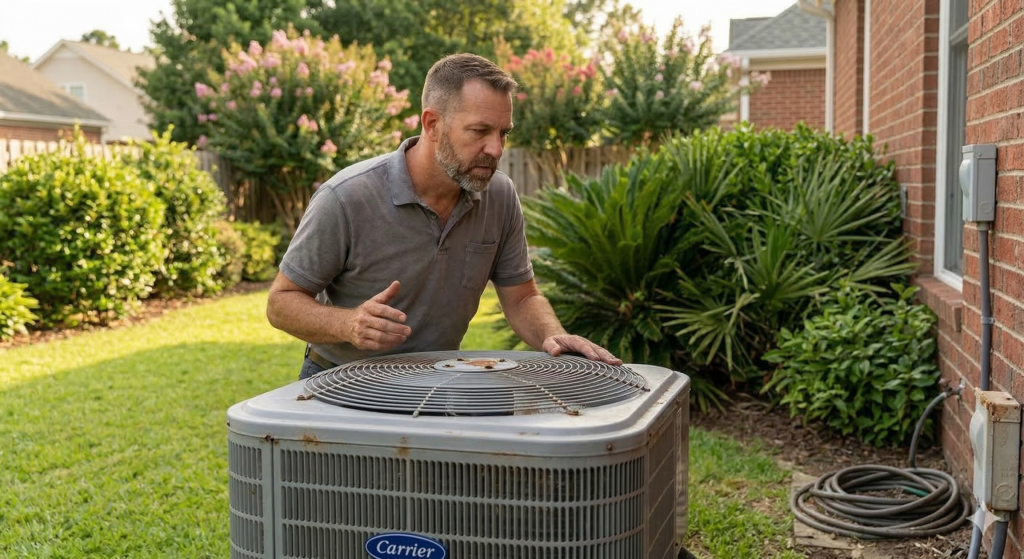
AC Unit Making Strange Noises: What Each Sound Means and When to Call for Repair A healthy air conditioning system produces a consistent, low-level hum during operation. When you hear new sounds — grinding, buzzing, clicking, banging, hissing, or screeching — each noise points to a specific mechanical or electrical problem. Identifying what the sound is and where it’s coming from helps determine whether you need immediate service, can schedule a repair within a few days, or simply have a minor issue that’s easy to resolve. Coastal Carolina Comfort’s NATE-certified technicians diagnose and repair noisy AC systems across Summerville, Charleston, Columbia, and the entire South Carolina Lowcountry and Midlands. We identify the source of the sound, explain what’s causing it, and provide upfront pricing before any work begins. Call (843) 708-8735. A Sound-by-Sound Diagnostic Guide Grinding: Failing Motor Bearings What it sounds like: A metallic grinding, scraping, or growling that gets louder over time. It may be intermittent at first and become constant. Where it comes from: Usually the indoor blower motor or the outdoor condenser fan motor. What’s happening: The motor bearings that allow the shaft to spin freely are wearing out. As the bearings degrade, metal contacts metal, creating the grinding sound. Eventually the motor seizes completely — which turns a $350–$700 motor replacement into a potential compressor failure if the system overheats. Urgency level: Schedule within 1–3 days. A grinding motor can fail at any time. Continuing to run the system accelerates the damage but won’t cause an immediate safety hazard. The longer you wait, the higher the chance the motor seizes during a peak-heat day when you need it most. South Carolina note: The extended cooling season in the Lowcountry and Midlands puts more annual hours on motor bearings than most of the country. A motor that might last 15 years in a cooler climate may wear out in 10–12 years here because it runs 6+ months per year. Buzzing: Electrical Problems What it sounds like: A steady electrical buzz or hum, louder than the system’s normal operating sound. May come from the outdoor unit, indoor unit, or both. What’s happening: Buzzing from the outdoor unit most commonly indicates a failing contactor (the electrical relay that starts the compressor) or loose wiring connections vibrating during operation. Buzzing from the indoor unit may point to a failing transformer, a relay issue, or a blower motor with electrical problems. Urgency level: Schedule within 1–2 days. Electrical issues can worsen without warning. A contactor that’s arcing or buzzing can weld itself shut (causing the system to run nonstop), fail open (causing a complete shutdown), or create a fire risk if left unaddressed. If the buzzing is accompanied by a burning smell, turn the system off at the breaker and call for emergency AC repair in the Lowcountry. Clicking: Capacitor or Control Board Issues What it sounds like: Repeated clicking sounds at startup — the system tries to start, clicks, pauses, tries again, clicks. Or a single click followed by silence instead of the compressor engaging. What’s happening: This is typically a failed run capacitor trying and failing to deliver the electrical boost the compressor needs to start. The click is the contactor engaging, but without sufficient capacitance, the compressor can’t turn over. The system tries repeatedly, clicking each time. Less commonly, clicking indicates a control board relay failure — the electronic brain of the system is sending the start signal but a relay on the board isn’t completing the circuit. Urgency level: Same-day to next-day. The system won’t cool in this state. If the weather is mild, next-day service is fine. In South Carolina summer heat, this is a same-day call. A failed capacitor is one of the quickest and most affordable repairs — typically $150–$300 including parts and labor. Banging or Clanking: Loose or Broken Internal Components What it sounds like: A rhythmic banging, clanking, or knocking — usually from the outdoor unit. The sound follows the fan’s rotation cycle. What’s happening: Something inside the unit is loose and making contact with a moving part. The most common causes are a broken fan blade striking the housing, a loose compressor mounting bolt allowing the compressor to vibrate excessively, or debris (a stick, acorn, or small animal) caught inside the condenser housing. Urgency level: Turn off and schedule same-day. A broken fan blade or loose component can cause escalating damage to other parts with every rotation. Turn the system off at the thermostat and call for service. Do not reach inside the unit to investigate. Hissing or Bubbling: Refrigerant Leak What it sounds like: A persistent hiss from the indoor or outdoor unit, or a bubbling/gurgling sound from the refrigerant lines. What’s happening: Refrigerant is escaping through a hole or crack in the copper lines, coil, or fittings. A hiss indicates gas-phase refrigerant escaping under pressure. A bubbling sound indicates the leak is in a section where refrigerant is in liquid phase. Urgency level: Schedule within 1–2 days. A refrigerant leak won’t cause immediate damage to your home, but every day it leaks reduces cooling capacity and forces the compressor to work harder. Running a system with critically low refrigerant can cause compressor damage. If you also notice ice forming on the indoor unit, turn the system off. In South Carolina’s coastal and humid environment, refrigerant line corrosion is more common than in drier climates — particularly on homes near the coast where salt air accelerates copper degradation. Our guide on what South Carolina humidity does to your cooling system explains why. Screeching or Squealing: Belt or Motor Issues What it sounds like: A high-pitched screech or squeal, usually at startup, that may fade as the system reaches operating speed. What’s happening: In older systems with belt-driven blower motors, a worn or misaligned belt slips and squeals — similar to a car’s serpentine belt. In newer direct-drive systems, the screech may indicate a failing motor bearing or a blower wheel rubbing against its housing. Urgency level: Schedule within
AC Blowing Warm Air? What South Carolina Homeowners Should Check First
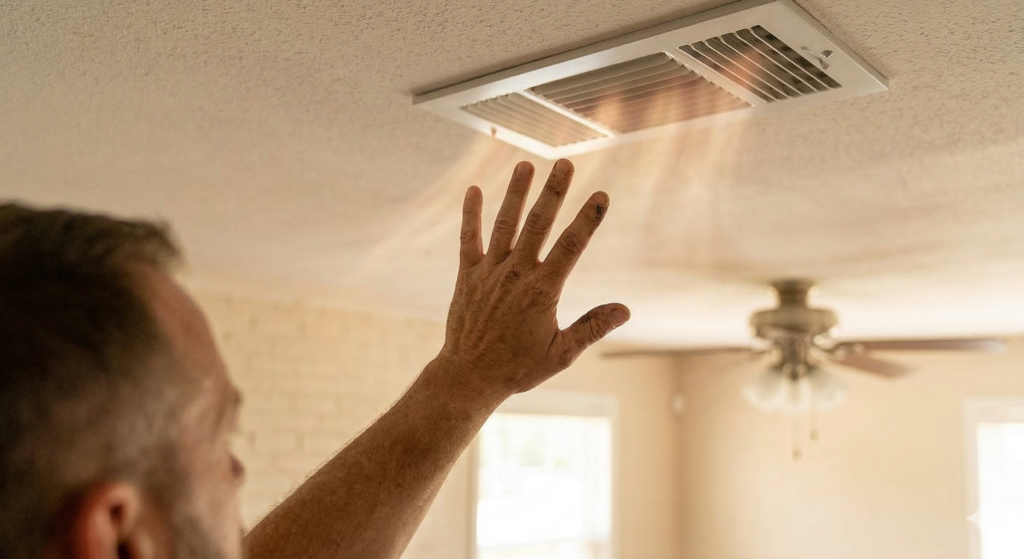
AC Blowing Warm Air? What South Carolina Homeowners Should Check First An AC system blowing warm air is most commonly caused by low refrigerant from a leak, a failed or failing compressor, a thermostat set incorrectly, or a frozen evaporator coil that has thawed and re-frozen in a cycle that prevents proper cooling. In South Carolina’s climate — where indoor temperatures can climb past 85°F within hours of losing cooling — identifying the cause quickly matters both for comfort and for preventing secondary damage to your system. Coastal Carolina Comfort’s NATE-certified technicians diagnose the root cause of warm air from AC vents across Summerville, Charleston, Columbia, and the entire South Carolina Lowcountry and Midlands. Most warm-air issues can be diagnosed and repaired in a single same-day visit. Call (843) 708-8735 to schedule your diagnostic. Quick Checks Before You Call a Technician Before scheduling a service call, run through these homeowner-safe checks. They take less than five minutes and resolve the problem roughly 15% of the time. Check your thermostat settings. It sounds basic, but it’s the first thing our technicians verify on every call. Make sure the thermostat is set to “cool” (not “heat” or “fan only”) and that the set temperature is at least 3–5°F below the current room temperature. If someone in the household accidentally bumped the setting — or if a smart thermostat entered a scheduling mode — the system may be functioning exactly as programmed, just not as you expected. Check the air filter. A severely clogged air filter restricts airflow across the evaporator coil. When airflow drops below the minimum threshold, the coil temperature plummets, moisture on the coil freezes, and ice builds up until the coil can no longer absorb heat from your indoor air. The result: your system runs, but the air coming from the vents is room temperature or warmer. Pull the filter out. If you can’t see light through it, replace it and give the system 2–3 hours to thaw before restarting. Check the outdoor unit. Walk outside and look at the condenser unit. Is the fan spinning? If the outdoor unit is completely silent or humming but the fan isn’t moving, the system can’t release heat — which means it can’t cool your home. A non-spinning fan usually points to a failed capacitor or burned-out fan motor. Do not attempt to manually spin the fan blade — call for professional repair. Check the circuit breakers. Your AC system typically runs on two breakers — one for the indoor air handler and one for the outdoor condenser. If the outdoor breaker has tripped but the indoor breaker hasn’t, the air handler will continue to blow air through your vents, but without the outdoor unit running, that air won’t be cooled. Reset the breaker once. If it trips again immediately, stop — that indicates an electrical fault that requires professional diagnosis. If none of these checks resolve the issue, the problem is internal to the system and requires a trained technician. The 6 Most Common Causes of an AC Blowing Warm Air 1. Low Refrigerant From a Leak This is the most frequent cause of warm air from AC vents in South Carolina. Your air conditioning system doesn’t consume refrigerant — it circulates the same charge in a sealed loop. If the charge is low, there’s a leak somewhere in the system. Low refrigerant reduces the evaporator coil’s ability to absorb heat from your indoor air. As the charge drops, the temperature differential between supply air and return air narrows until the air coming from your vents feels lukewarm or warm. In South Carolina’s high-humidity environment, low refrigerant also causes the evaporator coil to operate below the dew point in unpredictable ways, leading to inconsistent cooling and excessive condensation or ice formation. Coastal Carolina Comfort performs a leak check, locates the source, repairs it, and recharges the system to manufacturer specifications. Simply adding refrigerant without finding the leak is a temporary fix that will fail again — often within weeks in the Lowcountry’s demanding climate. Learn more about what South Carolina’s climate does to your cooling system. 2. Compressor Failure The compressor is the component that pressurizes refrigerant and drives the entire cooling cycle. When it fails — partially or completely — the system loses its ability to transfer heat from inside your home to the outside. Your air handler will still blow air through the vents, but that air won’t be cooled. Compressor failures in South Carolina are often caused by extended run times during sustained summer heat, chronic low refrigerant that forces the compressor to work harder, electrical issues from power surges, or simple age-related wear. The outdoor unit may hum without starting, make a clicking sound as it tries repeatedly to engage, or trip the circuit breaker. Compressor replacement is one of the most expensive AC repairs — typically $1,500–$3,000+ depending on the system. For systems over 10 years old, this repair often triggers a conversation about whether to repair or replace your AC system. 3. Frozen Evaporator Coil A frozen evaporator coil can’t absorb heat. When ice builds up on the coil, airflow drops further, the ice gets worse, and your system enters a downward spiral where it runs constantly but cools poorly or not at all. The most common causes are restricted airflow (clogged filter, closed vents, dirty coil) and low refrigerant. In South Carolina’s humid climate, frozen coils are particularly problematic because the ice melts and refreezes in cycles that can flood your condensate pan and overflow onto floors. Read our full guide on frozen evaporator coils in humid South Carolina weather. 4. Thermostat Malfunction A thermostat that reads the wrong temperature, loses its connection to the system, or has a dead battery in a wireless sensor can cause the AC to behave erratically — including blowing air without activating the cooling cycle. Modern smart thermostats with multiple sensors, scheduling features, and Wi-Fi connectivity have more potential failure points than older mechanical models. If your
Signs Your AC Needs Repair (And When to Call a Pro)
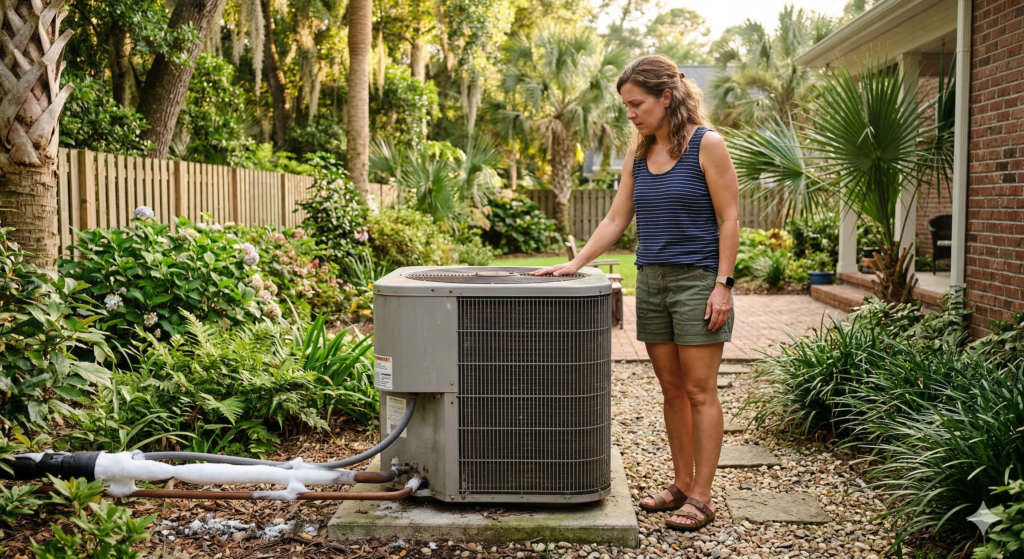
Signs Your AC Needs Repair (And When to Call a Pro) An air conditioner rarely fails without warning. In most cases, your cooling system will show clear signs that something is wrong — warm air from the vents, unusual sounds, higher-than-normal electric bills, or moisture where it shouldn’t be — days or even weeks before a complete breakdown occurs. Recognizing these AC repair warning signs early gives you time to schedule a professional diagnosis and fix the problem before it escalates into an expensive emergency. Here in the Lowcountry, where our cooling systems run six to seven months straight, catching problems early is especially important. Coastal Carolina Comfort’s NATE-certified technicians see these issues every day across Summerville, Charleston, and the surrounding communities, and we can tell you from experience: the homeowners who call at the first sign of trouble almost always pay less and stay more comfortable than those who wait. Below are the eight most common signs that your air conditioner needs professional repair — and guidance on when each situation warrants a call. 1. Your AC Is Blowing Warm or Lukewarm Air This is the most obvious symptom and the one that sends most Lowcountry homeowners reaching for the phone. If your system is running but the air coming from your vents feels warm or barely cool, several things could be happening. A refrigerant leak is one of the most common causes. Your AC system relies on a precise charge of refrigerant — typically R-410A in newer systems — to absorb heat from indoor air and transfer it outside. When the refrigerant level drops due to a leak in the evaporator coil, condenser coil, or refrigerant lines, the system simply cannot cool effectively. Other potential causes include a failing compressor, a malfunctioning expansion valve, or restricted airflow from a severely clogged air filter. Before calling a technician, check your thermostat settings and replace your air filter if it’s been more than 30 days. If neither fixes the issue, it’s time for a professional diagnosis. When to call: If warm air persists after checking your thermostat and filter, call for AC repair in Summerville, SC or AC repair in Charleston, SC — a refrigerant leak will only get worse and can damage the compressor if left unaddressed. 2. Strange or Unusual Noises Your air conditioner should produce a consistent, low hum when running. When you start hearing sounds that are new, loud, or rhythmic, your system is telling you something specific is going wrong. Grinding or metal-on-metal screeching typically indicates a problem with the blower motor bearings or the fan motor inside the condenser unit. When bearings wear out, the motor has to work harder, generating heat and friction that can eventually burn out the motor entirely. Banging or clanking often points to a loose or broken component inside the compressor, the blower assembly, or a disconnected fan blade hitting other parts. This is a sound you should never ignore — loose parts cause cascading damage. Buzzing can indicate electrical issues such as a failing contactor, loose wiring, or a capacitor that’s starting to fail. Electrical components are some of the most common failure points in South Carolina AC systems because our high humidity accelerates corrosion on connections and terminals. Hissing or bubbling sounds frequently point to a refrigerant leak, especially if the sound comes from the area near the indoor evaporator coil. When to call: Any new or unusual sound warrants a diagnostic call. Some of these — especially grinding and banging — can turn a $200 repair into a $2,000 compressor replacement if ignored for even a few weeks. 3. Short Cycling — Your AC Turns On and Off Rapidly Short cycling happens when your AC compressor kicks on, runs for a few minutes (or less), shuts off, and then restarts the cycle almost immediately. This is not how a healthy cooling system operates. A properly functioning air conditioner should run in cycles of roughly 15 to 20 minutes before reaching the thermostat set point and shutting off. Short cycling puts enormous stress on the compressor — the most expensive component in your AC system. Each startup draws a surge of electrical current, and frequent cycling causes premature wear on the compressor motor, the capacitor, and the contactor. Common causes include an oversized AC unit, a failing run capacitor, a dirty evaporator coil that’s causing the system to overheat and trigger a safety shutdown, or a refrigerant issue that’s causing the low-pressure safety switch to trip. In the Lowcountry, we also see short cycling caused by thermostat placement issues. If your thermostat is near a window receiving direct afternoon sun or positioned above a heat-generating appliance, it can create false temperature readings that confuse the system. When to call: Short cycling should be addressed within a week. Every cycle puts unnecessary wear on your compressor, and a new compressor can cost $1,500 to $3,000 installed. 4. Your Energy Bills Have Spiked Unexpectedly A gradual increase in your electric bill during peak cooling season is normal — we expect higher bills from May through September here in South Carolina. What isn’t normal is a sudden, unexplained spike when your usage habits haven’t changed. When an AC system is struggling — whether from low refrigerant, a dirty coil, a failing motor, or aging components — it compensates by running longer and harder to maintain the same temperature. That extra runtime translates directly into higher electricity consumption. We recommend comparing your current bill to the same month in the previous year. If you see a 20% or greater increase without a corresponding change in usage or rate, your cooling system is likely working harder than it should be. When to call: A spike of 20% or more over the same billing period last year is a strong indicator that your system needs professional AC repair. The longer you wait, the more you pay in both energy costs and accumulated system wear. 5. Weak Airflow From Your Vents If you