
 Emergency HVAC Repair in Summerville: What to Do When Your AC Dies at 2 AM
When your AC fails unexpectedly in Summerville, stay calm and follow these steps: First, check your thermostat settings and batteries, then inspect your circuit breaker for tripped switches, and finally examine your air filter for severe clogs. If these quick fixes don’t restore cooling, turn off the system to prevent further damage and call for emergency HVAC service. While waiting, close blinds, open interior doors, and use fans to circulate air. True HVAC emergencies include complete system failure during extreme heat, burning smells, gas odors, or water actively flooding your home.
2 AM, 85 Degrees, and Dead Silence
You wake up sweating. The house feels wrong—heavy, still, suffocating. You check the thermostat: 85°F and climbing. The AC isn’t running. It’s 2 AM on a July night in Summerville, and your air conditioner has officially quit.
First things first: take a breath. We know that moment of panic. After more than a decade of emergency calls across the Lowcountry, we’ve talked hundreds of homeowners through this exact situation. And here’s what we’ve learned—most people don’t know what to do, what to check, or when a situation truly requires emergency service.
This guide will walk you through exactly what to do when your AC dies unexpectedly, how to stay safe and relatively comfortable while you wait for help, and how to know whether you’re dealing with a true emergency or something that can wait until morning.
Let’s get you through this.
Step 1: Don’t Panic—Troubleshoot First
Before you pick up the phone, run through these quick checks. You’d be surprised how often a “dead” AC is actually a simple fix.
Check Your Thermostat
It sounds obvious, but start here:
Verify the settings: Is it set to “cool”? Is the temperature set below the current room temperature? We’ve seen thermostats accidentally bumped to “heat” or “off” more times than we can count.
Check the batteries: Many thermostats run on batteries, and when they die, so does communication with your system. If your thermostat screen is blank or dim, swap in fresh batteries.
Look for error codes: Smart thermostats and some programmable models display error codes when something’s wrong. Check your manual or do a quick phone search for what the code means.
Try a reset: Turn the thermostat off completely, wait 30 seconds, then turn it back on. Sometimes that’s all it takes.
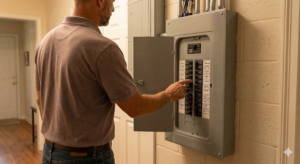
Inspect Your Circuit Breaker
Your HVAC system typically uses two breakers—one for the indoor air handler and one for the outdoor condenser. Head to your electrical panel and look for:
Tripped breakers: A tripped breaker sits in the middle position between “on” and “off,” or may show a red indicator. If you find one, flip it fully to “off,” then back to “on.”
Multiple trips: If the breaker trips again immediately or within a few minutes, stop. Repeated tripping indicates an electrical problem that needs professional diagnosis. Don’t keep resetting it.
Labeled breakers: Look for labels like “AC,” “HVAC,” “Air Handler,” or “Condenser.” If your panel isn’t labeled, the HVAC breakers are typically 20-40 amp double breakers.
Check Your Air Filter
A severely clogged filter can cause your system to overheat and shut down as a safety measure.
Locate your filter: Usually found in the return air grille, at the air handler, or in a filter slot in your ductwork.
Assess the condition: If you can’t see light through it, or if it’s visibly caked with dust and debris, it’s overdue for replacement.
Replace if necessary: Put in a fresh filter and give your system 15-20 minutes to reset before trying to restart.
Inspect the Outdoor Unit
If it’s safe to go outside (and you have a flashlight), take a quick look at your condenser:
Is it running? If the indoor fan runs but the outdoor unit is silent, the problem is likely outside—possibly a capacitor, contactor, or compressor issue.
Is it blocked? Check for debris, overgrown vegetation, or anything restricting airflow around the unit.
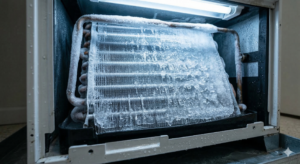
Is ice present? Ice on the refrigerant lines or the unit itself indicates a problem—usually low refrigerant or airflow restriction. If you see ice, turn the system off and call for service.
Is the disconnect pulled? There’s an electrical disconnect box near your outdoor unit. Make sure it hasn’t been accidentally switched off.
Step 2: Determine If It’s a True Emergency
Not every AC failure at night requires emergency service. Here’s how to assess your situation:
True HVAC Emergencies—Call Now
Burning smell or visible smoke: Turn off your system immediately at the thermostat AND the breaker. This could indicate an electrical fire. If you see smoke or the smell is strong, evacuate and call 911 first, then your HVAC company.
Gas smell (rotten eggs/sulfur): If you have a gas furnace and smell gas, leave your home immediately. Don’t flip any switches or use your phone inside. Call your gas company’s emergency line from outside, then call 911 if needed.
Water actively flooding: If your condensate drain has backed up and water is pouring into your home, you need to stop the damage. Turn off the system and call for emergency service to prevent ceiling collapse, floor damage, or electrical hazards.
Extreme heat with vulnerable occupants: If temperatures are dangerous (90°F+) and you have infants, elderly family members, people with medical conditions, or pets that can’t be relocated, this becomes a health emergency.
Complete failure during heat advisory: When the National Weather Service issues a heat advisory for the Summerville area and your AC is completely non-functional, waiting until morning could be dangerous.
Urgent But Can Wait Until Morning
System not cooling efficiently: If the AC runs but doesn’t cool well, you can likely make it through the night with fans and open windows (if outdoor temps allow).
Intermittent operation: A system that cycles on and off or works sometimes is frustrating but not dangerous. Document what’s happening to help your technician diagnose faster.
Strange noises without other symptoms: Grinding, squealing, or banging sounds warrant prompt attention but don’t require a 3 AM service call unless accompanied by burning smells or system shutdown.
Thermostat issues: If you suspect the thermostat is the problem, you can often wait for regular business hours.
The Honest Truth About Emergency Calls
Here’s something most HVAC companies won’t tell you: emergency service calls cost significantly more than regular appointments—often $150-$300 extra just for the after-hours response, plus regular repair costs.
At Coastal Carolina Comfort, we’ll always respond when you truly need us. But we’ll also be honest with you on the phone. If your situation can safely wait until morning, we’ll tell you—and we’ll get you first on the schedule. We’d rather save you money and fix it right than charge emergency rates for something that isn’t urgent.
Step 3: How to Stay Cool While You Wait
Whether you’re waiting until morning or waiting for an emergency technician to arrive, here’s how to stay as comfortable as possible:
Maximize Air Circulation
Use every fan you have: Box fans, ceiling fans, portable fans—get air moving. Position box fans in windows to pull cooler night air in (if outdoor temps are lower than inside).
Open interior doors: This allows whatever cool air remains to circulate throughout the house rather than getting trapped in individual rooms.
Create a cross-breeze: If outdoor temperatures are cooler than inside (common in early morning hours), open windows on opposite sides of your home to create airflow.
Minimize Heat Gain
Close blinds and curtains: Even at night, this helps insulate against outdoor heat. During the day, this is critical—especially on south and west-facing windows.
Turn off unnecessary lights: Incandescent bulbs generate significant heat. LED bulbs are better, but turning off what you don’t need still helps.
Avoid using the oven or stove: The last thing you need is more heat. Opt for cold meals, microwave, or outdoor grilling.
Postpone laundry and dishwashing: These appliances generate heat and humidity.
Cool Your Body, Not the House
When you can’t cool the space, focus on cooling yourself:
Cold water: Drink plenty of it. Dehydration makes heat feel worse and can become dangerous.
Cool showers or baths: A lukewarm (not ice cold) shower lowers your body temperature effectively.
Wet towels: Drape a cool, damp towel around your neck or on your forehead.
Ice packs: Apply to pulse points—wrists, neck, ankles—where blood vessels are close to the surface.
Cotton clothing: Wear loose, light-colored, breathable fabrics. Or less clothing, if privacy allows.
Relocate If Necessary
Sometimes the best solution is temporary relocation:
Move to the lowest level: Heat rises, so basements and ground floors stay cooler.
Consider a hotel: If temperatures are dangerous and you have vulnerable family members, a night in an air-conditioned hotel room is worth the cost.
Stay with family or friends: A Lowcountry neighbor with working AC can be a lifesaver—literally.
Cooling centers: During extreme heat events, Dorchester County and the City of Summerville sometimes open public cooling centers. Check local news or government websites.
Step 4: What to Expect From Emergency HVAC Service
If you’ve determined you need emergency service, here’s what the process typically looks like:
The Phone Call
When you call for emergency service, be ready to describe:
- What happened: Did the system stop suddenly? Gradually lose cooling? Make unusual noises?
- What you’ve checked: Thermostat, breakers, filter—let them know what you’ve already ruled out
- Any unusual symptoms: Smells, sounds, water, ice
- Your system type and age: If you know it
- Who’s in the home: Mention if you have infants, elderly, or medically vulnerable occupants
This information helps the dispatcher prioritize your call and helps the technician arrive prepared.
Response Time
Emergency response times vary based on:
- Time of night: 10 PM calls typically get faster response than 3 AM calls
- Current demand: During heat waves, every HVAC company in Summerville gets slammed
- Your location: Technicians respond from home, so proximity matters
- Severity: True safety emergencies (gas leaks, electrical fires) get prioritized
At Coastal Carolina Comfort, we aim for 2-4 hour response times on emergency calls, though extreme circumstances can extend that. We’ll give you an honest estimate when you call.
The Service Visit
The technician will:
- Assess the situation: Confirm the symptoms and check what you’ve already checked
- Diagnose the problem: Use tools and expertise to identify the failure point
- Explain your options: What’s wrong, what it takes to fix it, and what it costs
- Make repairs if possible: Many common failures can be fixed on the spot if parts are available
- Provide temporary solutions: If parts aren’t available, they may be able to get you partial cooling until a full repair can be completed
Emergency Service Costs
Be prepared for higher costs on emergency calls:
- After-hours service fee: $150-$300 on top of regular rates
- Diagnostic fee: $80-$150 to identify the problem
- Repair costs: Vary widely based on what’s wrong
- Parts markup: Emergency parts may cost more if sourced outside normal supply chains
We know emergency repairs are expensive and stressful. That’s why we’re always transparent about costs before we do any work. No surprises.
Common Causes of Sudden AC Failure
Understanding what might have gone wrong can help you communicate with your technician and make informed decisions:
Capacitor Failure
What it does: Capacitors store electrical energy to help motors start and run. Your system has capacitors for both the compressor and fan motors.
Why it fails: Capacitors degrade over time, especially in hot climates. Summerville’s heat accelerates this wear significantly.
Symptoms: System hums but doesn’t start, fan runs but compressor doesn’t (or vice versa), or system struggles to start then shuts off.
Repair cost: $150-$400 including labor—one of the more affordable emergency repairs.
Contactor Failure
What it does: Contactors are electrical switches that turn your compressor and fan motors on and off.
Why it fails: The contact points wear, pit, and corrode over time—especially in humid environments like Summerville.
Symptoms: Outdoor unit doesn’t respond at all, or you hear clicking but nothing starts.
Repair cost: $150-$350 including labor.
Compressor Failure
What it does: The compressor is the heart of your AC—it pressurizes refrigerant and circulates it through the system.
Why it fails: Electrical issues, refrigerant problems, overheating, or simply age and wear.
Symptoms: Outdoor unit runs but doesn’t cool, system trips breakers repeatedly, or loud unusual noises from the outdoor unit.
Repair cost: $1,500-$3,000+. At this price point, replacement often makes more sense, especially for older systems.
Refrigerant Leak
What it does: Refrigerant absorbs heat from your home and releases it outside. Without adequate refrigerant, cooling stops.
Why it fails: Corrosion (common in humid climates), vibration damage, or manufacturing defects in coils or lines.
Symptoms: Gradual loss of cooling, ice on refrigerant lines, hissing sounds near the indoor or outdoor unit.
Repair cost: $200-$1,500+ depending on leak location and refrigerant type. R-22 systems cost significantly more due to refrigerant scarcity.
Frozen Evaporator Coil
What it does: The evaporator coil absorbs heat from your home’s air. When it freezes, airflow stops and cooling fails.
Why it fails: Low refrigerant, restricted airflow (dirty filter, blocked returns), or blower motor problems.
Symptoms: Ice visible on refrigerant lines, reduced airflow, water leaks when ice melts.
Repair cost: Varies widely based on root cause—could be a $20 filter or a $1,000+ refrigerant leak repair.
How to Prevent Emergency Breakdowns
The best emergency is the one that never happens. Here’s how to reduce your risk:
Schedule Regular Maintenance
Twice-yearly professional maintenance catches most problems before they become emergencies:
- Spring tune-up: Prepares your system for cooling season
- Fall tune-up: Prepares for heating season and addresses wear from summer
Our Comfort Club members get both visits included, plus priority scheduling if emergencies do occur—meaning shorter wait times when you need us most.
Change Filters Religiously
A clogged filter is the most common preventable cause of AC failure. In Summerville’s dusty, pollen-heavy environment:
- Check monthly during peak season
- Replace every 30-60 days when running constantly
- Don’t cheap out—quality pleated filters protect your system better
Listen to Your System
Your AC usually warns you before it fails completely. Don’t ignore:
- Strange noises (grinding, squealing, banging)
- Weak airflow or warm air
- Unusual odors
- Short-cycling (frequent on/off)
- Rising energy bills
Related: Learn the 5 warning signs your AC is about to break down
Address Small Problems Promptly
A $200 repair today prevents a $2,000 emergency next month. When something seems off, get it checked. Waiting rarely makes HVAC problems cheaper.
Know Your System’s Age
Systems over 10 years old are at higher risk for sudden failure. If your equipment is aging, consider:
- More frequent maintenance
- Setting aside funds for eventual replacement
- Proactive replacement before catastrophic failure
Coastal Carolina Comfort Emergency Services
When you need emergency HVAC service in Summerville, here’s what you get with Coastal Carolina Comfort:
24/7 availability: Real emergencies don’t wait for business hours, and neither do we.
Honest assessment: We’ll tell you if it’s a true emergency or if it can wait—even if that means less money for us.
Transparent pricing: You’ll know the cost before we do any work. No 3 AM surprises.
Experienced technicians: Our team knows Lowcountry HVAC systems inside and out. We’ve seen it all.
Comfort Club priority: Members get moved to the front of the emergency queue—because loyalty should mean something.
Save our number: 843-256-6476—you’ll be glad you have it when you need it.
Frequently Asked Questions
How much does emergency HVAC service cost in Summerville?
Emergency service typically includes an after-hours fee of $150-$300 on top of standard diagnostic and repair costs. Total costs depend on what’s wrong—a capacitor replacement might run $300-$500 total, while a compressor failure could exceed $2,000. At Coastal Carolina Comfort, we provide upfront pricing before any work begins.
Should I turn off my AC if it’s not cooling?
If the system runs but doesn’t cool, you can leave it running temporarily—it’s still circulating air. However, if you notice burning smells, hear grinding or banging noises, see ice forming, or the system is short-cycling (turning on and off rapidly), turn it off to prevent further damage.
How long can I safely go without AC in Summerville summer heat?
For healthy adults, discomfort is the main concern for the first 12-24 hours. However, temperatures above 90°F become dangerous more quickly for infants, elderly individuals, those with heart conditions or respiratory issues, and pets. If you have vulnerable household members and no AC, consider relocating to a cooled environment.
Will my homeowner’s insurance cover emergency AC repair?
Standard homeowner’s insurance typically doesn’t cover HVAC repairs due to normal wear and tear or mechanical failure. However, if your AC was damaged by a covered event (lightning strike, fire, fallen tree), your policy may help. Check with your insurance provider for specifics.
What’s the fastest way to get emergency HVAC service?
Call directly rather than submitting online forms—phones get answered faster after hours. Have your system information ready, clearly describe the symptoms and any safety concerns, and mention if vulnerable individuals are in the home. Being a maintenance plan member often gets you priority scheduling.