★★★★★
“Response time is like no other! Thorough in explaining what was wrong with our ac unit, along with pricing and how we can make payments.”
Karen Chewning · July 19, 2026

Coastal Carolina Comfort provides residential AC repair in Charleston. A repair diagnostic starts with the simple causes first: filter, coils, drain line, and electrical connections, before anything gets recommended. You see what the tech sees, with photos, and nothing is repaired until you approve it.
Before approving work, ask for the diagnosis, recommended repair, and price in writing. After an approved repair is completed, ask the technician to recheck the system and explain what was corrected.
Warm or inconsistent air can involve airflow, electrical, refrigerant-related, or coil conditions. A diagnostic identifies the cause.
Water near the indoor unit or ice on the system can be connected to drainage, airflow, or coil conditions. Turn the system off if water could damage the home.
Frequent starts and stops can have more than one cause. A technician can check controls, airflow, system condition, and other factors.
New buzzing, rattling, grinding, or squealing should be inspected before the condition gets worse.
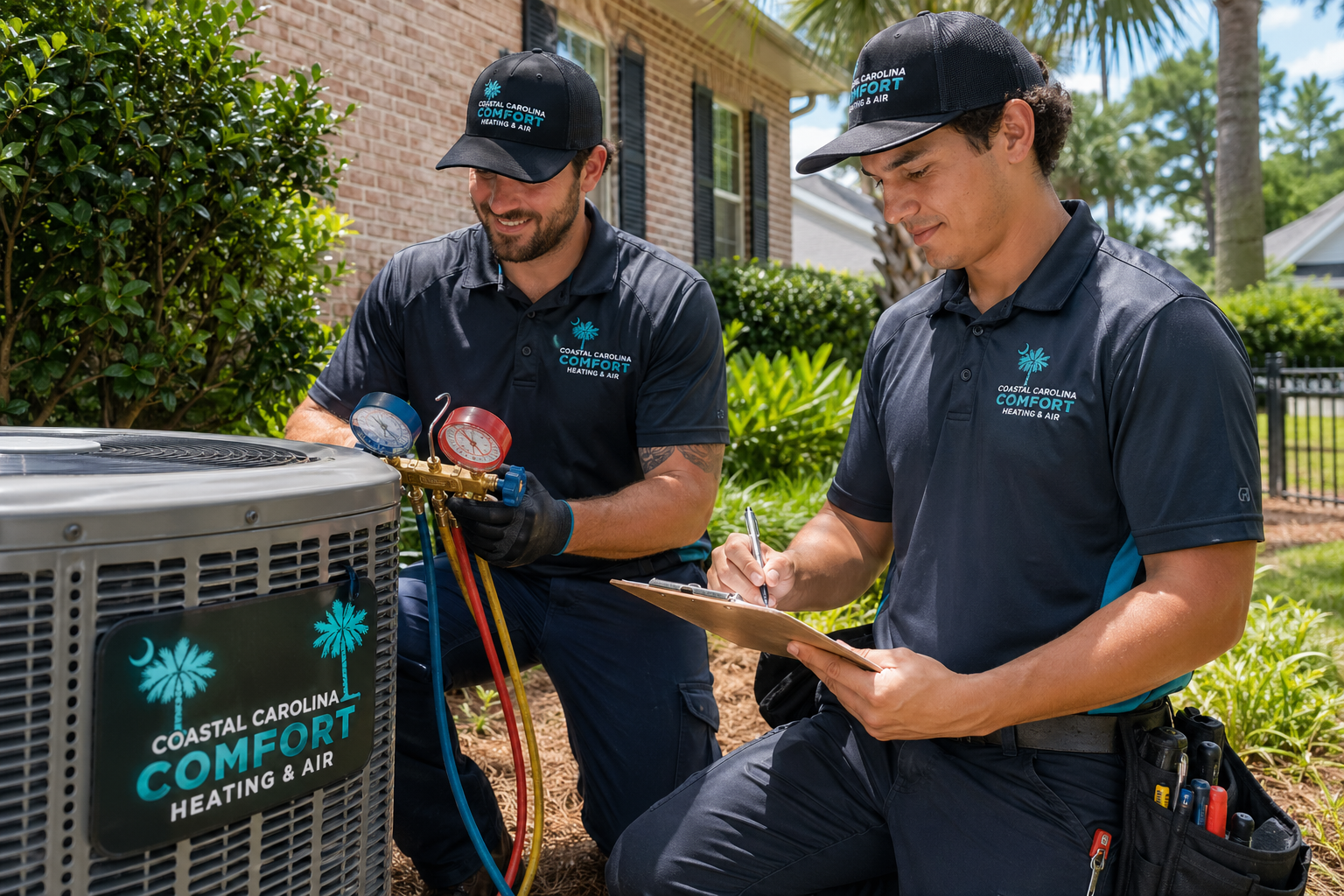
When an air conditioner is not cooling correctly, the symptom alone does not prove which component is at fault. Warm air, short cycling, water near the indoor unit, unusual noise, or a system that will not start can involve airflow, drainage, electrical, refrigerant-related, control, or equipment conditions.
A diagnosis-first visit separates the symptom from the cause. The technician checks the system, explains the findings, and presents the recommended work before you decide whether to proceed.
BOOK AN AC DIAGNOSTICSeveral conditions can produce the same symptom. These categories are a starting point, not a diagnosis.
A dirty filter, blocked return, blower issue, or coil condition can reduce airflow and comfort.
Thermostat, capacitor, contactor, wiring, disconnect, or other electrical conditions can keep equipment from starting or operating correctly.
Drainage restrictions, frozen coils, dirt buildup, or other coil conditions can affect cooling and create water near the system.
A diagnostic can determine whether pressures, temperatures, coils, valves, or leaks require further attention.
Charleston's hot, humid climate can increase the sensible and latent cooling load on a home. Humidity control depends on equipment sizing, airflow, runtime, duct condition, and the building envelope, so a comfort problem should be evaluated at the system and home level.
Outdoor equipment in coastal environments may also be exposed to moisture and airborne salt. Corrosion or coil condition should be documented during inspection rather than assumed from a neighborhood or distance from the water.
Older construction, additions, crawl spaces, elevated equipment, access limits, and previous modifications can change the diagnostic path. Share any known history with the technician and ask what was inspected. For related planning, see the flood-zone and equipment-elevation guide.
The goal is to identify the cause, show you the findings, and give you the information needed to approve or decline the recommended work.
The diagnostic starts with the filter, coils, drain line, and electrical connections before anything gets recommended.
You see what the technician sees, with photos, and receive an explanation of the diagnosed condition.
Ask for the diagnosis, recommended repair, and price in writing. Nothing is repaired until you approve it.
After approved work is completed, ask the technician to recheck the system and explain what was corrected.
The correct repair depends on the equipment, installation, controls, and diagnosed condition.
Split systems combine indoor and outdoor equipment. Diagnosis may include airflow, coils, drainage, controls, electrical components, and refrigerant-circuit checks.
Heat pumps provide heating and cooling. Their controls and operating modes can affect the steps used to isolate a cooling problem.
Ductless systems have model-specific controls and components. Error codes and operating history can help guide the inspection.
Packaged equipment places major components in one cabinet. Access, installation, and equipment condition shape the service recommendation.
Use the symptom guides below to understand immediate precautions and what a technician may inspect.
Warm air can involve airflow, electrical, refrigerant-related, coil, or control conditions. See the warm-air troubleshooting guide.
Water can involve the drain, pan, airflow, or ice on a coil. Turn the system off if water could damage the home, then see the AC water-leak guide.
Frequent cycling needs diagnosis because thermostat, airflow, electrical, equipment, and sizing factors can overlap. See the short-cycling guide.
Buzzing, rattling, grinding, or squealing can have different causes. See the AC noise guide and avoid operating equipment if the noise suggests active damage.
A clear repair decision starts with written findings and a recommendation you understand.
Ask the technician to connect the symptom to the tested condition and show the supporting photos or readings.
Request the repair scope and price in writing before approving work.
If repair and replacement are both being discussed, ask how equipment condition, repair history, warranty coverage, refrigerant options, comfort, and sizing affect the recommendation.
After approved work, ask for a system recheck and an explanation of what was corrected.
There is no single age, price, or percentage rule that decides every system. Compare the diagnosed condition, repair history, equipment age and condition, warranty coverage, refrigerant options, comfort, efficiency goals, and whether the system is properly sized for the home.
Ask for the repair recommendation and price in writing, then compare that option with a replacement proposal only when replacement is a reasonable alternative. See the AC repair-versus-replacement guide for a structured decision framework.
Describe what the system is doing, then review the diagnosis and written recommendation before approving work.
📞 (843) 708-8735