
My AC Won’t Turn On: Troubleshooting Before You Call a Technician
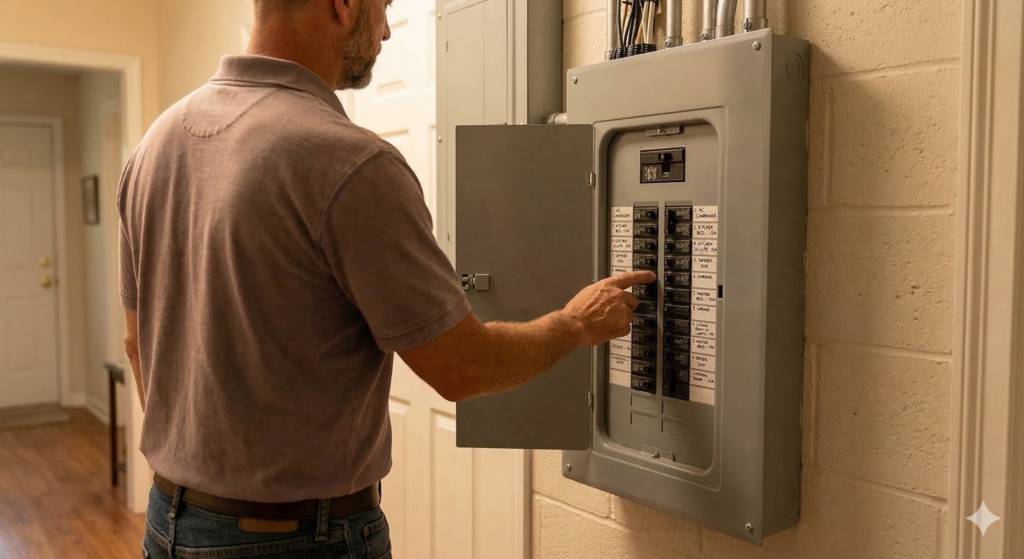
My AC Won’t Turn On: Troubleshooting Before You Call a Technician When your AC system won’t turn on at all — no fan, no compressor, no response to thermostat changes — the cause is either an interruption in the electrical supply reaching the system (tripped breaker, blown fuse, safety switch activation, thermostat failure) or a failure of a startup component within the system itself (dead capacitor, burned contactor, failed control board, or seized compressor). About 30% of “AC won’t start” calls that Coastal Carolina Comfort responds to across South Carolina are resolved by the homeowner checks described below. The remaining 70% require professional diagnosis and repair. Coastal Carolina Comfort provides same-day diagnostic service for systems that won’t start across Summerville, Charleston, Columbia, and the entire Lowcountry and Midlands. Our NATE-certified technicians carry the common startup components — capacitors, contactors, control boards — needed to restore your system in a single visit. Call (843) 708-8735. Homeowner Troubleshooting: 6 Checks Before You Call These checks are safe for any homeowner to perform and take less than 10 minutes total. Work through them in order. Check 1: Thermostat Power and Settings Start at the thermostat — it’s the most common cause of a system that appears dead. Verify it has power. If the display is blank, the thermostat has lost power. Check whether it uses batteries (replace them) or is wired to the system (a tripped breaker or blown fuse at the air handler may have cut power to the thermostat). Verify the settings. Ensure the system is set to “cool” (not “off,” “heat,” or “fan only”), the set temperature is at least 3–5°F below the current room temperature, and any scheduling or away modes aren’t overriding your settings. Try a hard reset. Turn the thermostat completely off, wait 30 seconds, then turn it back to cooling mode. For smart thermostats, a power cycle or factory reset can resolve software glitches that prevent the system from responding. If the thermostat appears to be working correctly — display is on, settings are correct, it shows “cooling” — but the system doesn’t respond, the issue is downstream. Check 2: Circuit Breakers Your AC system typically uses two circuit breakers in your main electrical panel: one for the indoor air handler and one for the outdoor condenser unit. Check both. Look for a tripped breaker. A tripped breaker sits in the middle position — not fully “on” and not fully “off.” Push it firmly to “off” first, then back to “on.” If the breaker holds and the system starts, monitor it. If the breaker trips again within minutes, do not reset it a third time — the system has an electrical fault that requires professional diagnosis. Check for a blown fuse at the air handler. Some air handlers have a small fuse (typically 3–5 amp) on the control board that protects the low-voltage circuit. If this fuse blows, the thermostat loses its ability to communicate with the system. This fuse is accessible inside the air handler’s front panel — but if you’re not comfortable opening the panel, skip this check and call for service. Check 3: Emergency Shutoff Switch Many AC installations include a wall-mounted emergency shutoff switch that looks like a standard light switch — typically located near the indoor air handler or in the utility closet. If someone accidentally flipped this switch off (during maintenance, painting, or cleaning), the entire system is disabled. Check for a switch near the air handler that might be in the “off” position. Flip it on and see if the system responds. Check 4: Condensate Drain Safety Switch Many South Carolina HVAC installations include a float switch on the condensate drain line that shuts the system down when the drain line clogs and water backs up. This is a safety feature designed to prevent water damage — but it also means a simple drain clog can make your entire AC system unresponsive. If your system has a visible float switch on the drain line (a small device with a float attached to the PVC pipe near the air handler), check whether standing water is visible in the drain pan. If the pan is full, the float switch has activated. Clearing the drain line may restore system operation. Our guide on AC leaking water inside your house covers drain line clearing in detail. Check 5: Outdoor Disconnect Box Near your outdoor condenser unit, there’s a disconnect box — a small metal box mounted on the wall within a few feet of the unit. This box contains either a pull-out fuse block or a breaker that supplies power specifically to the outdoor unit. Check that the disconnect is in the “on” position and that the fuses (if applicable) haven’t blown. A blown disconnect fuse is a common cause of a system where the indoor fan runs but the outdoor unit doesn’t respond at all. Check 6: Wait 5 Minutes After Any Reset Modern AC systems have built-in time delays that prevent the compressor from restarting too quickly after a shutdown — rapid cycling can damage the compressor. If you’ve reset a breaker, flipped a switch, or changed the thermostat, wait at least 5 minutes before concluding the system isn’t responding. The delay is protecting your equipment. If the Homeowner Checks Don’t Work: Common Professional Repairs When all homeowner-accessible checks fail to restore the system, one of these mechanical or electrical failures is typically the cause. Failed Capacitor The run capacitor provides the electrical boost the compressor and fan motors need to start. When it fails, the motors can’t overcome their starting inertia. You might hear a clicking sound from the outdoor unit as the contactor engages, followed by a hum and then silence — the system is trying to start but the capacitor can’t deliver. Capacitor failure is the single most common reason an AC system won’t start. It’s also one of the most affordable repairs: $150–$300 including parts and labor. In South Carolina’s long cooling season, capacitors endure more
AC Frozen Evaporator Coil: Why Your Air Conditioner Ices Up in Humid SC Weather
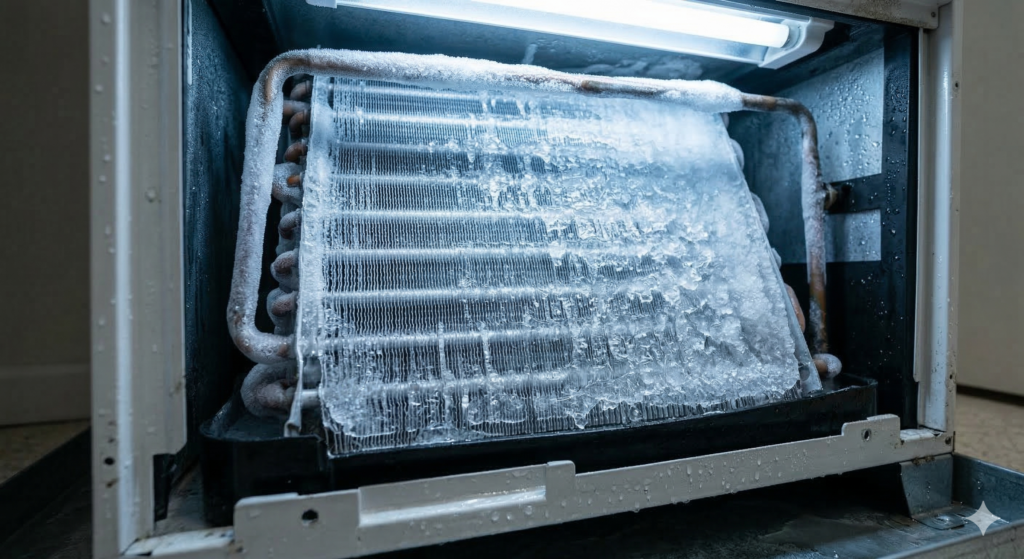
AC Frozen Evaporator Coil: Why Your Air Conditioner Ices Up in Humid SC Weather A frozen evaporator coil occurs when the coil’s surface temperature drops below 32°F and moisture from your indoor air freezes on contact, building a layer of ice that blocks airflow and prevents heat absorption. The most common causes are restricted airflow from a clogged filter or dirty coil, low refrigerant charge from a leak, and blower motor failure that reduces air volume across the coil. In South Carolina’s high-humidity environment, frozen coils are both more common and more damaging than in drier climates — the heavy moisture content in Lowcountry and Midlands air means ice builds faster and produces more water when it melts. Coastal Carolina Comfort diagnoses and repairs frozen evaporator coils across Summerville, Charleston, Columbia, and all of South Carolina. Our NATE-certified technicians identify the root cause — not just thaw the ice — and provide upfront pricing before any repair begins. Call (843) 708-8735. How a Frozen Coil Damages Your AC System A frozen evaporator coil isn’t just a temporary inconvenience — it creates a cascade of problems that can damage multiple components if the system continues running. The compressor is at greatest risk. Under normal operation, liquid refrigerant enters the evaporator coil, absorbs heat, and exits as a gas before returning to the compressor. When the coil freezes, this heat exchange stops. Liquid refrigerant passes through the coil without vaporizing and reaches the compressor in liquid form. Compressors are designed to pump gas, not liquid. Liquid refrigerant entering the compressor — called liquid slugging — can crack valves, damage pistons, and cause catastrophic compressor failure. A compressor replacement typically costs $1,500–$3,000+. Water damage when the ice melts. A frozen coil accumulates a surprising amount of ice. When the system shuts off or the ice begins to melt, the resulting water can easily overwhelm the drain pan — especially if the drain line is also partially clogged (a common combination in South Carolina). Water overflows onto floors, into ceilings, or through walls. Read our guide on AC leaking water inside your house for immediate steps if you’re already dealing with water. Reduced system life. Repeated freeze-thaw cycles stress the coil fins, degrade the coil’s protective coating, and can eventually cause refrigerant leaks in the coil itself — one of the most expensive AC repairs. The 5 Causes of Frozen Evaporator Coils in South Carolina 1. Clogged Air Filter This is the most common cause — and the most preventable. A clogged filter restricts the volume of warm air passing over the evaporator coil. Without sufficient warm air, the coil’s temperature drops below the freezing point. Moisture in the air freezes on contact, and the ice layer further restricts airflow, accelerating the freeze. In South Carolina, where pet dander, pollen, dust, and high humidity all contribute to faster filter loading, a filter that might last 90 days in a drier climate may need replacement every 30 days during peak cooling season. The fix: Replace the filter, turn the system off for 2–3 hours to allow complete thawing, then restart. If the system runs normally and doesn’t refreeze, the filter was the sole cause. If ice returns within 24 hours, there’s an additional underlying issue. 2. Low Refrigerant From a Leak Low refrigerant charge causes the evaporator coil’s temperature to drop below normal operating range. When the coil is too cold, moisture freezes on its surface instead of condensing into liquid and draining away. The ice insulates the coil, making it even colder, and the freeze accelerates until the coil is completely encased. This is the most common mechanical cause of frozen coils, and it requires professional repair. A technician will thaw the coil, test for leaks, repair the leak source, and recharge the system to manufacturer specifications. Simply adding refrigerant without fixing the leak guarantees the problem will return. In South Carolina’s coastal environment, refrigerant line corrosion from salt air is a significant contributor to leaks — particularly on homes within a few miles of Charleston Harbor, James Island, or the Isle of Palms. 3. Dirty Evaporator Coil Even with regular filter changes, the evaporator coil accumulates dust, biological growth, and particulate matter over time — especially in South Carolina’s humid environment where mold and mildew thrive on the constantly damp coil surface. A dirty coil insulates itself from the warm air passing over it. The coil can’t absorb enough heat, its temperature drops, and the same freeze cycle begins. The difference is that a dirty-coil freeze develops more gradually than a low-refrigerant freeze — you might notice declining performance for weeks before ice becomes visible. The fix: Professional coil cleaning. This requires access to the indoor unit, coil-specific cleaning solution, and careful handling to avoid damaging the delicate aluminum fins. Coil cleaning is typically included in comprehensive maintenance visits that prevent frozen coils and costs $150–$300 as a standalone service. 4. Blower Motor Failure or Reduction The blower motor moves air across the evaporator coil. If it fails entirely, airflow stops completely and the coil freezes rapidly. A partially failing motor — running at reduced speed due to worn bearings, a failing capacitor, or a winding issue — moves insufficient air, causing a slower but equally damaging freeze. In multi-speed systems, a motor stuck on low speed may provide enough airflow for mild days but insufficient volume on high-demand days, creating intermittent freezing that’s harder to diagnose. 5. Collapsed or Blocked Return Ductwork If the return duct — the large duct that carries warm room air back to the air handler — is crushed, disconnected, or severely blocked, the volume of air reaching the evaporator coil drops below the minimum threshold. This can happen when stored items are placed on flex duct in an attic, when a duct joint separates due to age or poor installation, or when a return vent is blocked by furniture or closed. This cause is more common in homes with ductwork routed through attics — a standard
Why Is My AC Leaking Water Inside My House?
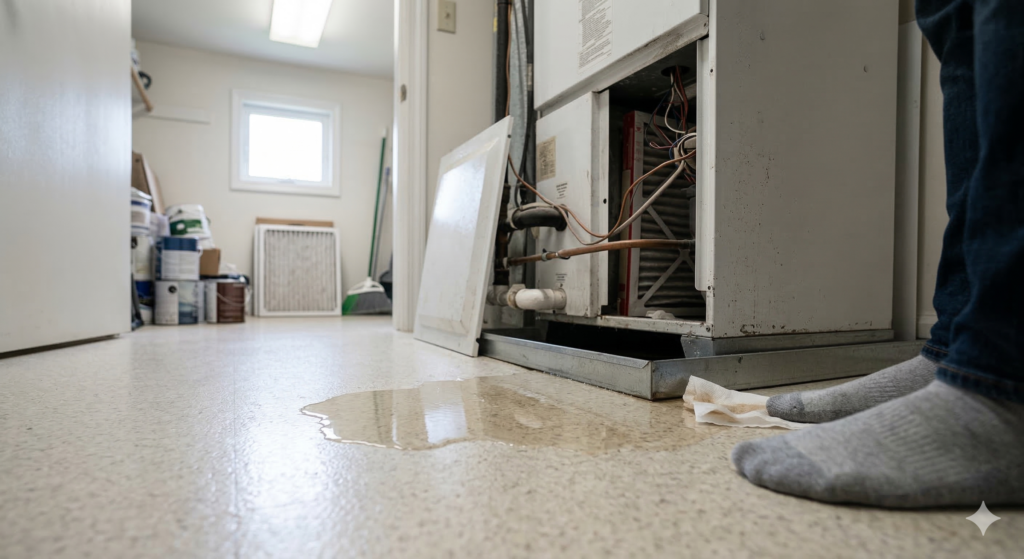
Why Is My AC Leaking Water Inside My House? Water pooling around your indoor AC unit is almost always caused by a clogged condensate drain line, a cracked or overflowing drain pan, or a frozen evaporator coil that’s melting faster than the drainage system can handle. In South Carolina’s high-humidity climate, your AC removes significantly more moisture from the air than systems in drier regions — often producing 5–20 gallons of condensate per day during peak summer. That volume of water needs a clear path out of your home, and when anything blocks or breaks that path, the water ends up on your floors. Coastal Carolina Comfort diagnoses and repairs AC water leaks across Summerville, Charleston, Columbia, and the entire South Carolina Lowcountry and Midlands. Most condensate-related repairs are completed in a single same-day visit. Call (843) 708-8735. Why South Carolina Homes See More AC Water Leaks Understanding why this problem is so common in our region starts with understanding how much moisture your AC handles. A residential air conditioning system in South Carolina processes far more humidity than the same system would in Colorado, Arizona, or even the mid-Atlantic states. When warm, humid Lowcountry or Midlands air passes over the cold evaporator coil, moisture condenses on the coil’s surface — the same way water beads on a cold glass on a summer day. That condensation collects in a drain pan below the coil and flows through a drain line to the outside of your home. During a typical South Carolina summer day with 80%+ relative humidity, your system may remove 5–20 gallons of water from your indoor air. That’s a tremendous amount of water flowing through a ¾-inch PVC pipe every day for six months. The warm, wet environment inside that drain line is ideal for algae, mold, and bacterial growth — which is exactly what clogs it. This is why AC water leaks are one of the most common repair calls Coastal Carolina Comfort receives across the region, and why regular AC maintenance that includes drain line treatment is so important here. The 5 Most Common Causes of AC Water Leaks 1. Clogged Condensate Drain Line This is the cause in roughly 70% of AC water leak calls we respond to across South Carolina. The drain line — typically a ¾-inch PVC pipe running from the drain pan to an exterior exit point — becomes blocked by algae, mold, rust, or mineral deposits. Water backs up behind the clog, fills the drain pan, and overflows onto your floors. South Carolina’s humidity makes drain clogs far more common than in drier climates because the warm, constantly wet interior of the drain line is a perfect incubator for biological growth. In the Lowcountry, we see drain lines that clog within 3–6 months of cleaning if no preventive treatment is applied. The fix: A technician clears the clog using a wet/dry vacuum, nitrogen flush, or manual snake, then treats the line with an algaecide tablet or solution to inhibit regrowth. This is one of the most affordable AC repairs — typically $100–$200. The best prevention is flushing the drain line with vinegar monthly during cooling season and scheduling professional treatment during your annual maintenance visit. 2. Cracked or Rusted Drain Pan The drain pan sits beneath the evaporator coil and catches condensation before it reaches the drain line. Over time — especially in the high-moisture environment inside a South Carolina air handler — metal drain pans rust through and plastic pans can crack. When the pan is compromised, water bypasses the drain line entirely and drips directly onto the floor, into the ceiling, or into the crawl space below. The fix: Drain pan replacement. Secondary drain pans (the backup pan beneath the air handler) are accessible and relatively inexpensive to replace. Primary drain pans (integrated into the coil assembly) are more involved and may require partial disassembly of the air handler. Costs typically range from $200–$600 depending on accessibility and pan type. 3. Frozen Evaporator Coil Melting When the evaporator coil freezes — due to low refrigerant, restricted airflow, or a blower motor failure — the ice buildup can be substantial. When the system shuts off or the ice begins to melt, the volume of water released can overwhelm the drain pan and flood the area around the unit. This is different from a normal condensate leak because the water volume is much larger and more sudden. If you see ice on the indoor unit or the copper refrigerant lines, you’re dealing with a coil freeze — not a simple drain clog. Read our complete guide on frozen evaporator coils in humid South Carolina weather. The fix: Turn the system off to allow the coil to thaw completely (2–3 hours minimum). Place towels or a shallow pan to catch the meltwater. Then call for professional diagnosis to identify why the coil froze in the first place — the freeze is a symptom, not the root cause. 4. Disconnected or Damaged Drain Line The PVC drain line can become disconnected from the drain pan fitting, cracked from physical impact, or separated at a joint due to poor installation or settling of the home. When this happens, condensate exits the system but misses the drain path — flowing instead into ceilings, walls, or onto floors at the point of disconnection. This is more common in homes where the air handler is located in the attic — found frequently across Charleston, Summerville, and Columbia — because the drain line has a longer run and more joints that can separate over time. The fix: Reattach, reseal, or replace the damaged drain line section. This is typically a straightforward repair costing $100–$300 depending on accessibility and the extent of the damage. 5. Condensate Pump Failure Some AC installations — particularly where the air handler is in a basement, crawl space, or interior closet below the level of the exterior drain exit — use a condensate pump to move water uphill to an exit point. When
AC Keeps Turning On and Off: Short Cycling Causes and Fixes in South Carolina
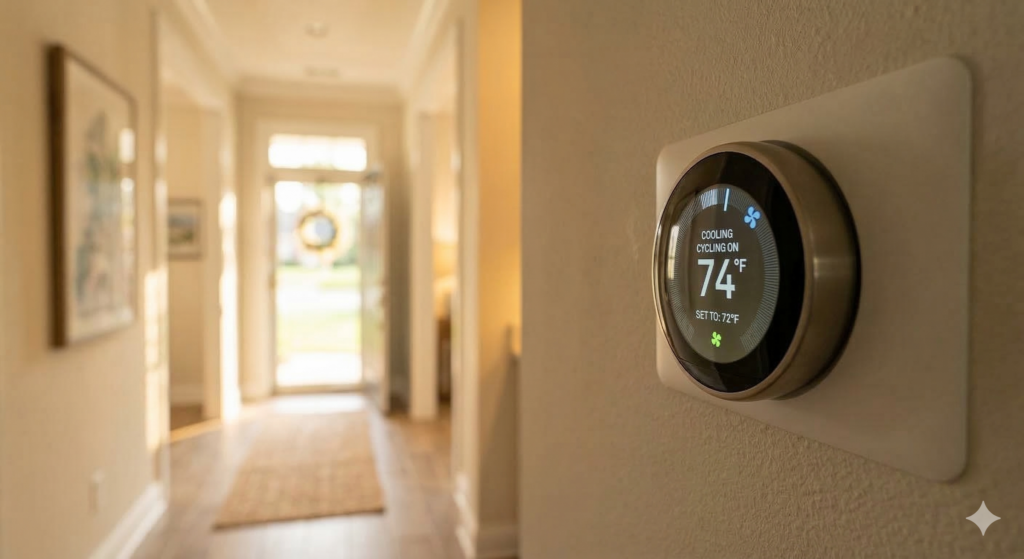
AC Keeps Turning On and Off: Short Cycling Causes and Fixes in South Carolina Short cycling is when your air conditioning system turns on, runs for only a few minutes (typically 2–8 minutes instead of the normal 10–20 minute cycle), shuts off, and then starts again shortly after. This pattern repeats continuously without the system ever completing a full cooling cycle. The most common causes are an oversized AC system, a failing compressor or capacitor, a refrigerant leak that’s triggering low-pressure safety shutoffs, or a thermostat malfunction. Short cycling isn’t just an annoyance — it’s one of the most damaging conditions for your air conditioning system. Coastal Carolina Comfort diagnoses short cycling across Summerville, Charleston, Columbia, and every community we serve in the South Carolina Lowcountry and Midlands. Call (843) 708-8735 for a same-day diagnostic. Why Short Cycling Damages Your AC System Every time your compressor starts, it draws significantly more electrical current than during steady operation — typically 4–8 times its running amperage. In a normal cycle, this startup surge happens a few times per hour. In a short-cycling system, the compressor may start and stop 10–15 times per hour, each time drawing that heavy startup current. This repeated electrical stress overheats the compressor windings, weakens the capacitor faster, increases wear on the contactor, and spikes your energy bills — all while failing to actually cool your home because the system never runs long enough to complete a full cooling cycle. In South Carolina’s climate, where the cooling season runs from April through October, short cycling compounds damage faster than in regions with shorter summers. Six months of short cycling can take years off a compressor’s life. The 7 Most Common Causes of AC Short Cycling 1. Oversized AC System This is the most common cause of chronic short cycling — and the hardest to fix because it’s a design problem, not a component failure. An oversized AC system cools the air near the thermostat quickly but shuts off before it has time to properly cool the rest of the home or adequately remove humidity. Minutes later, the temperature near the thermostat rises again, the system kicks back on, cools briefly, shuts off — and the cycle repeats. In South Carolina, oversized systems create a particularly unpleasant result: the home may reach the set temperature on the thermostat but feel clammy and uncomfortable because the short run times don’t allow the evaporator coil to remove enough moisture from the air. A house at 72°F with 65% indoor humidity feels warmer and stickier than a house at 74°F with 50% humidity. Oversized systems are distressingly common in South Carolina new construction — particularly in Summerville’s Nexton and Cane Bay communities, Lexington’s newer subdivisions, and Daniel Island and Mount Pleasant developments — where builder-grade installations may prioritize cost or use rule-of-thumb sizing rather than Manual J load calculations. The fix for an oversized system is either replacement with a correctly sized unit or, in some cases, installation of a variable-speed system that can modulate its output to match the actual load. 2. Failing or Failed Capacitor A weakening run capacitor can’t deliver sufficient electrical energy to keep the compressor running through a full cycle. The compressor starts, draws heavily on the failing capacitor, and the capacitor’s voltage drops below the threshold — causing the compressor to shut down on an overcurrent safety. The capacitor partially recovers during the off-cycle, the system tries again, and the pattern repeats. This is one of the most common and most affordable AC repairs — typically $150–$300. It’s also one of the easiest to prevent through regular AC maintenance, which includes testing capacitor health before the component fails. 3. Low Refrigerant Triggering Safety Shutoffs When refrigerant levels drop below a certain threshold, the system’s low-pressure safety switch activates and shuts down the compressor to prevent damage. As the system sits idle, pressures equalize enough for the safety switch to reset. The system starts again, runs until pressures drop, and shuts off again — creating a short cycling pattern. Low refrigerant always means a leak. Simply adding refrigerant without repairing the leak creates a recurring problem that worsens as the leak grows. In South Carolina’s humid environment, running a low-charge system also risks freezing the evaporator coil — adding another layer of problems. 4. Frozen Evaporator Coil Ice buildup on the evaporator coil restricts airflow and disrupts the heat exchange process. As ice accumulates, the system’s safety mechanisms may shut it down. The system restarts after partial thawing, runs until ice rebuilds, and shuts down again. In South Carolina’s humidity, a frozen coil is especially problematic because the melting ice produces heavy condensation that can overwhelm the drain pan and flood floors. If you see ice on the indoor unit and your system is short cycling, turn the system off for 2–3 hours to allow complete thawing before calling for diagnosis. 5. Thermostat Malfunction A thermostat with a faulty temperature sensor, dead battery in a wireless sensor, or improper placement can send erratic signals to the system. If the thermostat oscillates between readings — sensing 73°F one minute and 76°F the next — the system responds by cycling on and off in rapid succession. Smart thermostats with multiple sensors, learning algorithms, and Wi-Fi connectivity have more potential failure points than simple programmable models. If short cycling started after a thermostat change or firmware update, the thermostat itself is the likely culprit. 6. Dirty or Blocked Condenser Coil When the outdoor condenser coil can’t release heat effectively — due to dirt buildup, pollen coating, or vegetation growing too close — the system’s high-pressure safety switch can activate and shut down the compressor. After the system cools down briefly, it restarts and the cycle continues. Keeping vegetation cleared 2 feet from the outdoor unit and scheduling annual coil cleaning prevents this cause entirely. 7. Compressor Overheating A compressor that’s failing internally — due to worn bearings, valve leaks, or electrical winding degradation — generates excessive heat during operation.
AC Unit Making Strange Noises: What Each Sound Means and When to Call for Repair
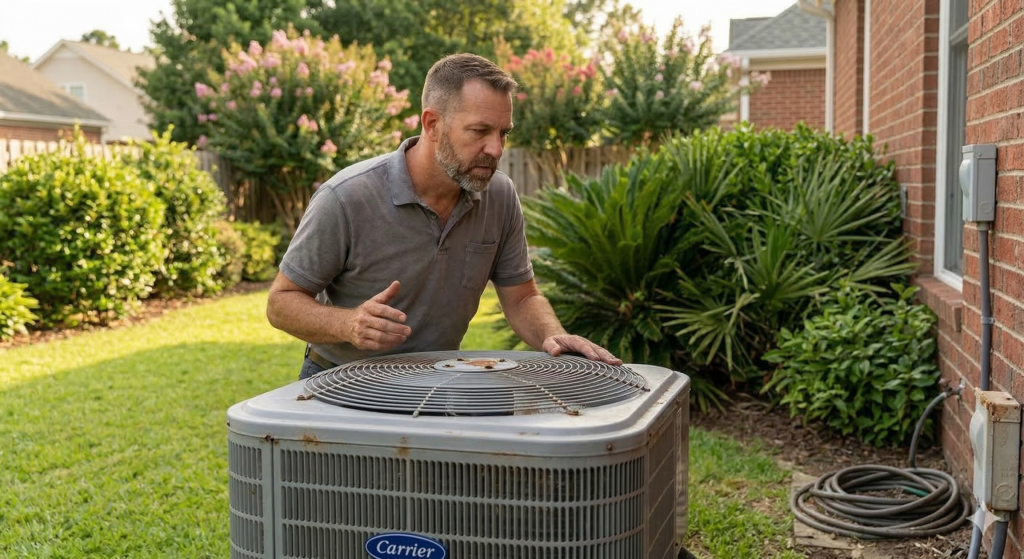
AC Unit Making Strange Noises: What Each Sound Means and When to Call for Repair A healthy air conditioning system produces a consistent, low-level hum during operation. When you hear new sounds — grinding, buzzing, clicking, banging, hissing, or screeching — each noise points to a specific mechanical or electrical problem. Identifying what the sound is and where it’s coming from helps determine whether you need immediate service, can schedule a repair within a few days, or simply have a minor issue that’s easy to resolve. Coastal Carolina Comfort’s NATE-certified technicians diagnose and repair noisy AC systems across Summerville, Charleston, Columbia, and the entire South Carolina Lowcountry and Midlands. We identify the source of the sound, explain what’s causing it, and provide upfront pricing before any work begins. Call (843) 708-8735. A Sound-by-Sound Diagnostic Guide Grinding: Failing Motor Bearings What it sounds like: A metallic grinding, scraping, or growling that gets louder over time. It may be intermittent at first and become constant. Where it comes from: Usually the indoor blower motor or the outdoor condenser fan motor. What’s happening: The motor bearings that allow the shaft to spin freely are wearing out. As the bearings degrade, metal contacts metal, creating the grinding sound. Eventually the motor seizes completely — which turns a $350–$700 motor replacement into a potential compressor failure if the system overheats. Urgency level: Schedule within 1–3 days. A grinding motor can fail at any time. Continuing to run the system accelerates the damage but won’t cause an immediate safety hazard. The longer you wait, the higher the chance the motor seizes during a peak-heat day when you need it most. South Carolina note: The extended cooling season in the Lowcountry and Midlands puts more annual hours on motor bearings than most of the country. A motor that might last 15 years in a cooler climate may wear out in 10–12 years here because it runs 6+ months per year. Buzzing: Electrical Problems What it sounds like: A steady electrical buzz or hum, louder than the system’s normal operating sound. May come from the outdoor unit, indoor unit, or both. What’s happening: Buzzing from the outdoor unit most commonly indicates a failing contactor (the electrical relay that starts the compressor) or loose wiring connections vibrating during operation. Buzzing from the indoor unit may point to a failing transformer, a relay issue, or a blower motor with electrical problems. Urgency level: Schedule within 1–2 days. Electrical issues can worsen without warning. A contactor that’s arcing or buzzing can weld itself shut (causing the system to run nonstop), fail open (causing a complete shutdown), or create a fire risk if left unaddressed. If the buzzing is accompanied by a burning smell, turn the system off at the breaker and call for emergency AC repair in the Lowcountry. Clicking: Capacitor or Control Board Issues What it sounds like: Repeated clicking sounds at startup — the system tries to start, clicks, pauses, tries again, clicks. Or a single click followed by silence instead of the compressor engaging. What’s happening: This is typically a failed run capacitor trying and failing to deliver the electrical boost the compressor needs to start. The click is the contactor engaging, but without sufficient capacitance, the compressor can’t turn over. The system tries repeatedly, clicking each time. Less commonly, clicking indicates a control board relay failure — the electronic brain of the system is sending the start signal but a relay on the board isn’t completing the circuit. Urgency level: Same-day to next-day. The system won’t cool in this state. If the weather is mild, next-day service is fine. In South Carolina summer heat, this is a same-day call. A failed capacitor is one of the quickest and most affordable repairs — typically $150–$300 including parts and labor. Banging or Clanking: Loose or Broken Internal Components What it sounds like: A rhythmic banging, clanking, or knocking — usually from the outdoor unit. The sound follows the fan’s rotation cycle. What’s happening: Something inside the unit is loose and making contact with a moving part. The most common causes are a broken fan blade striking the housing, a loose compressor mounting bolt allowing the compressor to vibrate excessively, or debris (a stick, acorn, or small animal) caught inside the condenser housing. Urgency level: Turn off and schedule same-day. A broken fan blade or loose component can cause escalating damage to other parts with every rotation. Turn the system off at the thermostat and call for service. Do not reach inside the unit to investigate. Hissing or Bubbling: Refrigerant Leak What it sounds like: A persistent hiss from the indoor or outdoor unit, or a bubbling/gurgling sound from the refrigerant lines. What’s happening: Refrigerant is escaping through a hole or crack in the copper lines, coil, or fittings. A hiss indicates gas-phase refrigerant escaping under pressure. A bubbling sound indicates the leak is in a section where refrigerant is in liquid phase. Urgency level: Schedule within 1–2 days. A refrigerant leak won’t cause immediate damage to your home, but every day it leaks reduces cooling capacity and forces the compressor to work harder. Running a system with critically low refrigerant can cause compressor damage. If you also notice ice forming on the indoor unit, turn the system off. In South Carolina’s coastal and humid environment, refrigerant line corrosion is more common than in drier climates — particularly on homes near the coast where salt air accelerates copper degradation. Our guide on what South Carolina humidity does to your cooling system explains why. Screeching or Squealing: Belt or Motor Issues What it sounds like: A high-pitched screech or squeal, usually at startup, that may fade as the system reaches operating speed. What’s happening: In older systems with belt-driven blower motors, a worn or misaligned belt slips and squeals — similar to a car’s serpentine belt. In newer direct-drive systems, the screech may indicate a failing motor bearing or a blower wheel rubbing against its housing. Urgency level: Schedule within
Why Is My AC Running But Not Cooling the House?
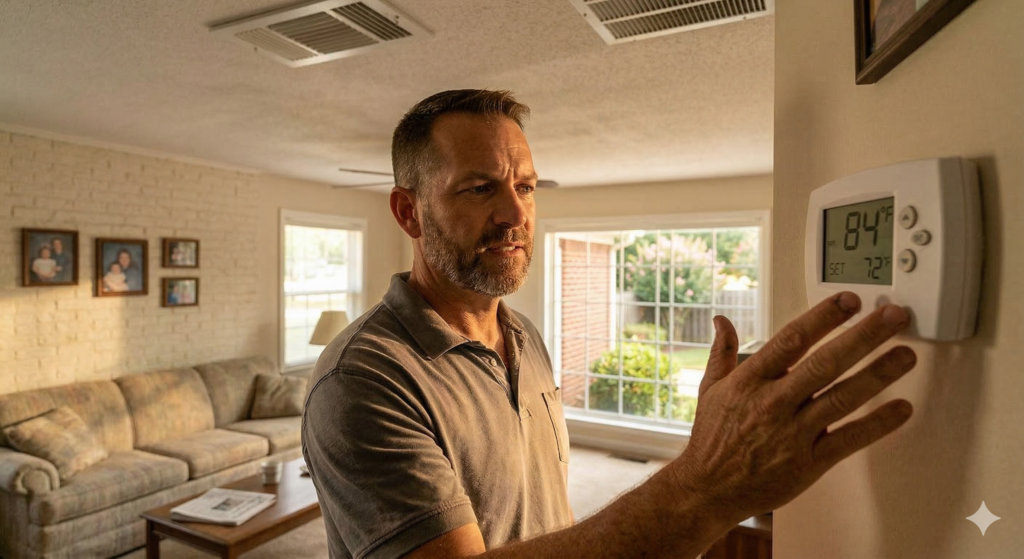
Why Is My AC Running But Not Cooling the House? When your AC runs continuously but your home isn’t reaching the set temperature, the system is either failing to produce adequate cooling or losing that cooling before it reaches your living spaces. The most common causes are low refrigerant charge from a leak, a dirty evaporator or condenser coil restricting heat transfer, leaking ductwork that dumps conditioned air into unconditioned spaces, or a system that is undersized for your home’s actual cooling load. Coastal Carolina Comfort diagnoses why your AC isn’t cooling effectively across Summerville, Charleston, Columbia, and every community we serve in the South Carolina Lowcountry and Midlands. Our NATE-certified technicians identify the root cause — not just the symptom — and provide upfront pricing before any repair begins. Call (843) 708-8735. First: Understanding the Difference Between “Not Cooling” and “Blowing Warm Air” These two problems overlap but aren’t identical, and the distinction affects the diagnostic path. AC blowing warm air means the air from your vents is noticeably warm — room temperature or warmer. This typically points to a complete failure of the cooling cycle: dead compressor, severely depleted refrigerant, tripped outdoor breaker, or a heat pump stuck in heating mode. If this describes your situation, our guide on AC blowing warm air covers those specific causes. AC running but not cooling means the system produces some cool air — you can feel it at the vent — but your home never reaches the set temperature, or takes far too long to get there. The system runs for hours without cycling off. This is a subtler problem with a wider range of possible causes, and it’s what this article addresses. In South Carolina’s climate, the distinction matters more than in cooler regions. A system that’s “almost cooling” but falls 5°F short can leave your home at 80°F with 70% humidity — which feels miserable even though the AC is technically doing something. The 7 Most Common Reasons Your AC Runs But Doesn’t Cool 1. Dirty Condenser Coil (Outdoor Unit) The condenser coil is where your system releases the heat it absorbed from inside your home. When the coil’s aluminum fins become coated with dirt, pollen, grass clippings, or pet hair, heat transfer drops dramatically. Your system still runs — the compressor works, the fan spins, cool air reaches the vents — but the system can’t reject enough heat to keep up with the load. In South Carolina, condenser coils take a beating. Spring pollen coats them heavily by April. Summer storms blow debris into the fins. And the combination of heat and humidity creates ideal conditions for biological growth between the fins. This is one of the most common — and most fixable — reasons an AC runs all day without cooling adequately. A professional coil cleaning restores heat transfer capacity and is typically included in regular maintenance that prevents costly repairs. 2. Dirty or Restricted Evaporator Coil (Indoor Unit) The evaporator coil absorbs heat from your indoor air. When it becomes coated with dust, mold, or biological growth — which happens faster in South Carolina’s humidity than in drier climates — its ability to absorb heat decreases. The air passing over a dirty evaporator coil cools less effectively, which means the air reaching your vents is cooler than room temperature but not cold enough to overcome the heat gain in your home. A dirty evaporator coil also increases humidity in your home because the coil can’t properly dehumidify the air passing over it. This is why a home might be at 74°F but feel clammy and uncomfortable — the AC is partially cooling but failing to adequately remove moisture. Learn more about what South Carolina humidity does to your cooling system. 3. Low Refrigerant Charge A partially depleted refrigerant charge produces exactly this symptom — the system runs, cool air reaches the vents, but the cooling capacity isn’t enough to match the heat load. Unlike a completely empty system (which blows warm air), a slow leak creates a gradual decline in performance that homeowners often attribute to “the system getting old” or “it’s just really hot outside.” The temperature differential between the supply air and return air tells the story. A properly charged system in South Carolina should produce a 15–20°F differential. If your supply air is only 8–12°F cooler than your return air, low refrigerant is a prime suspect. 4. Ductwork Leaks This is the hidden culprit that no amount of AC repair will fix, because the AC itself is working correctly. If your ductwork has gaps, disconnected joints, or deteriorated flex connections — especially where it runs through an unconditioned attic — cooled air escapes before it reaches your rooms. In a Lowcountry attic during summer, ambient temperatures regularly exceed 140°F. A duct leak in that environment doesn’t just lose cooled air — it actively pulls superheated attic air into the duct system, warming the conditioned air as it travels to your vents. Ductwork problems are especially common in older homes across Summerville’s Historic District, Charleston’s peninsula, and Columbia’s Shandon and Forest Acres neighborhoods where original ductwork may be 30–50+ years old. 5. Undersized or Improperly Sized System If your AC system was sized incorrectly for your home’s actual cooling load, it will run continuously on hot days without ever reaching the set temperature. This is more common than you’d expect, particularly in South Carolina where cooling loads are exceptionally high. An undersized system literally cannot produce enough cooling capacity to overcome the heat gain from walls, windows, attic, and South Carolina’s relentless humidity. Oversized systems create a different problem — short cycling — but undersized systems simply run all day, every day, wearing themselves out faster and costing more to operate. Sizing problems are especially prevalent in new construction where builder-grade systems may have been selected for cost rather than performance, and in homes that have been renovated or had additions built without upgrading the HVAC system to match the increased square footage.
AC Blowing Warm Air? What South Carolina Homeowners Should Check First
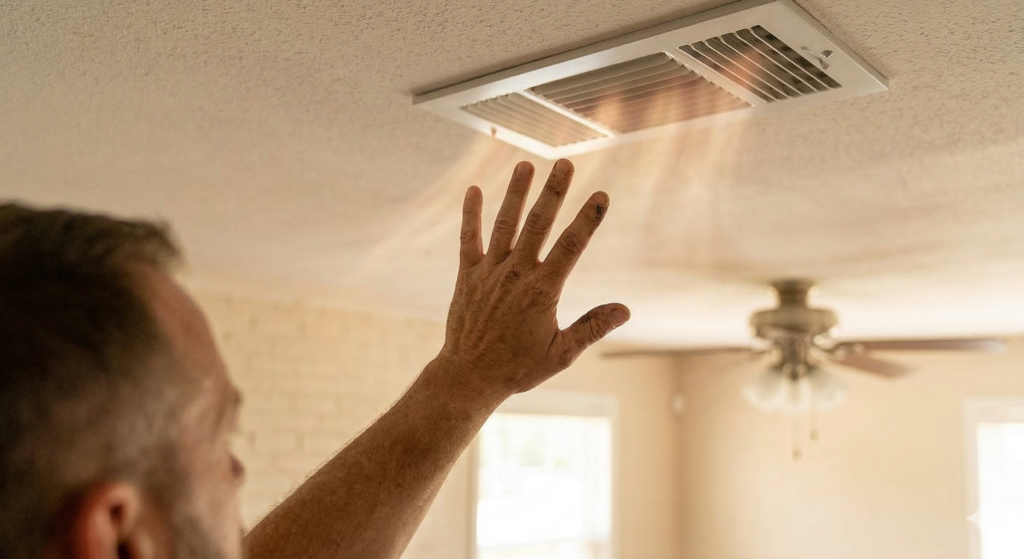
AC Blowing Warm Air? What South Carolina Homeowners Should Check First An AC system blowing warm air is most commonly caused by low refrigerant from a leak, a failed or failing compressor, a thermostat set incorrectly, or a frozen evaporator coil that has thawed and re-frozen in a cycle that prevents proper cooling. In South Carolina’s climate — where indoor temperatures can climb past 85°F within hours of losing cooling — identifying the cause quickly matters both for comfort and for preventing secondary damage to your system. Coastal Carolina Comfort’s NATE-certified technicians diagnose the root cause of warm air from AC vents across Summerville, Charleston, Columbia, and the entire South Carolina Lowcountry and Midlands. Most warm-air issues can be diagnosed and repaired in a single same-day visit. Call (843) 708-8735 to schedule your diagnostic. Quick Checks Before You Call a Technician Before scheduling a service call, run through these homeowner-safe checks. They take less than five minutes and resolve the problem roughly 15% of the time. Check your thermostat settings. It sounds basic, but it’s the first thing our technicians verify on every call. Make sure the thermostat is set to “cool” (not “heat” or “fan only”) and that the set temperature is at least 3–5°F below the current room temperature. If someone in the household accidentally bumped the setting — or if a smart thermostat entered a scheduling mode — the system may be functioning exactly as programmed, just not as you expected. Check the air filter. A severely clogged air filter restricts airflow across the evaporator coil. When airflow drops below the minimum threshold, the coil temperature plummets, moisture on the coil freezes, and ice builds up until the coil can no longer absorb heat from your indoor air. The result: your system runs, but the air coming from the vents is room temperature or warmer. Pull the filter out. If you can’t see light through it, replace it and give the system 2–3 hours to thaw before restarting. Check the outdoor unit. Walk outside and look at the condenser unit. Is the fan spinning? If the outdoor unit is completely silent or humming but the fan isn’t moving, the system can’t release heat — which means it can’t cool your home. A non-spinning fan usually points to a failed capacitor or burned-out fan motor. Do not attempt to manually spin the fan blade — call for professional repair. Check the circuit breakers. Your AC system typically runs on two breakers — one for the indoor air handler and one for the outdoor condenser. If the outdoor breaker has tripped but the indoor breaker hasn’t, the air handler will continue to blow air through your vents, but without the outdoor unit running, that air won’t be cooled. Reset the breaker once. If it trips again immediately, stop — that indicates an electrical fault that requires professional diagnosis. If none of these checks resolve the issue, the problem is internal to the system and requires a trained technician. The 6 Most Common Causes of an AC Blowing Warm Air 1. Low Refrigerant From a Leak This is the most frequent cause of warm air from AC vents in South Carolina. Your air conditioning system doesn’t consume refrigerant — it circulates the same charge in a sealed loop. If the charge is low, there’s a leak somewhere in the system. Low refrigerant reduces the evaporator coil’s ability to absorb heat from your indoor air. As the charge drops, the temperature differential between supply air and return air narrows until the air coming from your vents feels lukewarm or warm. In South Carolina’s high-humidity environment, low refrigerant also causes the evaporator coil to operate below the dew point in unpredictable ways, leading to inconsistent cooling and excessive condensation or ice formation. Coastal Carolina Comfort performs a leak check, locates the source, repairs it, and recharges the system to manufacturer specifications. Simply adding refrigerant without finding the leak is a temporary fix that will fail again — often within weeks in the Lowcountry’s demanding climate. Learn more about what South Carolina’s climate does to your cooling system. 2. Compressor Failure The compressor is the component that pressurizes refrigerant and drives the entire cooling cycle. When it fails — partially or completely — the system loses its ability to transfer heat from inside your home to the outside. Your air handler will still blow air through the vents, but that air won’t be cooled. Compressor failures in South Carolina are often caused by extended run times during sustained summer heat, chronic low refrigerant that forces the compressor to work harder, electrical issues from power surges, or simple age-related wear. The outdoor unit may hum without starting, make a clicking sound as it tries repeatedly to engage, or trip the circuit breaker. Compressor replacement is one of the most expensive AC repairs — typically $1,500–$3,000+ depending on the system. For systems over 10 years old, this repair often triggers a conversation about whether to repair or replace your AC system. 3. Frozen Evaporator Coil A frozen evaporator coil can’t absorb heat. When ice builds up on the coil, airflow drops further, the ice gets worse, and your system enters a downward spiral where it runs constantly but cools poorly or not at all. The most common causes are restricted airflow (clogged filter, closed vents, dirty coil) and low refrigerant. In South Carolina’s humid climate, frozen coils are particularly problematic because the ice melts and refreezes in cycles that can flood your condensate pan and overflow onto floors. Read our full guide on frozen evaporator coils in humid South Carolina weather. 4. Thermostat Malfunction A thermostat that reads the wrong temperature, loses its connection to the system, or has a dead battery in a wireless sensor can cause the AC to behave erratically — including blowing air without activating the cooling cycle. Modern smart thermostats with multiple sensors, scheduling features, and Wi-Fi connectivity have more potential failure points than older mechanical models. If your
How Much Does AC Repair Cost in Columbia, SC?
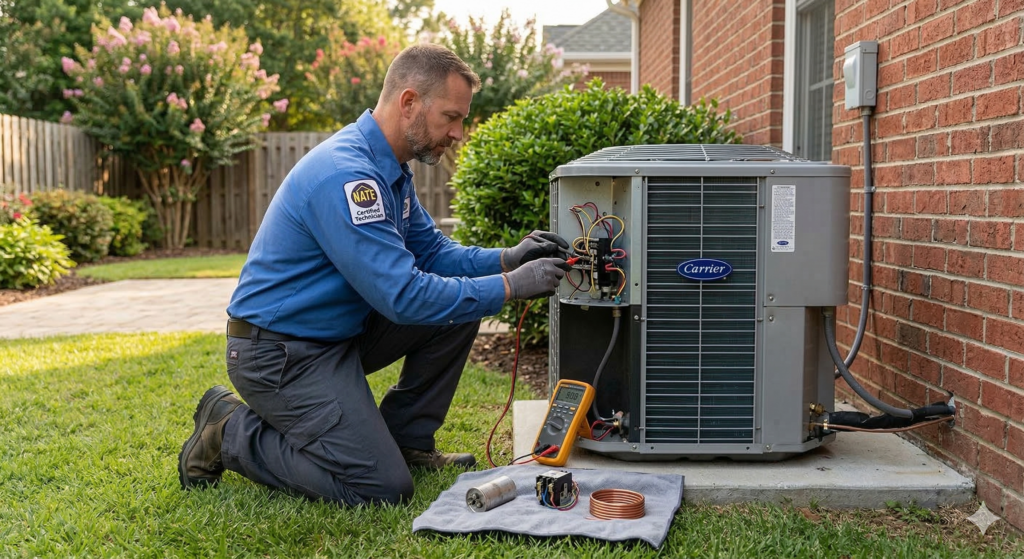
How Much Does AC Repair Cost in Columbia, SC? AC repair in Columbia, South Carolina typically costs between $150 and $650 for the most common residential repairs, including capacitor replacements, thermostat fixes, refrigerant recharges, and fan motor repairs. Major component failures — compressor replacements, evaporator coil repairs, and complete refrigerant system overhauls — range from $1,000 to $3,500 or higher depending on your system type, refrigerant, and the extent of the damage. Coastal Carolina Comfort provides flat-rate, upfront pricing for every AC repair across the Columbia and Midlands area. We quote a price before any work begins — no hourly rates that climb while you wait, no surprise charges when the job takes longer than expected. What we quote is what you pay. Common AC Repair Costs in the Columbia Area These are the repair costs Columbia-area homeowners can expect for the issues Coastal Carolina Comfort’s NATE-certified technicians diagnose most frequently across Richland, Lexington, and Calhoun counties. Capacitor replacement: $150–$300. The run capacitor is the single most commonly replaced AC component in the Midlands. It stores and releases electrical energy to start and run the compressor and fan motors. Capacitors weaken under Columbia’s sustained summer electrical loads and eventually fail. Symptoms include the outdoor unit humming but not starting, or the system shutting off shortly after it kicks on. This is typically a repair our technicians complete in under an hour. Contactor replacement: $150–$275. The contactor is the electrical relay that turns your compressor and condenser fan on and off. After thousands of on-off cycles during a Columbia summer, contactors pit, arc, and eventually weld shut or fail to close. A stuck-open contactor means no cooling. A welded-shut contactor means the system runs nonstop — both waste energy and damage other components if left unaddressed. Refrigerant recharge (R-410A): $250–$500. If your system is low on refrigerant, it has a leak somewhere — residential AC systems are sealed and don’t consume refrigerant under normal operation. A recharge restores cooling temporarily, but the leak needs to be located and repaired for a permanent fix. The cost depends on how much refrigerant the system needs and whether a leak search is included in the service. R-22 (Freon) recharge: $400–$800+. If your Columbia home still runs an older AC system that uses R-22 Freon, recharges are significantly more expensive because R-22 was phased out under EPA regulations and remaining supply is limited. This cost alone often tips the repair-or-replace decision toward replacement with a modern R-410A or R-32 system that will cost far less to maintain. Thermostat repair or replacement: $150–$350. A malfunctioning thermostat can cause short cycling, inability to reach set temperature, or a system that won’t respond at all. Replacement costs depend on whether you’re installing a basic programmable model or upgrading to a smart thermostat with humidity sensing — a feature particularly valuable during Columbia’s humid summers. Condensate drain cleaning: $100–$200. Columbia’s humidity means your AC produces heavy condensate volumes. When the drain line clogs with algae, mold, or mineral buildup, water backs up and can overflow onto floors or into ceilings. This is one of the most frequent — and most preventable — repair calls we receive in the Midlands. Regular maintenance eliminates most condensate drain issues before they cause water damage. Blower motor replacement: $350–$700. The blower motor circulates conditioned air through your ductwork. When it fails, you’ll notice weak airflow or no air at all from your vents. Replacement costs depend on whether your system uses a standard PSC motor or a more efficient variable-speed ECM motor. Older homes in Forest Acres, Shandon, and Rosewood often have single-speed motors that are less expensive to replace. Major AC Repair Costs in the Columbia Area These higher-cost repairs typically involve a serious conversation about whether repairing or replacing your AC system makes better financial sense. Compressor replacement: $1,500–$3,000+. The compressor is the most expensive single component in your air conditioning system. When it fails, the repair cost often approaches 50% or more of a new system’s price — especially on units older than 10 years. In the Columbia area, Coastal Carolina Comfort sees compressor failures accelerated by extended run times during the Midlands’ demanding cooling season and by low refrigerant conditions that go undetected without regular professional maintenance. Evaporator coil replacement: $1,000–$2,500. The evaporator coil sits inside your air handler and absorbs heat from your indoor air. Coil leaks are notoriously difficult and expensive to repair — in most cases, full coil replacement is the more reliable and cost-effective solution long-term. The cost varies based on coil size, refrigerant type, and accessibility of your air handler. Condenser coil replacement: $800–$2,000. The outdoor condenser coil releases absorbed heat into the outside air. Columbia-area condenser coils face less salt air corrosion than coastal Lowcountry systems, but they’re still vulnerable to physical damage from lawn equipment, storm debris, and the heavy pollen accumulation that restricts airflow every spring. Refrigerant leak repair: $500–$1,500. Beyond simply recharging, locating and repairing the source of a refrigerant leak involves pressurizing the system, identifying the leak point, and either soldering the connection or replacing the affected section of line. Costs vary significantly depending on where the leak is — a pinhole in an accessible copper line is far less expensive than a leak buried inside the evaporator coil, which usually requires full coil replacement. What Affects Your AC Repair Bill in Columbia? Several factors influence the final cost of any AC repair. Understanding them helps you evaluate whether a quote is fair and complete. System type. Central air conditioners, heat pumps, ductless mini-splits, and package units all have different component costs and labor requirements. Heat pump repairs involving the reversing valve or defrost board cost more than equivalent central AC repairs because the components are more specialized. Many Columbia-area homes in Lexington, Irmo, and Chapin run heat pumps — know what system you have before calling for quotes. Refrigerant type. Systems using current R-410A refrigerant are straightforward and affordable to recharge. Systems still running on phased-out R-22
Emergency AC Repair in Columbia & the South Carolina Midlands
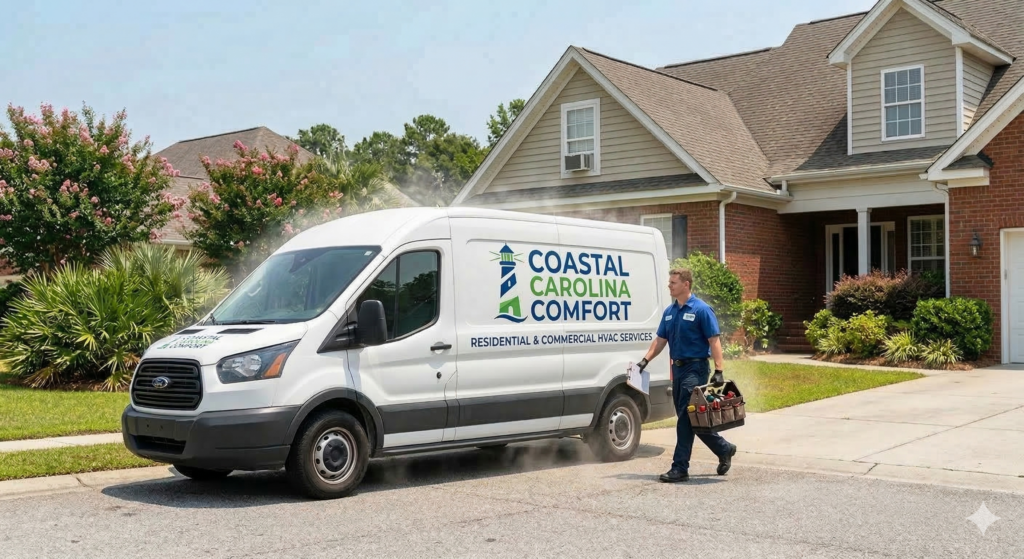
Emergency AC Repair in Columbia & the South Carolina Midlands When your air conditioning fails in Columbia, SC, during a 100°F heat index afternoon, you need a technician at your door — not a voicemail. Emergency AC repair in Columbia addresses sudden cooling system failures that create unsafe indoor conditions, including complete system shutdowns, compressor failures, refrigerant leaks, and electrical malfunctions that leave Midlands homes dangerously hot within hours. Coastal Carolina Comfort provides same-day emergency AC repair across Columbia, Lexington, Irmo, West Columbia, Cayce, and all of Richland, Lexington, and Calhoun counties. Our NATE-certified technicians carry the diagnostic equipment and common replacement parts needed to resolve most emergency repairs in a single visit — because when it’s 97°F outside and climbing inside your home, waiting for a second trip isn’t an option. Call (843) 708-8735 for same-day emergency AC repair in the Columbia area. What Counts as an AC Emergency in Columbia? Not every AC problem is an emergency — but in the Midlands’ extreme summer heat, certain situations demand same-day response. Coastal Carolina Comfort treats the following as emergency service calls. Complete system failure with vulnerable residents at home. If your AC stops working entirely and you have elderly family members, infants, or anyone with a heat-sensitive medical condition in the home, that qualifies as an emergency. Columbia’s summer heat index regularly exceeds 105°F. The CDC classifies indoor temperatures above 80°F as a health risk for vulnerable populations. AC running but blowing hot air during extreme heat. When outdoor temperatures exceed 95°F and your system is pushing warm air instead of cool, the cause is typically a refrigerant leak, compressor failure, or a failed reversing valve on a heat pump. Each of these conditions worsens the longer the system runs without correction. Burning smell or visible smoke from the system. Electrical failures in the air handler, a seized blower motor, or a short circuit can create fire hazards. Turn the system off at the breaker immediately and call for emergency service. Water actively flooding from the indoor unit. A burst condensate line, cracked drain pan, or catastrophic coil failure can release significant water into your home. In Columbia homes with crawl spaces — common in neighborhoods like Shandon, Rosewood, and Eau Claire — this water can cause structural damage quickly. Tripped breaker that resets and immediately trips again. This indicates a serious electrical fault — a ground fault in the compressor, a shorted capacitor, or damaged wiring. Do not keep resetting the breaker. Each reset risks further damage to the system and creates potential electrical hazards in the home. If you’re unsure whether your situation qualifies as an emergency, call (843) 708-8735 and describe what’s happening. We’ll help you determine the right next step — and if it’s urgent, we’ll dispatch a technician immediately. Why Columbia’s Climate Creates More AC Emergencies Columbia sits in the heart of South Carolina’s Midlands, one of the hottest regions in the southeastern United States. Unlike the Lowcountry coast where ocean breezes moderate peak temperatures, Columbia’s inland location means summer heat builds relentlessly. Average July highs reach 93°F, but the combination of humidity and direct sun exposure pushes the heat index above 105°F on the worst days. This heat profile creates specific emergency patterns Coastal Carolina Comfort sees every summer across the Midlands. Heat pump reversing valve failures peak in June and July. Many Columbia-area homes — particularly in Lexington, Irmo, and the newer subdivisions around Lake Murray — rely on heat pumps for year-round climate control. When the reversing valve sticks or fails, the system blows warm air instead of cool. During a Midlands heat wave, this turns from an inconvenience to a genuine safety concern within hours. Compressor burnout from extended run times. Columbia’s sustained high temperatures force compressors to run continuously for 10–14 hours per day during peak summer. Compressors already weakened by age or low refrigerant levels often fail during these marathon run cycles — usually on the hottest day of the week, when the demand is highest. Power surge damage after summer storms. The Midlands’ afternoon thunderstorm pattern is predictable but punishing. Lightning strikes and associated power surges damage capacitors, contactors, and control boards in outdoor AC units. Coastal Carolina Comfort sees a spike in emergency calls every time a strong storm rolls through Richland or Lexington County. Understanding the signs your AC needs professional repair before these situations escalate can help you catch problems early — but when an emergency does hit, fast response matters more than anything. Coastal Carolina Comfort’s Emergency Response Process When you call (843) 708-8735 for emergency AC service in the Columbia area, here’s exactly what happens. Step 1 — Phone triage. Our team asks targeted questions about your system’s behavior, your home’s current conditions, and whether vulnerable individuals are present. This helps us prioritize dispatch and ensure the responding technician brings the right equipment. Step 2 — Same-day dispatch. We dispatch a NATE-certified technician to your Columbia-area home the same day. Our technicians arrive equipped with diagnostic tools, common replacement parts — capacitors, contactors, fan motors, refrigerant — and the expertise to handle the diverse systems found across the Midlands. From older central air units in Eau Claire and Rosewood to high-efficiency heat pumps in Chapin and Ballentine, we’ve worked on them all. Step 3 — Rapid diagnosis. Your technician performs a systematic diagnostic to identify the root cause — not just the symptom. In emergency situations, we prioritize getting your system operational safely. If a temporary solution can restore cooling while a part is ordered, we’ll discuss that option honestly. Step 4 — Upfront pricing before any work begins. Even in an emergency, you get a written estimate before we start repairs. No surprises, no pressure. If the repair cost approaches replacement territory on an older system, we’ll tell you that too — and help you understand how much emergency AC repair costs in South Carolina so you can make an informed decision. Step 5 — Repair, test, and verify. We complete the repair using manufacturer-specified parts, run a full system verification including temperature differential testing, and confirm
The Lowcountry Climate and Your AC: What South Carolina Humidity Does to Your Cooling System
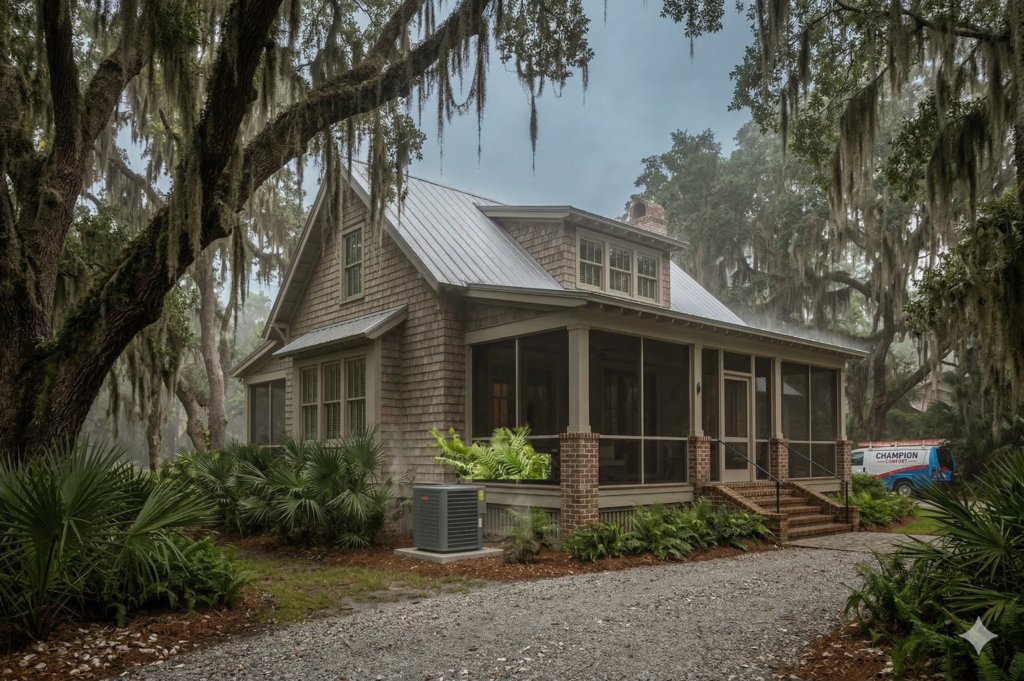
The Lowcountry Climate and Your AC: What South Carolina Humidity Does to Your Cooling System The South Carolina Lowcountry has one of the most demanding climates for residential air conditioning systems in the entire United States. The combination of sustained high temperatures, extreme relative humidity that routinely exceeds 80% to 90%, salt-laden coastal air, and a cooling season that stretches from April through October creates operating conditions that accelerate component wear, promote biological growth inside HVAC systems, and shorten equipment lifespans compared to most other U.S. markets. At Coastal Carolina Comfort, we service AC systems across Summerville, Charleston, and the surrounding communities every day, and we see firsthand how our climate affects the equipment that keeps Lowcountry families comfortable. Understanding these climate-specific challenges helps homeowners make smarter decisions about maintenance, repairs, and system selection. The Humidity Problem: It’s Not Just About Temperature Most people focus on temperature when they think about AC performance, but in the Lowcountry, humidity is the more significant factor. Air conditioning systems do two jobs simultaneously: they cool the air (sensible cooling) and they remove moisture from the air (latent cooling, also called dehumidification). In a dry climate, the cooling load dominates. In the Lowcountry, the dehumidification load is enormous — and it affects your system in ways that go beyond comfort. What Extreme Humidity Does to Your System When outdoor relative humidity sits above 80% — which is the norm in the Lowcountry from May through September — your AC system has to work significantly harder to remove moisture from indoor air. This additional workload manifests in several ways. Extended runtime. Your system runs longer per cycle to bring indoor humidity to a comfortable level (ideally 45-55% relative humidity). Longer runtime means more operating hours, more wear on the compressor, blower motor, and other mechanical components, and higher electricity consumption. Condensate overload. Your system may pull several gallons of water per day from the air during peak humidity. All that water has to exit through the condensate drain system. The volume alone puts stress on drain lines, drain pans, and condensate pumps — and creates ideal conditions for algae and biofilm growth that causes drain clogs. This is why condensate drain issues are among the most common AC repair calls we handle in the Lowcountry. Evaporator coil moisture. The evaporator coil operates in a perpetually wet environment during the cooling season, which promotes mold and biofilm growth on the coil surface. This biological buildup restricts airflow, reduces heat transfer efficiency, degrades indoor air quality, and can eventually lead to coil corrosion and refrigerant leaks. Indoor air quality impacts. When your AC system can’t adequately dehumidify, indoor humidity rises above comfortable levels. Sustained indoor humidity above 60% creates conditions for mold growth on walls, ceilings, and in hidden spaces — and it makes your home feel uncomfortable even when the temperature reads correctly on the thermostat. The Oversized AC Problem Ironically, one of the most common HVAC mistakes in the Lowcountry is installing an oversized AC system — one that’s too powerful for the home’s actual cooling load. An oversized system cools the air quickly but doesn’t run long enough per cycle to adequately dehumidify. It short cycles — turning on and off frequently — which fails to remove enough moisture and puts extra stress on the compressor. Proper system sizing in the Lowcountry requires a Manual J load calculation that accounts for our region’s extreme humidity levels, not just the square footage of the home. If your home feels cool but clammy, or if you notice that your AC cycles frequently without maintaining comfortable humidity levels, your system may be oversized for your space. Salt Air Corrosion: The Coastal Factor Homes in Charleston, James Island, Mount Pleasant, Sullivan’s Island, Folly Beach, Daniel Island, and other coastal areas face an additional challenge that inland communities like Summerville encounter to a lesser degree: salt air corrosion. Salt particles carried by coastal breezes accelerate oxidation on metal components. For your AC system, this means faster degradation of the outdoor condenser coil’s aluminum fins, corrosion on copper refrigerant lines and connections, oxidation of electrical contacts and wiring, and rust on the condenser unit’s steel cabinet and structural components. The effects are cumulative and progressive. A condenser coil coated in salt residue operates less efficiently because the corroded fins restrict airflow and heat transfer. Corroded electrical connections increase resistance and generate heat, which accelerates further degradation. Corroded refrigerant line connections can develop micro-leaks that slowly drain your system’s charge over months. Protecting Coastal AC Systems For homeowners within a few miles of the coast, additional protective measures extend system life. Regular condenser coil rinsing. A gentle freshwater rinse of the outdoor unit every few weeks during peak season helps remove salt deposits before they cause significant corrosion. Coil coatings. Some manufacturers offer factory-applied or aftermarket corrosion-resistant coatings for condenser coils. These coatings add a protective layer between the salt air and the metal components. More frequent professional maintenance. Coastal properties benefit from semi-annual or even quarterly professional maintenance to catch corrosion-related issues early. What might take five years to develop in Summerville can occur in two to three years on James Island or Sullivan’s Island. Elevated condenser placement. Raising the outdoor unit off the ground helps reduce exposure to salt-laden moisture that pools at ground level, especially during coastal storms and king tides. Extended Cooling Season: The Wear Factor In northern markets, AC systems may run three to four months per year. In the Lowcountry, your cooling system operates six to seven months annually — from early April through late October, and sometimes into November. In unusually warm years, some systems run more than 200 days. This extended runtime directly affects every component in your system. Compressor motors accumulate operating hours faster. Capacitors, which store electrical energy for motor startups, degrade with each cycle and reach end-of-life sooner. Contactors, which switch power to the compressor, develop carbon buildup and pitting from thousands of additional on-off cycles. Blower motor bearings