
Home of the $0 FREE Service Call Club | 0% Interest for 24 Months

Home of the $0 FREE Service Call Club | 0% Interest for 24 Months

Home of the $0 FREE Service Call Club | 0% Interest for 24 Months

When summer heat takes hold in Charleston, having a working AC isn’t just about comfort—it’s about staying sane. But if your system isn’t keeping up, there might be a hidden issue with your refrigerant. Low refrigerant levels can sneak up on homeowners, causing poor cooling, higher energy bills, and potential damage if left unchecked. These problems tend to show up just when you need your AC the most, making things even more frustrating.

The good news is that low refrigerant levels are both detectable and fixable. Acting early can help you avoid full system breakdowns and expensive repairs. Understanding what to look for and knowing what low refrigerant can really mean for your AC system makes a big difference. Let’s break down the warning signs, causes, and how these problems get repaired the right way.

Coastal Carolina Comfort provides dependable air conditioner repair in Charleston, so if you’re having trouble, we’re here to help.

Signs of Low Refrigerant Levels

Your air conditioner works by cycling refrigerant through a closed system. When levels drop too low, that system can’t do its job. That’s when things start feeling off. Most people notice something is wrong, but they’re not always sure what’s going on. Here’s how to tell if your AC might be running low on refrigerant:

– Warm air is blowing from the vents, even when the AC is set to cool

– You hear hissing or bubbling coming from the indoor or outdoor unit

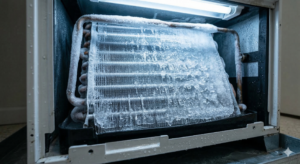
– Ice forms on the refrigerant lines or evaporator coil

– Your home takes much longer to cool down than usual

– Your energy bills spike without an obvious reason

These signs might not happen all at once. Maybe you feel warm air in one room, then notice ice on the outdoor unit a few days later. Since the signs can show up slowly, it’s easy to overlook them until your AC stops keeping up altogether.

When you notice any of these symptoms, don’t wait to act. Keeping refrigerant levels too low strains the system and wears out components. Fixing the problem early can save you from a total breakdown, especially when Charleston’s summer temperatures start rising.

Causes of Low Refrigerant

Refrigerant doesn’t get used up like gas in a car. If your system is running low, something is causing that loss, and it typically comes down to a leak. Other times, it’s a result of poor service work in the past. Here are the most common causes of low refrigerant:

– Leaking refrigerant lines due to small cracks or punctures

– Damaged evaporator or condenser coils from corrosion or wear

– Previous repairs where the system wasn’t recharged properly

– Worn connections or seals that allow refrigerant to escape

Each of these issues has the same result: your AC loses its ability to cool properly. But they can be tricky to detect. Some refrigerant leaks are so slow you won’t notice them until they’ve already caused noticeable performance problems. Others may happen in spots that aren’t easy to see.

Because refrigerant is part of a closed loop, you shouldn’t lose any unless something is wrong. But figuring out what’s wrong isn’t always obvious. A trained technician has the tools and know-how to test the system and determine exactly where the loss is coming from. That kind of accurate diagnosis is what prevents patchwork fixes and keeps your AC running as it should.

Solutions and Repairs

Fixing refrigerant issues isn’t guesswork. There’s a process that experienced HVAC professionals follow to repair the problem thoroughly and safely. Here’s what typically happens when someone calls us in for low refrigerant:

– Leak detection with special equipment, like electronic tools or UV dye, helps find exactly where the refrigerant is escaping

– Once the leak is found, it’s sealed or the damaged component is replaced, depending on how serious it is

– After sealing the leak, the system is recharged to the manufacturer’s recommended refrigerant level

– The entire system is tested to make sure it’s cooling correctly and no further leaks are present

This isn’t something homeowners should try to handle themselves. Handling refrigerant requires certification and comes with safety risks. Not to mention, recharging the system incorrectly can both hurt its performance and lead to more problems later on. That’s why it’s best to leave these repairs to professionals who are trained to get them right the first time.

When done correctly, your AC won’t just cool better. It’ll run more efficiently and be less likely to break down under pressure once those high Charleston temperatures kick in.

Preventative Measures

Low refrigerant problems are preventable in many cases, especially with regular upkeep. Like most home systems, your AC does best when it gets consistent attention. You can avoid some common issues with a few simple habits and professional support. Here’s how:

1. Regular Maintenance: Yearly service visits are one of the best ways to catch refrigerant issues early. A technician can inspect for minor leaks, test performance, and confirm refrigerant levels.

2. Prompt Repairs: If you hear strange noises or feel weak cooling, don’t wait around. Early repairs are easier and more affordable than dealing with full system failures down the road.

3. Routine Inspections: Over time, parts wear down and fittings loosen. An occasional inspection from a trained technician can catch these small issues before they turn into larger problems.

4. Maintenance Plans: Signing up for a service plan with Coastal Carolina Comfort means routine maintenance is already scheduled. Many plans include discounts and priority bookings, helping you stay ahead of repairs.

Preventative care doesn’t just save money. It also extends the life of your system. And when Charleston starts to heat up, your well-maintained AC will be ready to keep your home cool without any surprises.

Keeping Your Cool in Charleston

The right refrigerant levels are a big part of making sure your AC performs like it should. When the refrigerant is too low, everything suffers—cooling slows down, bills go up, and parts wear out faster. But when things are running at the correct level, your system uses less energy, cools your home consistently, and lasts longer.

Understanding the signs and fixing problems quickly is the best way to keep things from getting worse. If you’re already noticing warmer rooms, rising energy bills, or ice on the lines, it’s time to act. These are early alerts that your system might be low on refrigerant, and the sooner it’s checked, the better.

Charleston summers don’t leave much room for error when it comes to cooling. Staying ahead of refrigerant issues keeps your home comfortable even in the hottest months. Be proactive, stay alert to warning signs, and count on help from professionals when needed. With a little attention and the right team by your side, your AC will be set to handle whatever the Lowcountry heat throws your way.

If you’re noticing signs that your AC isn’t working the way it should, don’t wait until the next heatwave. Coastal Carolina Comfort offers expert air conditioner repair in Charleston to keep your home cool and your system running smoothly when it matters most.
Share This Post

Get 10% Off Your First Service and a FREE Quote


More To Explore

Hvac Repair In Summerville
HVAC

The Summerville HVAC Maintenance Checklist

The Summerville HVAC Maintenance Checklist That Prevents 90% of Repairs Regular HVAC maintenance prevents up to 90% of common repairs and extends system lifespan by 5-7 years. Summerville homeowners should perform monthly tasks (filter checks, vent clearing, thermostat monitoring), seasonal tasks (condensate drain treatment, outdoor unit cleaning, refrigerant line inspection), and schedule professional tune-ups twice yearly—in spring before cooling season and fall before heating season. The Lowcountry’s extreme humidity, extended cooling season, and airborne particulates demand more frequent maintenance than national guidelines suggest. A well-maintained system runs more efficiently, breaks down less often, and keeps your home comfortable year-round. Introduction: The Cheapest Repair Is the One You Never Need Here’s a number that should get your attention: 90%. That’s the percentage of HVAC repairs that could have been prevented with proper maintenance. Nine out of ten service calls we make in Summerville are for problems that didn’t have to happen. Clogged filters that caused compressors to overheat. Condensate drains that backed up and flooded ceilings. Capacitors that failed because coils were too dirty to dissipate heat. Refrigerant leaks that started as minor corrosion nobody caught. Every one of these repairs cost the homeowner hundreds—sometimes thousands—of dollars. And every one of them was preventable. At Coastal Carolina Comfort, we’ve maintained HVAC systems across the Lowcountry for over a decade. We’ve seen what neglect does to equipment in our climate. We’ve also seen homeowners who follow a simple maintenance routine go 10+ years without a single major repair. This guide gives you that routine. It’s specifically designed for Summerville’s climate—not generic advice written for somewhere with mild summers and low humidity. Follow this checklist, and you’ll dramatically reduce your repair bills, extend your system’s life, and stay comfortable no matter what the Lowcountry weather throws at you. Why Summerville Systems Need More Maintenance Before we dive into the checklist, let’s talk about why maintenance matters more here than almost anywhere else. The Extended Cooling Season In Minneapolis, an AC might run 4 months per year. In Summerville, we’re cooling 8-9 months—sometimes longer. That’s twice the operating hours, twice the wear, and twice the opportunity for problems to develop. A system that runs from April through November accumulates wear equivalent to nearly two years of operation in a milder climate. Maintenance intervals need to reflect that reality. The Humidity Factor Summerville’s average humidity hovers around 70-80% year-round. During summer mornings, it regularly exceeds 90%. This humidity: Forces your system to work harder (dehumidification uses significant energy) Creates ideal conditions for biological growth in drain lines and on coils Accelerates corrosion on electrical components and refrigerant lines Causes condensate drain clogs—one of the most common service calls we see Related: Learn how Summerville’s humidity damages HVAC systems Airborne Particulates Between pollen season (which feels like it lasts 8 months here), coastal salt air, and general Lowcountry dust, your system filters more particulates than systems in cleaner environments. Filters clog faster, coils get dirtier, and airflow restrictions develop more quickly. The Bottom Line National maintenance guidelines assume average conditions. Summerville doesn’t have average conditions—we have extreme conditions. Your maintenance routine needs to account for that. Monthly Maintenance Tasks These quick tasks take 10-15 minutes and should become habit. Do them on the same day each month—the first Saturday, the day you pay your mortgage, whatever helps you remember. 1. Check and Replace Your Air Filter This is the single most important thing you can do for your HVAC system. A clogged filter: Restricts airflow, forcing your system to work harder Causes evaporator coils to freeze Leads to compressor overheating and failure Increases energy consumption by 5-15% Reduces indoor air quality How to check: Locate your filter (return air grille, air handler, or dedicated filter slot) Remove the filter and hold it up to light If you can’t see light through it clearly, replace it If it’s visibly gray or caked with debris, replace it immediately Summerville-specific guidance: During peak cooling season (May-September), check weekly and replace every 30-45 days During shoulder seasons, check monthly and replace every 45-60 days During pollen season (spring), you may need to replace every 2-3 weeks After storms or high-wind events, check immediately Filter recommendations: Use pleated filters rated MERV 8-11 for best balance of filtration and airflow Avoid fiberglass filters (minimal filtration) and ultra-high MERV ratings (can restrict airflow) Buy filters in bulk—you’ll use 8-12 per year in Summerville 2. Clear Supply and Return Vents Blocked vents disrupt airflow balance and force your system to work harder. Monthly walkthrough: Check all supply vents (where air blows out) for obstructions Check all return vents (where air is pulled in) for blockages Move furniture, curtains, rugs, or stored items that block airflow Vacuum vent covers to remove dust buildup Ensure all vents are open (closing vents doesn’t save energy—it creates pressure imbalances) 3. Monitor Thermostat Performance Your thermostat is the brain of your HVAC system. Small issues here cause big problems. Monthly checks: Verify the display is clear and responsive Confirm the temperature reading seems accurate (compare to a separate thermometer) Check that the system responds when you adjust settings Replace batteries annually (or when the low battery indicator appears) For smart thermostats, ensure WiFi connection is stable Warning signs: Temperature swings greater than 2-3 degrees from setpoint System not responding to setting changes Blank or flickering display “Auxiliary heat” running frequently (for heat pump systems) 4. Listen and Observe Your system tells you when something’s wrong—if you’re paying attention. Monthly awareness check: Listen for unusual noises (grinding, squealing, banging, clicking) Notice any unusual odors from vents Feel for weak airflow or temperature inconsistencies Watch for water around the indoor unit Check for ice on refrigerant lines (visible at the outdoor unit) Related: Know the 5 warning signs your AC is about to break down Seasonal Maintenance Tasks These tasks should be performed quarterly or at the start of each season. They’re more involved than monthly tasks but still manageable for most homeowners. Spring: Prepare for Cooling Season Complete these tasks in

Hvac Repair Vs Replacement
Air Conditioning

HVAC Repair vs. Replacement

HVAC Repair vs. Replacement: A Summerville Homeowner’s Decision Guide Deciding between HVAC repair and replacement comes down to four key factors: the cost of repair relative to replacement (use the 50% rule—if repairs exceed half the cost of a new system, replace), the age of your equipment (systems over 15 years old are usually better replaced), refrigerant type (R-22 systems should be replaced due to phase-out costs), and repair frequency (multiple repairs per year signal it’s time). Summerville homeowners should also factor in energy efficiency gains, available rebates, and the demanding Lowcountry climate that shortens system lifespans compared to national averages. The Question Every Homeowner Dreads Your HVAC technician just delivered the news: your system needs a major repair. Maybe it’s a compressor. Maybe it’s a coil leak. Whatever it is, the number has four digits, and now you’re facing the question every Summerville homeowner eventually confronts. Do I fix it, or do I replace the whole thing? It’s not an easy decision. Repair feels like the cheaper option—until you’re repairing again six months later. Replacement feels like the responsible choice—until you see the price tag. And everyone from your neighbor to your brother-in-law has an opinion. At Coastal Carolina Comfort, we’ve guided thousands of Lowcountry homeowners through this exact decision. We’ve seen people waste money repairing systems that should have been replaced years ago. We’ve also seen people replace perfectly good equipment because someone talked them into it. This guide will give you the framework to make the right decision for your situation—not based on sales pressure, but on facts, math, and what actually makes sense for your home and budget. The 50% Rule: Your Starting Point The most reliable rule of thumb in the HVAC industry is simple: If the repair costs more than 50% of what a new system would cost, replace instead of repair. Here’s why this works: The Math Behind the Rule Let’s say a new HVAC system for your Summerville home costs $8,000 installed. Using the 50% rule: Repair cost under $4,000: Repair is likely the better value Repair cost over $4,000: Replacement makes more financial sense But this isn’t just about today’s repair. It’s about what comes next. A system that needs a $3,500 repair today is likely to need another significant repair within 1-2 years. That’s the nature of aging equipment—when major components fail, others are usually close behind. So that $3,500 repair might actually cost you $3,500 + $1,200 + $800 over the next two years. Suddenly you’ve spent $5,500 and still have an old, inefficient system. When to Adjust the Rule The 50% rule is a starting point, not an absolute. Adjust based on: System age: For systems under 8 years old, you might stretch to 60-70% before replacing—they likely have more good years ahead. For systems over 12 years old, consider replacing at 30-40% of replacement cost. Repair history: If this is the first major repair on a well-maintained system, lean toward repair. If it’s the third repair this year, lean toward replacement regardless of cost. Component involved: Some repairs (capacitor, contactor, fan motor) are normal wear items that don’t indicate broader system failure. Others (compressor, evaporator coil) often signal the beginning of the end. The Age Factor: How Old Is Too Old? System age is the second most important factor in your decision. Average HVAC Lifespan National average: 15-20 years with proper maintenance Summerville reality: 12-16 years is more typical Why the difference? Our systems work harder. A Summerville AC runs 8-9 months per year, often 12+ hours per day during summer. Compare that to a system in Minneapolis that might run 4 months per year. More operating hours means faster wear. Age-Based Decision Framework Under 8 years old: Almost always repair unless the cost exceeds 50% of replacement. These systems have significant life remaining. 8-12 years old: Evaluate carefully. Major repairs may be worthwhile, but start planning for eventual replacement. This is a good time to begin saving. 12-15 years old: Lean toward replacement for major repairs. The system is in its final years, and repair money is often better invested in new equipment. Over 15 years old: Replace for any significant repair. Even if the repair is relatively affordable, you’re likely facing additional failures soon. The efficiency gains alone often justify replacement. The Warranty Consideration Most HVAC systems come with: 5-10 year compressor warranty 5-10 year parts warranty 1 year labor warranty (sometimes extended by the installer) If your system is still under warranty, repair almost always makes sense—your out-of-pocket cost is limited to labor and any non-covered parts. Check your paperwork or call your installer to verify warranty status before making any decisions. The R-22 Refrigerant Problem If your system uses R-22 refrigerant (also called Freon or HCFC-22), this single factor may make your decision for you. What Happened to R-22 R-22 was the standard air conditioning refrigerant for decades. However, due to its ozone-depleting properties, the EPA phased it out: 2010: No new R-22 systems could be manufactured 2020: Production and import of R-22 banned entirely This means all R-22 available today is either recycled or reclaimed from decommissioned systems. Supply is limited and shrinking every year. The Cost Impact R-22 prices have skyrocketed: 2010: Approximately $10-15 per pound 2020: Approximately $50-75 per pound 2026: $100-200+ per pound depending on availability A typical residential AC system holds 6-12 pounds of refrigerant. If your R-22 system develops a leak, you’re looking at: Leak repair: $200-$1,000+ depending on location Refrigerant recharge: $600-$2,400+ for a full charge Total cost: Often $1,000-$3,000+ for a single repair And here’s the kicker—if it leaks once, it will likely leak again. You could face these costs repeatedly. How to Know If You Have R-22 Check the data plate on your outdoor unit. Look for: “R-22” or “HCFC-22” = R-22 system (consider replacement) “R-410A” or “Puron” = Modern refrigerant (repair may make sense) If your system was installed before 2010, it almost certainly uses R-22. Systems installed 2010-2015 could be either. Systems installed after 2015 are virtually all R-410A. Our Recommendation If you have an R-22 system that needs any refrigerant-related repair, replace

SCHEDULE A $0 FREE SERVICE CALL AND GET A FREE QUOTE


GET A FREE ESTIMATE and schedule service


GET A FREE ESTIMATE and schedule service