
Dryer Vent Cleaning: Why It Matters for Summerville Homeowners
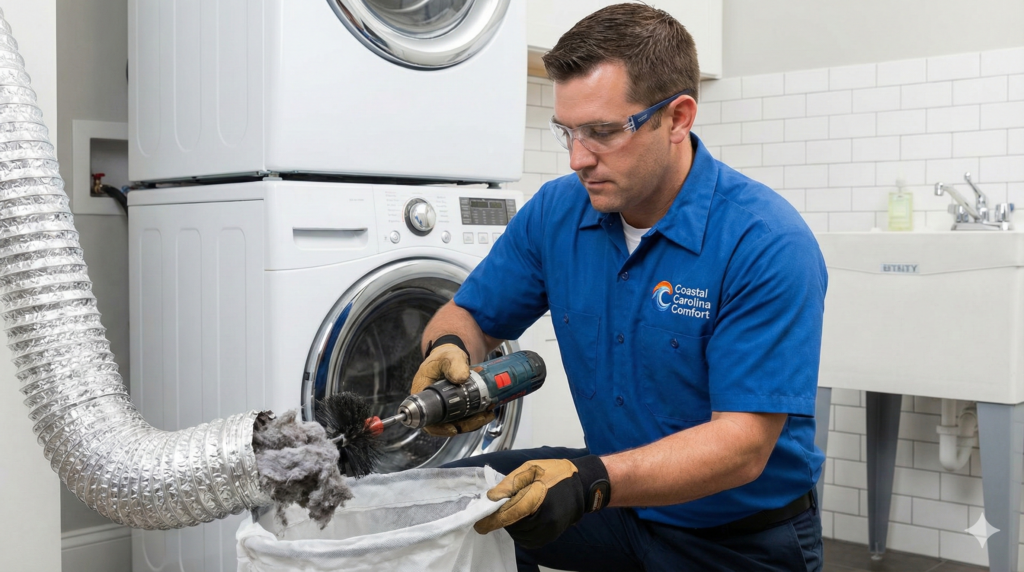
Dryer Vent Cleaning: Why It Matters for Summerville Homeowners Dryer vent cleaning prevents house fires, reduces energy costs, and extends your dryer’s lifespan. According to the U.S. Fire Administration, clothes dryers cause approximately 2,900 home fires each year, and lint buildup is the leading cause. When your dryer vent becomes clogged, hot air can’t escape properly—creating a fire hazard and forcing your dryer to work harder. Professional dryer vent cleaning removes accumulated lint from the entire exhaust system, not just the lint trap. For Summerville homeowners, annual cleaning is recommended, especially if your dryer takes longer than usual to dry clothes or feels excessively hot. The Hidden Danger in Your Laundry Room You clean the lint trap after every load. That’s enough, right? Unfortunately, no. The lint trap catches only about 75% of the lint your dryer produces. The rest travels into the dryer vent—the duct that carries hot, moist air from your dryer to the outside of your home. Over time, lint accumulates along the entire length of this vent, creating a serious fire hazard. Lint is highly flammable. Combine it with the heat your dryer generates, and you have the ingredients for a house fire. The U.S. Fire Administration reports that failure to clean dryer vents is the leading cause of dryer fires, ahead of mechanical failure and electrical issues. This isn’t a scare tactic—it’s physics. And it’s preventable. Warning Signs Your Dryer Vent Needs Cleaning Your dryer will tell you when the vent is clogged. Watch for these signs: Clothes Take Longer to Dry This is the most common symptom. If loads that used to dry in 45 minutes now take 60, 75, or even 90 minutes, restricted airflow is likely the cause. Your dryer can’t expel moist air efficiently, so clothes stay damp longer. Dryer Feels Excessively Hot Touch the top of your dryer during a cycle. Warm is normal. Hot enough to be uncomfortable? That’s a warning sign. When the vent is clogged, heat builds up inside the dryer instead of exhausting outside. Clothes Are Unusually Hot After a Cycle Similarly, if your clothes come out of the dryer extremely hot—almost too hot to handle—the dryer is working overtime to compensate for poor airflow. Burning Smell If you notice a burning odor when your dryer runs, stop using it immediately. This could indicate lint is overheating or has ignited. Unplug the dryer and have the vent inspected before using it again. Visible Lint Around the Outside Vent Check the exterior vent where your dryer exhausts. If you see lint accumulation around the opening or the flap doesn’t open properly when the dryer runs, the vent needs cleaning. Laundry Room Feels Humid or Hot A properly functioning dryer vent expels hot, moist air outside. If your laundry room feels humid or warmer than usual during drying cycles, that air may be backing up into your home. It’s Been More Than a Year Even without obvious symptoms, annual dryer vent cleaning is recommended. Lint accumulates gradually, and problems may not become apparent until the vent is significantly clogged. The Real Cost of a Clogged Dryer Vent Beyond the fire risk, a clogged dryer vent costs you money and shortens your appliance’s life. Higher Energy Bills When your dryer can’t exhaust air efficiently, it runs longer to dry each load. That extended run time adds up. According to Energy Star, a clogged dryer vent can increase energy consumption by 30% or more. For a household that does five loads per week, that’s a noticeable increase in your electric bill. Premature Dryer Failure Dryers aren’t designed to run for extended periods or operate at excessive temperatures. When a clogged vent forces your dryer to work harder, components wear out faster. The heating element, thermostat, and motor all suffer from the added strain. A dryer that should last 10–13 years may fail in seven or eight. Clothing Damage Excessive heat damages fabrics. Clothes dried in an overheating dryer wear out faster, shrink more, and fade sooner. Delicate items are especially vulnerable. Carbon Monoxide Risk (Gas Dryers) If you have a gas dryer, a clogged vent creates an additional hazard. Gas dryers produce carbon monoxide as a byproduct of combustion. Normally, this exhausts safely outside through the vent. When the vent is blocked, carbon monoxide can back up into your home—an invisible, odorless danger. Why the Lint Trap Isn’t Enough Many homeowners assume that cleaning the lint trap handles the lint problem. Here’s why it doesn’t: The Lint Trap’s Limitations The lint trap sits between the dryer drum and the exhaust system. It catches lint before it enters the vent—but not all of it. Fine lint particles pass through the screen, and lint that accumulates on the trap’s housing can bypass it entirely. The Journey Through the Vent Your dryer vent may run 10, 20, or even 30 feet from the dryer to the exterior wall. Along that path, lint settles on the duct walls, accumulates at bends and joints, and builds up near the exterior vent cap. None of this is addressed by cleaning the lint trap. Vent Configuration Matters Longer vents, vents with multiple turns, and vents that run vertically accumulate lint faster than short, straight runs. Many Summerville homes—especially two-story construction in neighborhoods like Cane Bay and Nexton—have dryers located far from exterior walls, requiring longer vent runs that need more frequent attention. What Professional Dryer Vent Cleaning Includes Professional cleaning addresses the entire exhaust system, not just the accessible parts. Here’s what to expect: Inspection Technicians inspect the vent system from both ends—at the dryer connection and at the exterior vent cap. They assess the vent’s length, configuration, and condition, and identify any damage or code violations. Lint Removal Using specialized rotating brushes and high-powered vacuums, technicians dislodge and extract lint from the entire length of the vent. This includes: The transition duct (flexible connector between dryer and wall) The rigid ductwork running through walls, floors, or ceilings Elbows and joints where lint accumulates The exterior
Duct Cleaning for Allergies: Does It Actually Help?

Duct Cleaning for Allergies: Does It Actually Help? Yes, duct cleaning can help reduce allergy symptoms by removing accumulated allergens—dust, dust mites, pet dander, and pollen—from your HVAC system. When these particles build up in ductwork, they recirculate through your home every time the system runs, triggering sneezing, congestion, itchy eyes, and respiratory discomfort. Professional duct cleaning eliminates allergens at the source, reducing your overall exposure. However, duct cleaning works best as part of a comprehensive approach that includes regular filter changes, humidity control, and source reduction. For Summerville allergy sufferers, addressing your ductwork can provide meaningful relief—especially before peak pollen seasons. Why Allergies Get Worse Indoors You’d think staying inside would give you a break from allergies. But for many Summerville residents, symptoms actually intensify at home. The culprit? Your HVAC system. Here’s what happens: allergens enter your home through open doors, windows, on your clothes, and on your pets. Your HVAC system pulls air from every room, and those allergens get drawn into the return vents. Some get trapped in your air filter. The rest settle in your ductwork. Over months and years, your ducts accumulate layers of allergenic material. Then, every time your heating or air conditioning kicks on, the system pushes air through those contaminated ducts—and redistributes allergens into your living spaces. It’s a cycle that keeps you exposed to allergens 24/7, even when pollen counts outside are low. Common Allergens Hiding in Your Ductwork Your ducts can harbor a surprising variety of allergy triggers: Dust Mites These microscopic creatures are one of the most common indoor allergens. Dust mites feed on dead skin cells and thrive in warm, humid environments—exactly what they find inside ductwork. It’s not the mites themselves that trigger allergies, but their waste particles and body fragments, which become airborne when disturbed. According to the Asthma and Allergy Foundation of America, dust mites are a trigger for approximately 20 million Americans. Pet Dander If you have cats, dogs, or other furry pets, their dander circulates through your HVAC system constantly. Pet dander is incredibly lightweight and sticky—it clings to duct surfaces and accumulates over time. Even if you’ve rehomed a pet or moved into a home where pets previously lived, dander can persist in ductwork for months or years. Pollen Summerville’s pollen seasons are no joke. Oak, pine, and grass pollen blanket the Lowcountry in spring, while ragweed takes over in fall. Pollen enters your home and gets pulled into your HVAC system, where it settles in ducts and recirculates long after the outdoor pollen count drops. This explains why some allergy sufferers experience symptoms year-round indoors, even during “off” seasons. Cockroach and Pest Debris Cockroach droppings, saliva, and body parts are potent allergens, particularly for people with asthma. Rodent urine and dander also trigger allergic reactions. If pests have ever inhabited your ductwork, their allergenic debris may still be present. Fabric Fibers and Household Dust General household dust—a mixture of fabric fibers, dirt, skin cells, and miscellaneous particles—accumulates in ducts and contributes to overall allergen load. How Duct Cleaning Reduces Allergy Symptoms Professional duct cleaning addresses allergies by removing contaminated material at the source. Here’s how the process helps: Eliminates Accumulated Allergens Over years of operation, your ducts collect pounds of dust, dander, and debris. A thorough cleaning extracts this material using specialized equipment—typically truck-mounted or portable vacuums with HEPA filtration that captures particles as small as 0.3 microns. Stops the Recirculation Cycle Once allergens are removed from your ductwork, your HVAC system stops redistributing them every time it runs. This immediately reduces your exposure and gives your immune system a break. Improves Air Filter Effectiveness When ducts are heavily contaminated, allergens can bypass your filter or overwhelm it quickly. Clean ducts mean your filter can do its job more effectively, capturing incoming allergens before they enter the duct system. Enhances Overall Indoor Air Quality Removing allergens from ducts is one component of better indoor air quality. Many allergy sufferers notice improvements in breathing comfort, sleep quality, and overall well-being after professional duct cleaning. What the Research Says The EPA takes a measured stance on duct cleaning, noting that it hasn’t been proven to prevent health problems. However, they acknowledge that duct cleaning may be beneficial when ducts are visibly contaminated with dust, debris, or pest droppings. The National Air Duct Cleaners Association (NADCA) points to studies showing that HVAC systems accumulate significant biological and particulate contamination over time, and that proper cleaning can reduce airborne contaminants. For allergy sufferers specifically, the logic is straightforward: if allergens are present in your ducts, removing them reduces your exposure. While duct cleaning isn’t a cure for allergies, it eliminates one significant source of triggers. When Duct Cleaning Makes the Biggest Difference for Allergies Duct cleaning isn’t necessary for everyone, but certain situations make it especially valuable for allergy sufferers: You’ve Never Had Your Ducts Cleaned If your home is more than five years old and the ducts have never been professionally cleaned, significant allergen accumulation is likely. You Recently Adopted or Rehomed Pets Bringing a new pet into your home—or removing one—changes your indoor allergen profile. Cleaning ducts after a pet transition removes accumulated dander and gives you a fresh start. You Moved Into a Previously Owned Home You inherit the previous occupants’ allergens when you buy a home. Their pets, their dust, their pollen exposure—it’s all in the ductwork. Cleaning ducts when you move in eliminates that history. Your Allergies Are Worse Indoors Than Outdoors If you experience more symptoms inside your home than outside—especially when the HVAC system is running—your ductwork may be a primary allergen source. You’re Preparing for Allergy Season Cleaning ducts before Summerville’s spring or fall pollen seasons removes accumulated pollen from previous years and reduces your baseline allergen exposure before new pollen arrives. You’ve Completed Home Renovations Construction projects generate enormous amounts of dust that settles in ductwork. Post-renovation duct cleaning is essential for allergy sufferers. A Note About Mold and Allergies Mold is a significant
Can Dirty Air Ducts Make You Sick? What Summerville Homeowners Need to Know

Can Dirty Air Ducts Make You Sick? What Summerville Homeowners Need to Know Yes, dirty air ducts can contribute to health problems—particularly respiratory issues, allergy symptoms, and irritation of the eyes, nose, and throat. When contaminated ducts circulate air through your home, they distribute dust, pet dander, pollen, bacteria, and other pollutants into every room. The Environmental Protection Agency (EPA) ranks indoor air pollution among the top five environmental health risks. While dirty ducts aren’t the sole cause of illness, they can worsen symptoms for people with asthma, allergies, or compromised immune systems and create discomfort for otherwise healthy individuals. What’s Actually Living in Your Ductwork? Your air ducts are out of sight, so they’re easy to forget. But over time, they collect more than just dust. Here’s what accumulates in a typical Summerville home’s ductwork: Dust and Dust Mites Every home generates dust—a mixture of dead skin cells, fabric fibers, dirt tracked indoors, and microscopic debris. Dust mites, tiny creatures invisible to the naked eye, feed on this material and thrive in ductwork. Their waste particles become airborne when your HVAC system runs, triggering allergic reactions in sensitive individuals. Pet Dander If you have dogs, cats, or other furry pets, their dander (tiny flakes of skin) circulates through your HVAC system and settles in ductwork. Even homes without current pets may harbor dander from previous occupants. Pollen Summerville’s oak trees, pine trees, and grasses produce significant pollen loads in spring and fall. Pollen enters your home through open doors, windows, and on clothing, then gets pulled into your HVAC system and trapped in ducts. Bacteria Biological contaminants can survive in ductwork, particularly in areas with moisture or organic debris. While your HVAC system isn’t a primary transmission route for most illnesses, contaminated ducts can harbor bacteria that affect indoor air quality. Pest Debris Rodents, insects, and other pests sometimes make their way into ductwork. They leave behind droppings, urine, dander, and in some cases, carcasses—all of which decompose and release particles into your air supply. Construction Debris If your home was recently built or renovated, your ducts may contain drywall dust, sawdust, insulation fibers, and other construction materials that weren’t properly cleaned out. Moisture and Potential Mold Concerns The Lowcountry’s humid subtropical climate creates conditions where moisture can accumulate in ductwork—through condensation, leaks, or high humidity. When moisture persists, it can lead to mold growth, which requires assessment and remediation by certified mold specialists. If you notice musty odors or see discoloration around vents, have a qualified mold professional inspect your system before scheduling duct cleaning. The Health Effects of Poor Indoor Air Quality The connection between dirty ducts and health problems comes down to indoor air quality (IAQ). When your HVAC system circulates contaminated air, you breathe in whatever’s been collected in your ductwork. Respiratory Symptoms The most common complaints linked to poor indoor air quality include: Coughing and wheezing Shortness of breath Chest tightness Frequent respiratory infections Sinus congestion These symptoms often worsen when the HVAC system is running and improve when you leave the house—a telltale sign that indoor air quality may be the culprit. Allergy and Asthma Flare-Ups For the estimated 50 million Americans with allergies and 25 million with asthma, contaminated ductwork can be a significant trigger. Dust mites, pet dander, and pollen are all common allergens that accumulate in ducts. If you notice that allergy symptoms persist indoors even when pollen counts are low outside, your ductwork may be recirculating allergens trapped from previous seasons. Eye, Nose, and Throat Irritation Airborne particles and biological contaminants can irritate mucous membranes, causing: Itchy, watery, or red eyes Runny or stuffy nose Sore throat Frequent sneezing These symptoms often get dismissed as “just allergies” or a lingering cold, but they may indicate an indoor air quality problem. Headaches and Fatigue Poor indoor air quality has been linked to headaches, difficulty concentrating, and general fatigue. This cluster of symptoms—sometimes called “sick building syndrome”—occurs when people spend extended time in spaces with inadequate ventilation or contaminated air. Skin Irritation Dry, itchy skin and unexplained rashes can result from airborne irritants circulating through your home. Dust mite waste is a common culprit. Serious Health Risks for Vulnerable Populations While healthy adults may experience only mild discomfort from poor indoor air quality, certain groups face greater risks: Population Elevated Risk Infants and young children Developing respiratory systems are more susceptible to damage Elderly adults Weakened immune response and existing health conditions People with asthma Contaminated air triggers attacks and worsens control People with allergies Constant exposure prevents symptom relief Immunocompromised individuals Higher risk of infection from airborne bacteria People with COPD Airborne irritants exacerbate breathing difficulties How to Tell If Your Ducts Are Affecting Your Health Connecting health symptoms to dirty ductwork isn’t always straightforward. Here are signs that your HVAC system may be contributing to health problems: Symptoms Improve When You Leave Home If your coughing, sneezing, or headaches ease up when you’re at work or running errands but return when you get home, indoor air quality deserves investigation. Multiple Household Members Are Affected When several people in your home experience similar symptoms—especially respiratory issues or allergies—a shared environmental factor like contaminated ductwork is more likely than coincidence. Symptoms Worsen When HVAC Runs Pay attention to whether symptoms intensify when your heating or air conditioning kicks on. If the correlation is consistent, your ducts may be distributing contaminants. Musty Odors If you notice a musty or stale smell when your system runs, moisture may have accumulated in your ductwork. This warrants inspection—and if mold is suspected, contact a certified mold assessment professional before proceeding with duct cleaning. Excessive Dust Despite Regular Cleaning Do you find yourself dusting constantly, only to see dust reappear within days? Your ducts may be the source, redistributing particles every time the system cycles. Recent Renovation or Water Damage Construction projects and water intrusion events introduce contaminants into ductwork. If health symptoms appeared after either situation, your ducts should be inspected. What the Research
HVAC Installation & Replacement in Charleston, SC | A Smart Investment in Your Home’s Comfort
Your HVAC system is the heart of your home, working tirelessly day in and day out to fight off the Lowcountry humidity and keep your family comfortable. But like any workhorse, it won’t last forever. If your aging unit is struggling, constantly breaking down, or sending your energy bills soaring, it might be time for an upgrade. A modern, high-efficiency HVAC system isn’t just a replacement, it’s a long-term investment in your home’s value, health, and comfort. At Coastal Carolina Comfort, HVAC installation is one of the most important services we offer to our neighbors, from the Charleston coast to the quiet streets of Summerville. Is It Time to Replace Your HVAC System? Repairs can often extend the life of a unit, but there comes a point when a replacement is the smarter financial decision. Here are the key signs it’s time to start planning for an installation: Your System is Over 10 Years Old: The average lifespan of an HVAC system in our coastal climate is 10-15 years. If yours is in that range, it’s living on borrowed time. Rising Energy Bills: An older system loses efficiency, working harder and using more electricity to do the same job. A new system can often pay for itself in energy savings. Frequent and Costly Repairs: Are you on a first-name basis with your repair technician? If a repair costs 30-50% of a new unit, it’s time to replace it. Poor Performance: Your home has hot and cold spots, the system runs constantly, or it just can’t keep up on the hottest days. Strange Noises: Loud grinding, banging, or rattling that persists after a tune-up can indicate a major component is about to fail. Our Installation Process: Done Right, From Start to Finish We believe in making the installation process as smooth and stress-free as possible. When you trust us with your home, you’re getting a partner dedicated to your long-term comfort. Free In-Home Consultation: We don’t do one-size-fits-all. We’ll come to your home, assess your layout, ductwork, and insulation, and listen to your comfort needs and budget. System Sizing & Selection: We perform a “Manual J” load calculation to ensure your new system is perfectly sized for your home, not too big, not too small. We’ll help you select the right high-efficiency system for your needs. Transparent, No-Pressure Quote: You’ll receive a detailed, easy-to-understand quote outlining the full scope of work and total cost. No hidden fees. Professional Installation Day: Our licensed and insured team will arrive on time, protect your home with floor coverings, and professionally install your new system according to manufacturer specifications and local codes. Final Walkthrough & Education: Once the installation is complete, we’ll test the system thoroughly and walk you through how to use your new thermostat and get the most out of your investment. Frequently Asked Questions About HVAC Installation How much does a new HVAC installation cost in the Charleston area? The cost of a new system varies based on your home’s size, the system’s efficiency rating (SEER2), and the complexity of the installation. A full system replacement can range from $8,000 to $20,000+. The best way to know for sure is with our free in-home estimate, where we provide an exact, all-inclusive price with no hidden fees. What is a “Manual J” load calculation and why is it important? A “Manual J” calculation is an essential engineering analysis we perform to determine the precise heating and cooling needs of your home. It prevents oversizing or undersizing the unit, which is the #1 cause of inefficiency, poor comfort, and premature system failure. We will never use a simple “rule-of-thumb” for your investment. How long does an HVAC installation take? A standard HVAC system replacement in a residential home can typically be completed by our professional team in a single day, usually within 4 to 8 hours. We work efficiently to minimize disruption and restore your comfort as quickly as possible. Can I really get 0% financing on a new system? Yes. We partner with trusted lenders to offer flexible financing options to qualified buyers, including our popular 0% interest plan for 24 months. We can walk you through the simple application process during your free consultation. Ready to explore your options for a new, energy-efficient HVAC system? Let our friendly experts provide you with the information you need to make a confident choice. Get Your Free, No-Obligation Estimate for a new HVAC system today! Call (843)708-8735 or fill out our online form.
What To Do When Your AC Freezes Up In Charleston

Learn how to handle AC freeze-ups in humid Charleston. Get tips on signs, causes, and solutions from Coastal Carolina Comfort experts.
How Regular Duct Cleaning Prevents Health Issues
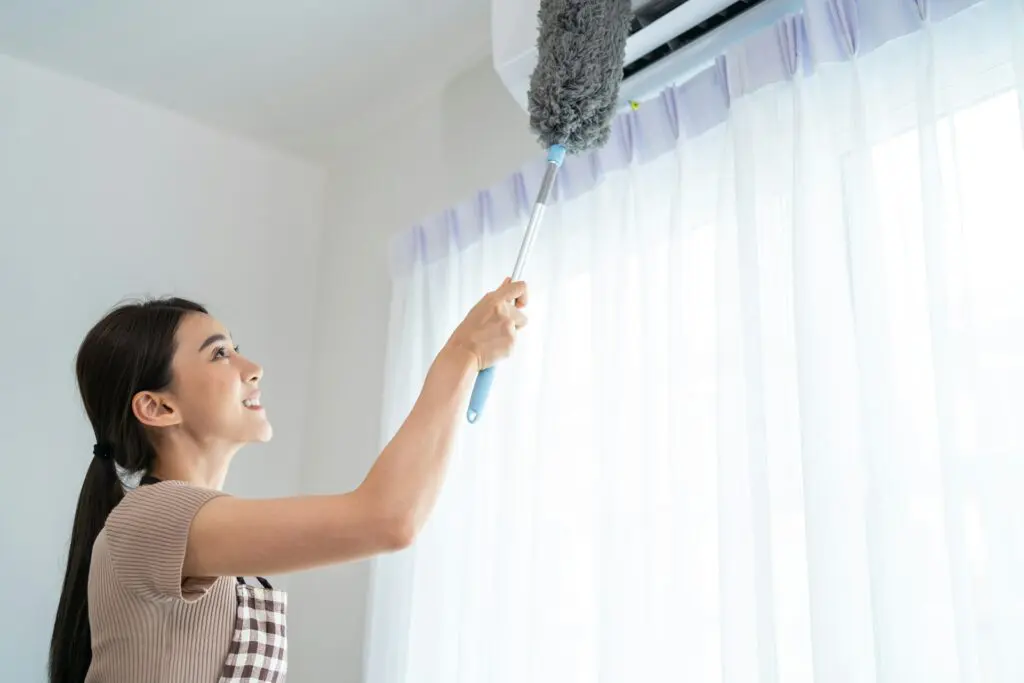
Learn how regular duct cleaning enhances your home’s air quality, reducing health risks like allergies and asthma for a healthier living space in Charleston.
Key Factors That Affect Your AC Replacement Decision

Explore top factors for AC replacement in Charleston, including age, efficiency, and budget. Get expert advice from Coastal Carolina Comfort today.
Steps To Take When Your Heat Pump Stops Working
Discover effective steps to tackle heat pump problems. Learn when it’s time to contact Coastal Carolina Comfort for expert HVAC repair services.
Expert HVAC Repair in Charleston, SC | Fast, Neighborly Service
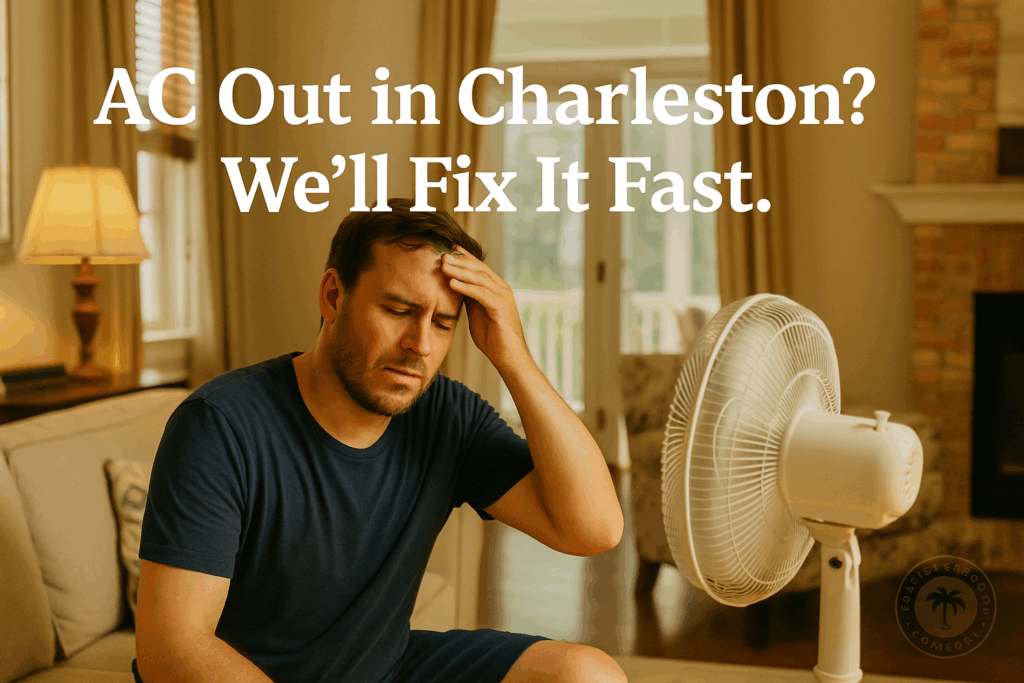
There’s no feeling quite like it. It’s a sweltering July afternoon in Charleston, the humidity is thick enough to swim through, and you suddenly realize your house is getting warmer. The AC unit is silent. Panic sets in. In the Lowcountry, a working HVAC system isn’t a luxury—it’s an absolute necessity. When it breaks down, you need a local expert who can get there fast, diagnose the problem honestly, and get it fixed right the first time. At Coastal Carolina Comfort, that’s exactly what we do. This article is your guide to our repair services, helping you understand common issues and know what to do when your system lets you down. It’s a core part of our mission to provide comprehensive HVAC services for our neighbors across the Charleston area. Signs Your HVAC System is Calling for Help Sometimes a system fails suddenly, but often it gives you warning signs. If you notice any of the following, it’s time to call in a professional before a small problem becomes a major, costly one. Weak or No Airflow: Air is barely trickling out of your vents. AC Blowing Warm Air: The system is running, but it’s not cooling your home. Strange Noises: Grinding, squealing, or clanking sounds are a clear sign something is wrong with the internal components. Unpleasant Odors: A musty or burning smell from your vents needs immediate attention. Constant Cycling: Your system turns on and off constantly, struggling to maintain the set temperature. Visible Leaks or Moisture: Any water pooling around your indoor or outdoor unit is a red flag. Common HVAC Problems We Fix Every Day With years of experience serving homes from Summerville to Mount Pleasant, we’ve seen it all. Our licensed technicians can quickly identify and fix all common HVAC issues, including: Failed Capacitors: A frequent victim of our hot summers, preventing the motor from starting. Refrigerant Leaks: The essential “lifeblood” of your AC. We can find the leak and recharge the system. Clogged Condensate Drains: Humidity and algae can create blockages, causing water to back up and potentially shut down your system. Worn Contactor Coils: The switch that powers your outdoor unit can wear out over time. Blower Motor Issues: A problem with the fan that circulates air through your home. We service all major brands, including Trane, Carrier, Lennox, Goodman, and more. If it heats or cools a home in the Lowcountry, we know how to fix it. Our straightforward HVAC Repair Process When you call us, you know exactly what to expect, good old-fashioned, neighborly service backed by professional expertise. Schedule Your Service: Give us a call or book online. We’ll find a time that works for you. Diagnose the Issue: Our technician will arrive on time, listen to your concerns, and perform a thorough diagnostic of your system. Provide a Clear Explanation & Upfront Price: We’ll explain the problem in plain English and provide you with a clear, flat-rate price for the repair. No hidden fees, no surprises. Fix it Right: With your approval, our technician will perform the repair using high-quality parts, getting your system back up and running. Ensure Your Satisfaction: We’ll test the system to make sure everything is working perfectly and answer any questions you have before we leave. Need Emergency HVAC Repair? Breakdowns don’t wait for business hours. If your heat goes out on a freezing night or your AC dies during a heatwave, call us. We offer emergency HVAC repair services to restore your family’s comfort and safety as quickly as possible. Why Choose Coastal Carolina Comfort for Your Repair? We’re Truly Local: We understand the toll that salt air and high humidity take on HVAC equipment in Charleston, Dorchester, and Berkeley counties. Honest Recommendations: We’ll always give you the straight scoop. If a repair is a better option than a replacement, we’ll tell you. Save on Future Repairs: As a member of our Comfort Club, you get priority service and a 15% discount on all repairs. Regular maintenance is the best way to prevent future breakdowns. Frequently Asked Questions About HVAC Repair How much does a typical HVAC repair cost? The cost of a repair depends entirely on the issue. A simple fix like replacing a capacitor might cost a few hundred dollars, while a major repair like a refrigerant leak could be more. We charge a flat diagnostic fee to find the problem, and then we provide you with an exact, upfront price for the repair before any work begins. There are no surprise charges. Should I repair or replace my old HVAC system? This is a common question. We generally recommend considering a replacement if your system is over 10-12 years old, needs frequent repairs, or if the cost of the current repair is 30-50% of the cost of a new unit. Our technicians will always give you an honest assessment of both options. Is your emergency HVAC repair service more expensive? We do not charge overtime fees for members of our Comfort Club. For non-members, there may be an additional fee for after-hours or weekend emergency service. We are always transparent about all costs before we begin work. Do you carry the parts needed for my repair on your trucks? Yes, our service vehicles are fully stocked with the most common parts for all major HVAC brands. Our goal is to complete your repair in a single visit whenever possible, getting your comfort restored quickly. Don’t let a broken HVAC system ruin your day. For fast, reliable, and friendly HVAC repair service, you can count on your local experts. Call Coastal Carolina Comfort today at (843)708-8735 or click here to schedule your repair online!
Emergency HVAC Repair in Charleston, SC | 24/7 Service
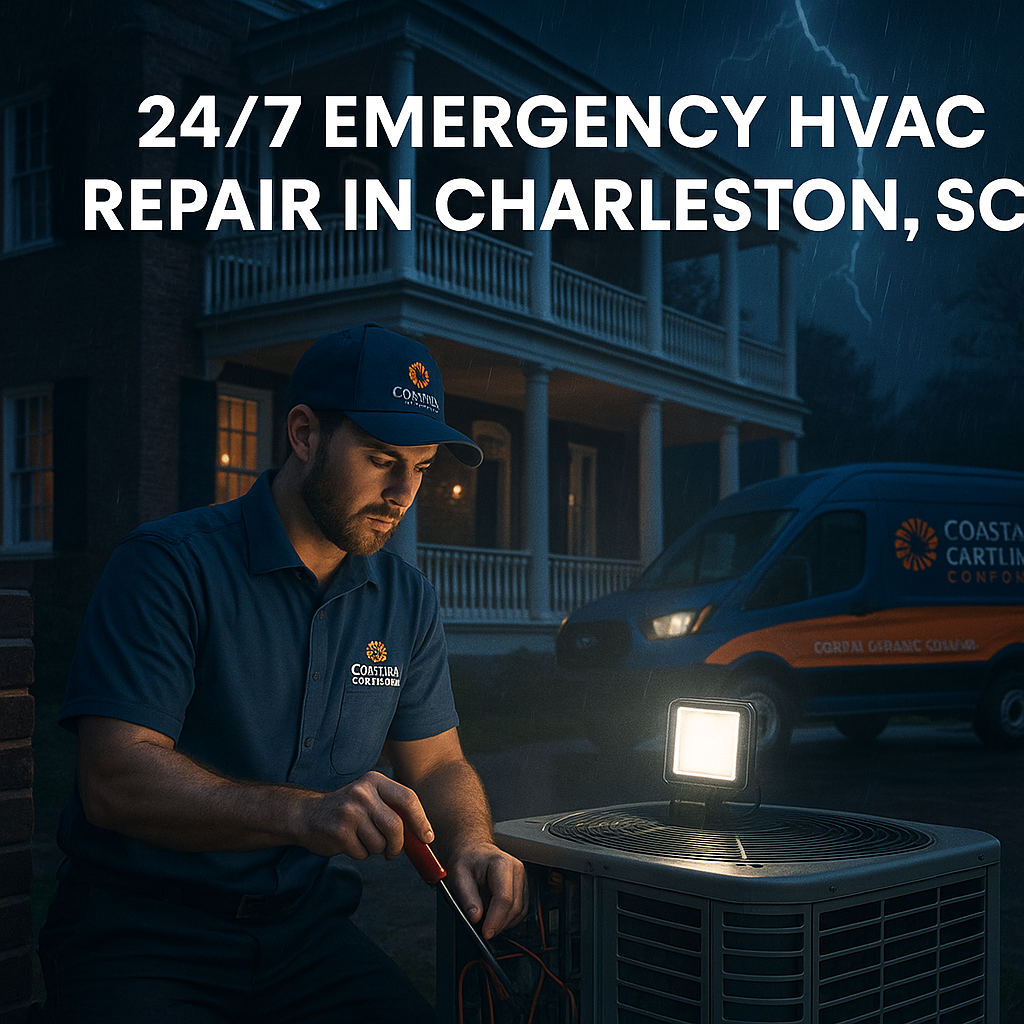
There’s never a good time for your HVAC system to fail, but it almost always seems to happen at the worst possible moment, in the dead of a humid August night, during a holiday weekend, or right when guests are about to arrive. When your air conditioner or heater suddenly quits, you don’t just need a repair; you need it now. At Coastal Carolina Comfort, we understand that urgency. We know that a broken AC in a Charleston summer isn’t just an inconvenience; it can be a serious comfort and safety issue. That’s why we offer fast, reliable emergency HVAC repair services across the Lowcountry, ready to restore your peace of mind when you need it most. This commitment is a core part of our expert HVAC repair offerings. When Is It a True HVAC Emergency? While any breakdown is frustrating, some situations require immediate attention. Call for emergency service if you experience: Complete System Failure: Your AC or heat will not turn on at all, especially during extreme temperatures. Burning Smells or Smoke: Immediately turn off your system at the thermostat and breaker and call us. Loud, Alarming Noises: Grinding, screaming, or banging metallic sounds can indicate a critical component failure that could cause more damage if left to run. Signs of an Electrical Issue: Flickering lights when the system kicks on or a buzzing from the unit could be a dangerous electrical fault. For Vulnerable Occupants: If you have infants, elderly family members, or individuals with health conditions in the home, any heating or cooling failure is an emergency. Our Emergency Repair Process: Your Fast Track to Comfort When you call us for an emergency, you become our immediate priority. Immediate Dispatch: We have technicians on-call and ready to respond to your HVAC emergency 24 hours a day, 7 days a week. Fast Diagnosis: Our technician will arrive promptly, listen to your concerns, and quickly diagnose the critical issue to stop any further damage and identify the problem. Clear, Upfront Pricing: Even in an emergency, we provide a clear, flat-rate price for the repair before we begin work. You will never have surprise fees. On-the-Spot Repair: Our service vehicles are stocked with the most common parts needed to fix a wide range of emergency issues. Our goal is to fix the problem in a single visit and get your system running again. Don’t Let an HVAC Emergency Derail Your Life A system failure is stressful, but the solution doesn’t have to be. Coastal Carolina Comfort is your calm, capable, and trusted partner in any HVAC crisis. Frequently Asked Questions About Emergency Repair Do you really offer service 24/7, including holidays? Yes. We have technicians on-call 365 days a year. We understand that emergencies don’t stick to a 9-to-5 schedule, and we are ready to help whenever you call. How quickly can you get a technician to my home in an emergency? Emergency calls are our highest priority. While response times can vary based on your location and current demand, we dispatch the next available technician to your home as quickly as possible to minimize your wait time. Is an emergency repair more expensive than a standard one? There may be an after-hours or emergency service fee for non-members. However, members of our Comfort Club are never charged overtime fees. In all cases, you will see and approve the full, flat-rate price for the repair itself before any work is done. What if my system can’t be repaired and needs to be replaced? If the system has suffered a catastrophic failure, our technician will provide an honest assessment and explain your options. While a full installation typically cannot happen in the middle of the night, we can help you find a safe temporary solution and schedule an immediate replacement consultation for the next business day. Facing an HVAC emergency? Don’t wait. Call Coastal Carolina Comfort now at (843)708-8735 for immediate assistance.