
Why Regular AC Maintenance Prevents Costly Repairs
Professional AC maintenance is the single most effective way to prevent unexpected breakdowns, extend your system’s lifespan, and keep repair costs low over time. A comprehensive tune-up performed once or twice per year allows a trained technician to identify and address failing components — worn capacitors, low refrigerant levels, dirty coils, corroded electrical connections — before they cascade into expensive emergency repairs. In the Lowcountry, where AC systems run six to seven months per year and endure extreme humidity, salt air exposure, and sustained high temperatures, maintenance isn’t optional if you want your system to reach its full lifespan. Coastal Carolina Comfort’s preventive maintenance program covers every critical component, and the homeowners who follow a regular maintenance schedule consistently experience fewer breakdowns, lower energy bills, and longer system life.
Here’s what professional AC maintenance actually involves, how it prevents the most common and costly repairs, and why it matters more in South Carolina than almost anywhere else.
What Professional AC Maintenance Includes
A proper AC tune-up is not a quick visual inspection and a filter change. It’s a systematic evaluation of every component that can fail, degrade, or lose performance over time. At Coastal Carolina Comfort, our NATE-certified technicians follow a comprehensive checklist during every maintenance visit.
Electrical Component Testing
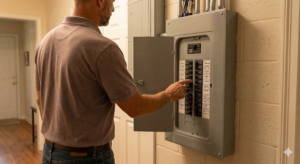
Your technician tests the run capacitor and start capacitor with a multimeter to measure microfarad readings. A capacitor that’s weakened but still functional today may fail within weeks under peak summer load — identifying this during a maintenance visit means a $200 scheduled replacement instead of a $400+ emergency call. We also inspect contactors for pitting and carbon buildup, check wiring connections for corrosion or looseness, and verify that safety controls and disconnect switches are functioning properly.
Refrigerant Level Verification
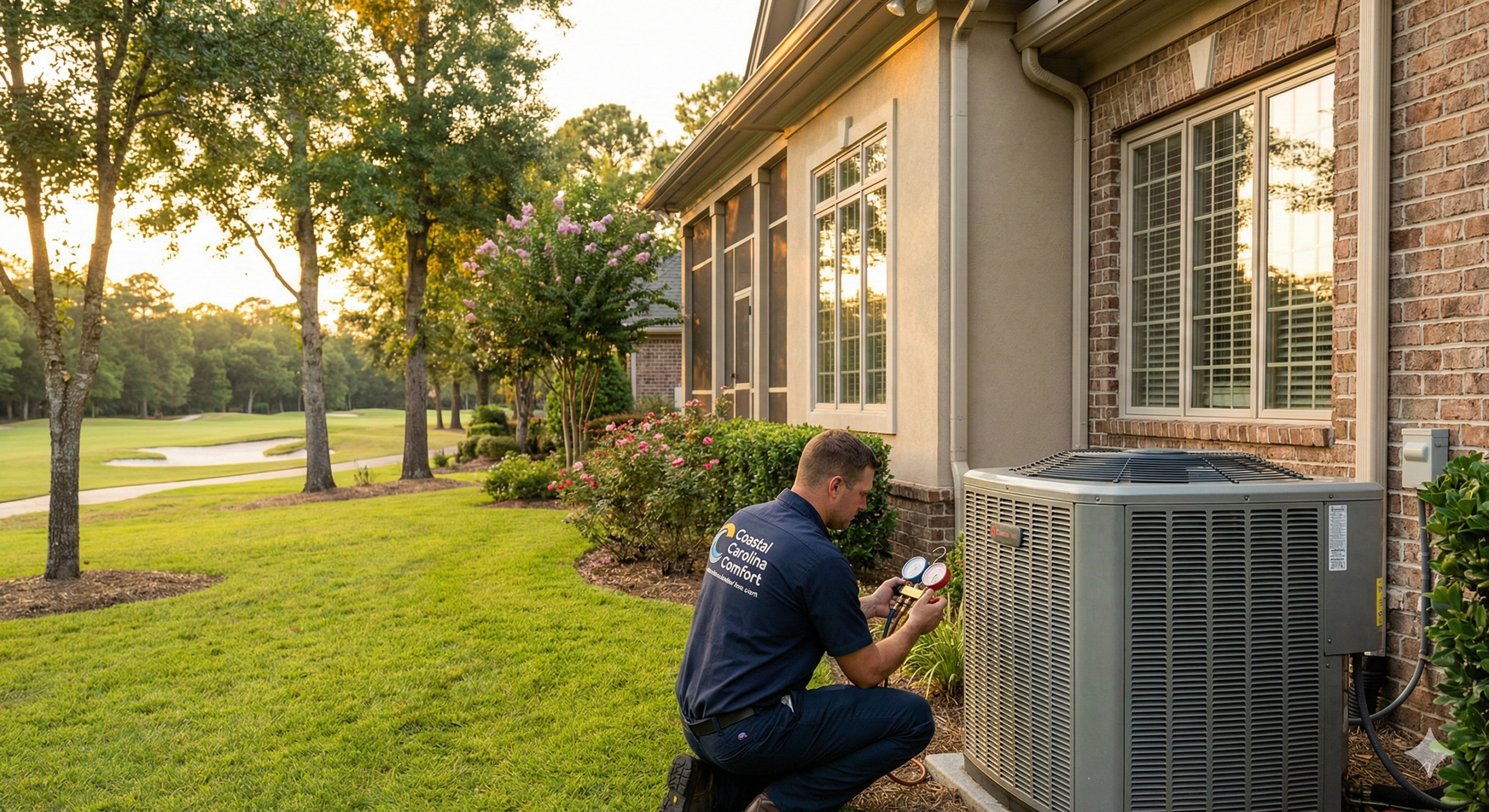
Using pressure gauges connected to the system’s service ports, your technician checks that the refrigerant charge matches the manufacturer’s specifications. Low refrigerant means a leak exists somewhere in the system — and identifying a slow leak during a maintenance visit prevents the scenario where your system gradually loses cooling capacity, works harder, consumes more electricity, and eventually shuts down entirely.
Coil Inspection and Cleaning
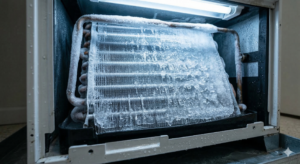
Both the evaporator coil (indoor) and condenser coil (outdoor) are checked for dirt, debris, and biological buildup. In the Lowcountry, the evaporator coil is particularly susceptible to mold and biofilm growth because it operates in a perpetually moist environment. A dirty evaporator coil restricts airflow, reduces heat absorption, and can cause the coil to freeze — all problems that lead to repair calls. The condenser coil accumulates dirt, pollen, grass clippings, and — in coastal areas — salt residue that corrodes the aluminum fins.
Condensate Drain Line Inspection and Treatment
The condensate drain line is one of the most common sources of AC service calls in our market. Our technicians flush the drain line, check the drain pan for cracks or corrosion, and treat the line to prevent algae and biofilm buildup. A $20 preventive treatment during a maintenance visit prevents a $200+ emergency drain clearing call — or worse, water damage to your ceiling or flooring.
Thermostat Calibration and Operation
We verify that your thermostat is reading temperatures accurately, communicating properly with the system, and cycling the equipment at appropriate intervals. A miscalibrated thermostat can cause short cycling, excessive runtime, or temperature inconsistencies that you might attribute to a system problem when the real issue is a $15 calibration fix.
Air Filter Assessment
We check and replace the air filter if needed, and we discuss the right filter type and replacement frequency for your specific system and home. In the Lowcountry’s high-pollen environment, homeowners often benefit from changing filters every 30 days during peak season rather than the standard 60-90 day recommendation you’ll find in most owner’s manuals.
Airflow and Ductwork Inspection
Your technician checks supply and return airflow at the registers, looks for obvious ductwork issues like disconnected sections or crushed flex duct (extremely common in South Carolina attic spaces), and verifies that the blower motor is operating within normal parameters.
How Maintenance Prevents the Five Most Costly AC Repairs
Each of the repairs below is one that maintenance directly prevents or mitigates.
Repair 1: Compressor Failure ($1,500–$3,500)
The compressor is the most expensive component in your AC system, and it rarely fails without a contributing cause. Low refrigerant forces the compressor to work under abnormal pressures. Dirty coils restrict heat transfer and cause the compressor to overheat. Electrical issues like failing capacitors put additional stress on the compressor motor. Regular maintenance addresses all three contributing factors, dramatically reducing the risk of catastrophic compressor failure.
Repair 2: Evaporator Coil Replacement ($1,000–$2,500)
Evaporator coils can develop refrigerant leaks over time, particularly in the Lowcountry where the coil’s perpetually moist operating environment accelerates corrosion. Maintenance catches early signs of coil degradation — unusual temperature differentials across the coil, minor pressure drops, or visible corrosion — allowing for planned repair or replacement rather than an emergency situation.
Repair 3: Blower Motor Failure ($400–$900)
Blower motors fail when they’re overworked. The most common overwork scenario is restricted airflow — typically from dirty filters, dirty evaporator coils, or ductwork issues. Every one of those root causes is addressed during a standard maintenance visit. A clean system with good airflow means your blower motor operates within its designed parameters instead of straining to push air through restrictions.
Repair 4: Frozen Evaporator Coil (Variable — $200–$800+)
A frozen coil is almost always a symptom of another problem: low refrigerant, restricted airflow, or a dirty coil. Maintenance catches all three root causes. Left unaddressed, a repeatedly freezing coil can damage the compressor — turning a $200 root-cause repair into a $3,000+ compressor replacement.
Repair 5: Condensate Drain Backup ($100–$250 + potential water damage)
This is the single most preventable AC service call in the Lowcountry. Our systems pull massive amounts of moisture from the air during the cooling season, and that moisture must drain properly. Algae, mold, and biofilm will inevitably build up in the drain line without regular treatment. A backed-up drain triggers a system shutdown if you have a float switch — or causes water damage if you don’t. Maintenance clears and treats the line before problems develop.
Why Maintenance Matters More in the Lowcountry
If you’ve lived anywhere else in the country and moved to the South Carolina Lowcountry, you may be used to a different relationship with your AC system. In markets where the cooling season runs three to four months, annual maintenance is a reasonable suggestion. In the Lowcountry, where your system runs six to seven months at sustained high loads, maintenance is essential infrastructure upkeep.
Several factors make our environment particularly demanding on AC systems.
Extended runtime: Your system accumulates far more operating hours than systems in cooler climates. More hours means more wear on every mechanical and electrical component.
Extreme humidity: Sustained humidity above 80% creates ideal conditions for biological growth on evaporator coils, in drain lines, and within ductwork. This biological buildup restricts airflow, degrades air quality, and creates conditions for component failure.
Salt air exposure: Homes in Charleston, James Island, Mount Pleasant, Sullivan’s Island, and other coastal areas face accelerated corrosion on outdoor condenser coils, electrical connections, and copper refrigerant lines due to salt-laden air. Annual coil cleaning and connection inspections are especially critical for coastal properties.
Pollen and particulate load: South Carolina’s pollen season adds extra strain on air filters and condenser coils. A condenser coated in pollen operates less efficiently, forcing the compressor to work harder and consume more energy.
All of these factors mean that the Lowcountry climate demands more from your AC system — and more frequent, more thorough maintenance to keep it running reliably.
Maintenance vs. Repair: Understanding the Difference
It’s worth clarifying a distinction that homeowners sometimes blur: AC maintenance and AC repair are different services that serve different purposes.
AC maintenance is preventive. It’s performed on a working system to keep it running efficiently, identify developing issues, and extend the system’s lifespan. Think of it like a physical checkup — you go to the doctor when you feel fine so problems can be caught early.
AC repair is corrective. It’s performed when something has already failed or degraded to the point where the system isn’t functioning properly. It addresses a specific problem with a specific fix.
The relationship between the two is straightforward: consistent maintenance reduces the frequency and severity of repairs. The data consistently shows that well-maintained systems experience fewer breakdowns, require less expensive repairs when they do occur, and last years longer than neglected systems.
If you’re already experiencing signs that your AC needs repair, maintenance is important but not a substitute for addressing the current issue. Get the repair handled first, then establish a maintenance schedule to prevent future problems.
The Coastal Carolina Comfort Maintenance Approach
We offer maintenance programs designed specifically for Lowcountry homeowners through our Comfort Club. Members receive scheduled maintenance visits, priority scheduling, $0 service call fees, and discounts on repairs and equipment. The program is built around the reality that South Carolina AC systems need consistent professional attention to perform reliably.
Whether you’re in Summerville’s established neighborhoods, the new communities of Nexton and Cane Bay, downtown Charleston, West Ashley, Mount Pleasant, or anywhere in the Lowcountry — proactive maintenance is the most cost-effective investment you can make in your home comfort system.
For AC repair services when you need them, we’re here for homeowners across Summerville, SC and Charleston, SC.
Call (843) 708-8735 or visit our AC maintenance services page to schedule your tune-up or join the Comfort Club.
Frequently Asked Questions
How often should I have my AC maintained in the Lowcountry?
We recommend twice-yearly maintenance for Lowcountry homeowners — once in early spring before the cooling season begins and once in fall before transitioning to heating. Our extended cooling season and extreme humidity put more strain on AC systems than most U.S. markets, making semi-annual maintenance the standard for reliable performance.
What’s the difference between a tune-up and a repair?
A tune-up is a scheduled, preventive service performed on a working system to maintain performance, catch developing issues, and extend lifespan. A repair is a corrective service performed to fix a specific problem that’s already causing the system to malfunction. Maintenance reduces the need for repairs — but when repairs are needed, they tend to be less severe on well-maintained systems.
Is AC maintenance worth the cost?
Yes. A typical maintenance visit costs a fraction of even a minor repair call. More importantly, maintenance prevents the most expensive failures — compressor replacement, evaporator coil replacement, and water damage from drain backups — that can cost $1,000 to $3,500+. Maintained systems also run more efficiently, saving you money on electricity every month.
Can I do AC maintenance myself?
You can and should handle basic tasks like regular filter changes (every 30-60 days during cooling season), keeping the outdoor unit clear of vegetation and debris, and keeping supply and return vents unobstructed. However, testing electrical components, checking refrigerant levels, cleaning coils, and treating drain lines require professional tools, training, and in some cases EPA certification. These tasks should be performed by a qualified technician.
What happens if I skip AC maintenance for a year?
One skipped year may not cause an immediate failure, but it allows gradual degradation — capacitor wear goes undetected, coil buildup reduces efficiency, drain lines develop clogs, and minor electrical issues worsen. Each skipped year increases the probability of an unplanned breakdown and shortens your system’s overall lifespan. In the Lowcountry’s demanding climate, the compounding effect of skipped maintenance is more pronounced.
Does maintenance extend the life of my AC system?
Consistently maintained systems typically last 15 years or more in the Lowcountry, while neglected systems often begin failing at 8 to 10 years. That’s a significant difference — potentially five or more additional years of service from a system that costs $5,000 to $12,000 to replace.
RELATED READING
- AC Repair in Summerville, SC — When maintenance catches a problem, we fix it fast
- AC Repair in Charleston, SC — Reliable repair for Lowcountry homeowners
- Signs Your AC Needs Repair — Know when something’s wrong so you can act early
- The Lowcountry Climate and Your AC — Why our environment demands more from your system
- Emergency AC Repair in the Lowcountry — When prevention wasn’t enough and you need help now