Signs Your AC Needs Repair (And When to Call a Pro)
An air conditioner rarely fails without warning. In most cases, your cooling system will show clear signs that something is wrong — warm air from the vents, unusual sounds, higher-than-normal electric bills, or moisture where it shouldn’t be — days or even weeks before a complete breakdown occurs. Recognizing these AC repair warning signs early gives you time to schedule a professional diagnosis and fix the problem before it escalates into an expensive emergency. Here in the Lowcountry, where our cooling systems run six to seven months straight, catching problems early is especially important. Coastal Carolina Comfort’s NATE-certified technicians see these issues every day across Summerville, Charleston, and the surrounding communities, and we can tell you from experience: the homeowners who call at the first sign of trouble almost always pay less and stay more comfortable than those who wait.
Below are the eight most common signs that your air conditioner needs professional repair — and guidance on when each situation warrants a call.
1. Your AC Is Blowing Warm or Lukewarm Air
This is the most obvious symptom and the one that sends most Lowcountry homeowners reaching for the phone. If your system is running but the air coming from your vents feels warm or barely cool, several things could be happening.
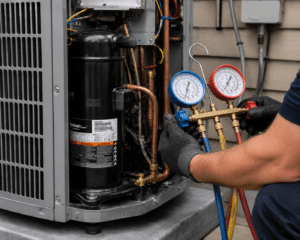
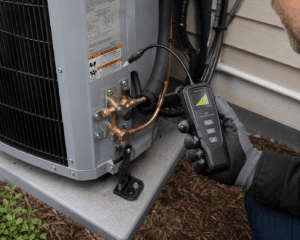
A refrigerant leak is one of the most common causes. Your AC system relies on a precise charge of refrigerant — typically R-410A in newer systems — to absorb heat from indoor air and transfer it outside. When the refrigerant level drops due to a leak in the evaporator coil, condenser coil, or refrigerant lines, the system simply cannot cool effectively.
Other potential causes include a failing compressor, a malfunctioning expansion valve, or restricted airflow from a severely clogged air filter. Before calling a technician, check your thermostat settings and replace your air filter if it’s been more than 30 days. If neither fixes the issue, it’s time for a professional diagnosis.
When to call: If warm air persists after checking your thermostat and filter, call for AC repair in Summerville, SC or AC repair in Charleston, SC — a refrigerant leak will only get worse and can damage the compressor if left unaddressed.
2. Strange or Unusual Noises
Your air conditioner should produce a consistent, low hum when running. When you start hearing sounds that are new, loud, or rhythmic, your system is telling you something specific is going wrong.
Grinding or metal-on-metal screeching typically indicates a problem with the blower motor bearings or the fan motor inside the condenser unit. When bearings wear out, the motor has to work harder, generating heat and friction that can eventually burn out the motor entirely.
Banging or clanking often points to a loose or broken component inside the compressor, the blower assembly, or a disconnected fan blade hitting other parts. This is a sound you should never ignore — loose parts cause cascading damage.
Buzzing can indicate electrical issues such as a failing contactor, loose wiring, or a capacitor that’s starting to fail. Electrical components are some of the most common failure points in South Carolina AC systems because our high humidity accelerates corrosion on connections and terminals.
Hissing or bubbling sounds frequently point to a refrigerant leak, especially if the sound comes from the area near the indoor evaporator coil.
When to call: Any new or unusual sound warrants a diagnostic call. Some of these — especially grinding and banging — can turn a $200 repair into a $2,000 compressor replacement if ignored for even a few weeks.
3. Short Cycling — Your AC Turns On and Off Rapidly
Short cycling happens when your AC compressor kicks on, runs for a few minutes (or less), shuts off, and then restarts the cycle almost immediately. This is not how a healthy cooling system operates. A properly functioning air conditioner should run in cycles of roughly 15 to 20 minutes before reaching the thermostat set point and shutting off.
Short cycling puts enormous stress on the compressor — the most expensive component in your AC system. Each startup draws a surge of electrical current, and frequent cycling causes premature wear on the compressor motor, the capacitor, and the contactor.
Common causes include an oversized AC unit, a failing run capacitor, a dirty evaporator coil that’s causing the system to overheat and trigger a safety shutdown, or a refrigerant issue that’s causing the low-pressure safety switch to trip.
In the Lowcountry, we also see short cycling caused by thermostat placement issues. If your thermostat is near a window receiving direct afternoon sun or positioned above a heat-generating appliance, it can create false temperature readings that confuse the system.
When to call: Short cycling should be addressed within a week. Every cycle puts unnecessary wear on your compressor, and a new compressor can cost $1,500 to $3,000 installed.
4. Your Energy Bills Have Spiked Unexpectedly
A gradual increase in your electric bill during peak cooling season is normal — we expect higher bills from May through September here in South Carolina. What isn’t normal is a sudden, unexplained spike when your usage habits haven’t changed.
When an AC system is struggling — whether from low refrigerant, a dirty coil, a failing motor, or aging components — it compensates by running longer and harder to maintain the same temperature. That extra runtime translates directly into higher electricity consumption.
We recommend comparing your current bill to the same month in the previous year. If you see a 20% or greater increase without a corresponding change in usage or rate, your cooling system is likely working harder than it should be.
When to call: A spike of 20% or more over the same billing period last year is a strong indicator that your system needs professional AC repair. The longer you wait, the more you pay in both energy costs and accumulated system wear.
5. Weak Airflow From Your Vents
If you hold your hand up to a supply vent and feel little to no air movement — even though the system is running — you have an airflow problem. This one is sneaky because your system may still be cooling the air it moves, but it’s not moving enough of it to cool your home effectively.
The most common cause is a severely restricted air filter. Coastal Carolina Comfort recommends checking your filter every 30 days during peak season. A clogged filter forces the blower motor to work harder, reduces the volume of air across the evaporator coil, and can eventually cause the coil to freeze.
Other causes include ductwork issues such as disconnected sections, crushed flex duct in attic spaces (extremely common in South Carolina attics where summer temperatures can reach 140°F), a failing blower motor, or a frozen evaporator coil.
When to call: If replacing the filter doesn’t restore normal airflow within a few hours, you likely have a blower motor issue or ductwork problem that requires a technician’s diagnosis.
6. Moisture, Leaks, or Ice Where They Shouldn’t Be
Water pooling around your indoor air handler, ice forming on the refrigerant lines or evaporator coil, or excessive condensation on your ductwork — these are all signs of a problem that needs attention.
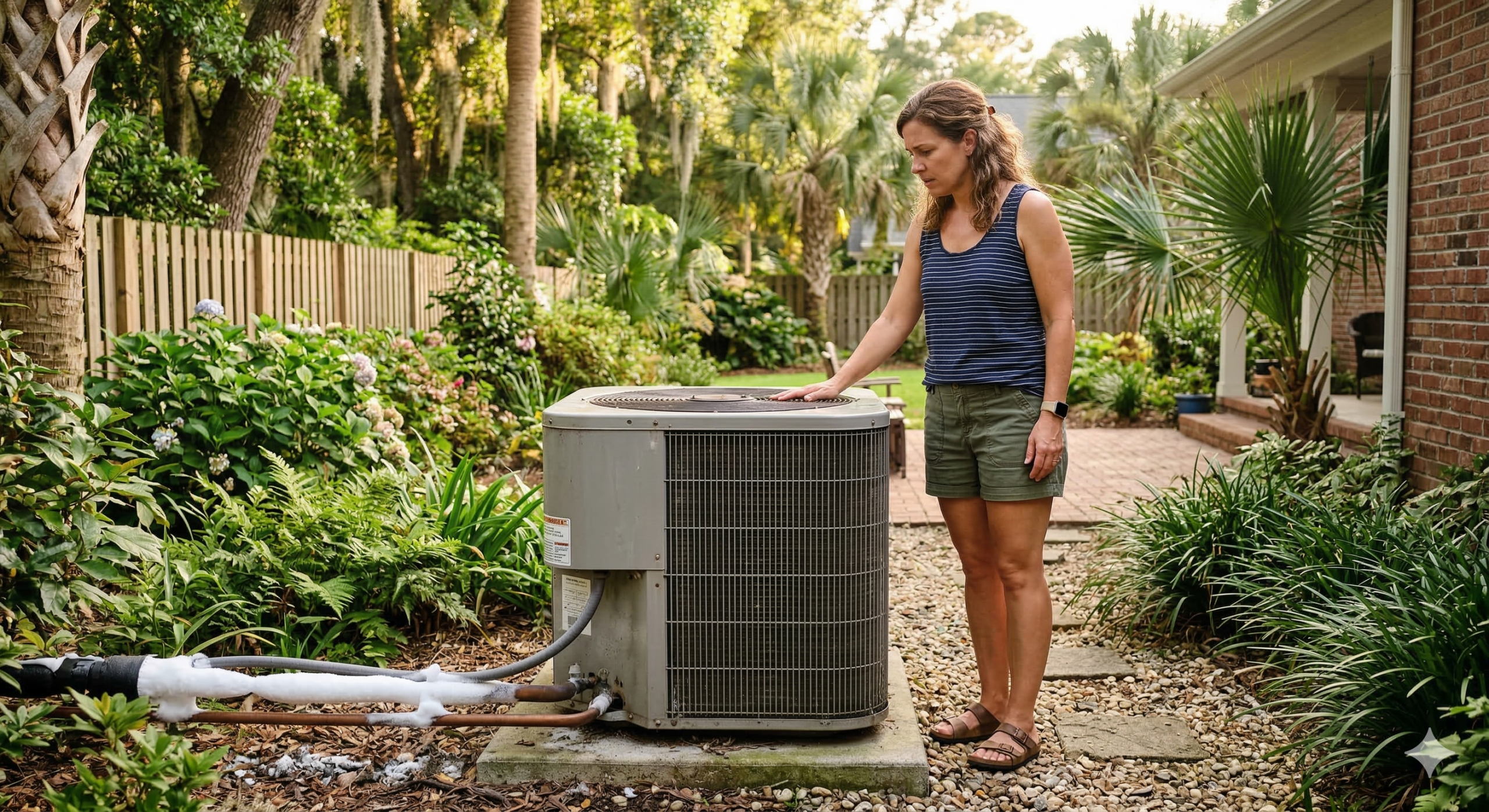
Ice on refrigerant lines or the evaporator coil almost always indicates low refrigerant or severely restricted airflow. When refrigerant pressure drops below normal operating range, the evaporator coil gets too cold and freezes the moisture it pulls from your indoor air. You’ll often notice warm air from the vents and ice on the copper line simultaneously.
Water pooling around the indoor unit typically means a clogged condensate drain line. In the Lowcountry’s humid climate, our AC systems pull an enormous amount of moisture from indoor air — sometimes several gallons per day. That moisture exits through the condensate drain line, and when algae, mold, or debris clogs that line, the water backs up and overflows the drain pan.
This is one of the most common service calls we handle across Summerville and Charleston, and it’s one that can cause significant water damage to ceilings, floors, and walls if left unaddressed.
When to call: Ice on the system or active water leaking around the indoor unit — call the same day. Water damage escalates quickly, and a frozen coil can damage the compressor. Contact our team for trusted AC repair in Charleston, SC or reliable service in Summerville.
7. Unpleasant Odors Coming From Your Vents
Your air conditioner should not produce any noticeable odor. If you smell something when the system kicks on, that smell is telling you something specific.
A musty or mildew smell is the most common odor complaint in Lowcountry HVAC systems, and it typically indicates mold or mildew growth on the evaporator coil, in the drain pan, or within the ductwork. Given that our relative humidity regularly exceeds 80% to 90%, this is a persistent challenge for South Carolina homeowners. Beyond being unpleasant, mold in your HVAC system affects indoor air quality and can trigger respiratory issues.
A burning or electrical smell could indicate an overheating motor, a wiring issue, or an electrical component that’s failing. This warrants an immediate shutdown and a service call — electrical problems can escalate to safety hazards.
A rotten egg or sulfur smell near the outdoor unit sometimes indicates a deceased animal near or inside the condenser, which can restrict airflow and damage components.
When to call: Musty smells should be addressed before they affect your family’s health. Burning or electrical smells warrant an immediate shutdown and same-day emergency AC repair in the Lowcountry.
8. Your System Is More Than 10 Years Old and Needing Frequent Repairs
Age alone doesn’t mean your AC is failing, but an aging system combined with increasing repair frequency is a pattern worth paying attention to. Most residential air conditioners in South Carolina have a functional lifespan of 12 to 15 years — and often less in our climate, where systems run seven or more months per year.
If your system is 10 years or older and you’ve had two or more repair calls in the past 12 months, the economics start shifting. At some point, continuing to repair becomes more expensive than replacing the system with a modern, high-efficiency unit.
A good rule of thumb is the 50% rule: if a single repair costs more than 50% of the value of a new system, replacement usually makes more financial sense. Our team can walk you through the numbers honestly — we’ll never push a replacement when a repair is the smarter choice. Read our full guide on deciding between AC repair and AC replacement for a detailed breakdown.
When to call: If you’re seeing a pattern of repeated repairs on an aging system, schedule a diagnostic so we can give you an honest assessment of repair vs. replacement options.
What to Do When You Notice These Signs
Not every warning sign requires an emergency call. Here’s a quick framework for prioritizing:
Call immediately (same-day): Burning smells, visible sparks or smoke, complete system failure during extreme heat, active water leaking into your home, or any safety concern.
Call within 24-48 hours: Warm air from vents, ice on the system, new grinding or banging sounds, short cycling.
Schedule within a week: Gradually increasing energy bills, mild airflow reduction, musty odors, recurring minor issues.
Regardless of urgency, the key is not to wait and hope the problem resolves itself. In our experience, AC problems in the Lowcountry only get worse with time — especially during peak summer when your system is running hardest.
Why Lowcountry Homeowners Trust Coastal Carolina Comfort
We’re a family-owned HVAC company headquartered in Summerville, SC, with NATE-certified technicians who serve homeowners across the Lowcountry every day. We diagnose the problem before we recommend any repair, we explain what we find in plain language, and we never push unnecessary work.
Whether you’re in Summerville’s Historic District, the new communities of Nexton and Cane Bay, downtown Charleston, West Ashley, Mount Pleasant, or anywhere in between — our team is ready to help. We offer same-day service when available, transparent pricing, and 0% interest financing for 24 months on qualifying repairs.
Call us today at (843) 708-8735 or schedule a free service call to have one of our technicians diagnose your AC issue.
Frequently Asked Questions
How do I know if my AC needs repair or just a new filter?
Start with the simplest fix: replace your air filter. If the problem — whether it’s weak airflow, warm air, or short cycling — persists after a fresh filter has been in place for several hours, the issue is beyond filtration and requires a professional diagnosis. Coastal Carolina Comfort offers $0 service calls so there’s no cost barrier to getting an honest assessment.
What’s the most common AC repair in Summerville, SC?
Capacitor replacements and refrigerant leak repairs are the two most frequent AC repairs we perform in Summerville. The combination of extended cooling seasons and high humidity puts constant stress on electrical components and creates conditions that accelerate corrosion on refrigerant connections.
How much does a typical AC repair cost?
Most common AC repairs in South Carolina cost between $150 and $650, including the diagnostic fee, parts, and labor. Major component repairs like compressor replacement range from $1,000 to $3,500 depending on the system. Read our complete breakdown of AC repair costs in South Carolina for detailed pricing by repair type.
Can I run my AC if it’s making a strange noise?
It depends on the noise. A mild rattling might be a loose panel and is usually safe to run temporarily. Grinding, screeching, or banging sounds should prompt you to shut the system off and call for service — these noises indicate component damage that worsens with continued operation.
Should I repair or replace my AC if it keeps breaking down?
If your system is under 8 years old and the repair costs less than 50% of a new system, repair usually makes sense. Beyond 10-12 years with recurring issues, the economics typically favor replacement. We’ve written a detailed guide on AC repair vs. replacement to help you make the right decision.
Why does my AC smell musty when it turns on?
A musty smell usually indicates mold or mildew growth on the evaporator coil, drain pan, or inside the ductwork. This is especially common in the Lowcountry due to our extreme humidity levels. It’s more than a comfort issue — mold in your HVAC system degrades your indoor air quality and can affect respiratory health.
RELATED READING
- AC Repair in Summerville, SC — Your local experts for fast, reliable service
- AC Repair in Charleston, SC — Trusted cooling repair across the Lowcountry
- Emergency AC Repair in the Lowcountry — When your AC breaks down and you can’t wait
- How Much Does AC Repair Cost in South Carolina? — Transparent pricing guide
- Why Regular AC Maintenance Prevents Costly Repairs — The proactive approach to AC health