 Furnace Not Blowing Hot Air? Here’s What Summerville Homeowners Should Check
When your furnace runs but doesn’t blow hot air, the most common causes are thermostat issues, a clogged air filter, pilot light or ignitor failure, or a tripped safety switch. Start by checking your thermostat settings and replacing your air filter—these simple fixes resolve many heating problems without a service call. If those don’t work, the issue likely involves your ignition system, gas supply, blower motor, or heat exchanger, which require professional diagnosis. For Summerville homeowners, understanding what’s safe to troubleshoot yourself versus when to call for professional heating repair can save time, money, and frustration on cold Lowcountry nights.
When Your Heater Runs But the Air Stays Cold
Few things are more frustrating than hearing your heating system running while cold air blows from your vents. The system sounds like it’s working. The thermostat says it should be heating. But your house keeps getting colder.
This disconnect between “running” and “heating” is actually helpful for diagnosis. It tells you the electrical components are functioning—the thermostat is communicating, the blower motor is operating. The problem lies somewhere in the heating process itself.
Before you call for service, there are several things you can safely check yourself. Some fixes take less than five minutes. Others require professional attention. This guide helps you identify which situation you’re facing.
Start Here: The Simple Fixes
Before assuming the worst, check these common culprits that homeowners can address themselves:
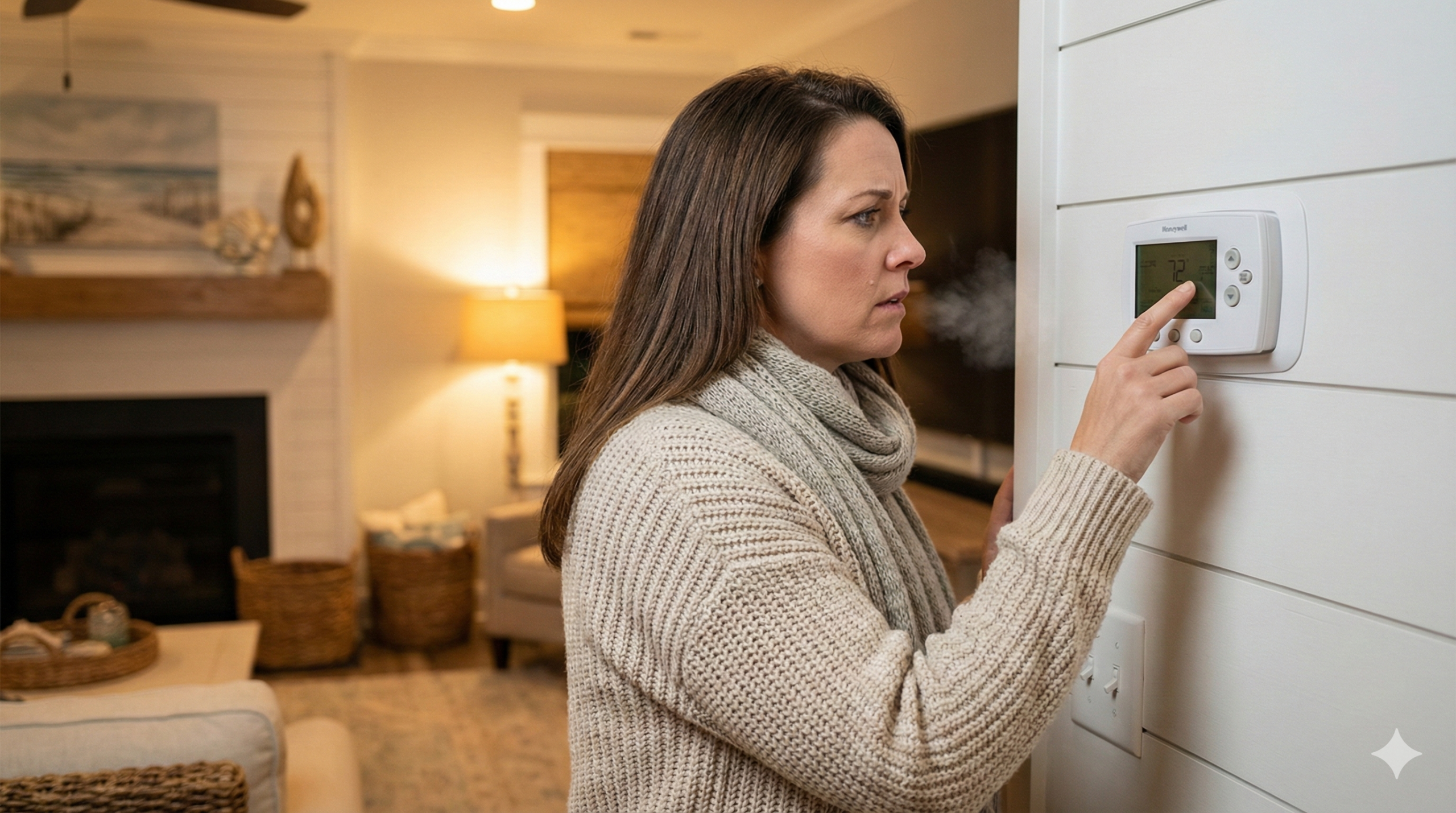
Check Your Thermostat Settings
It sounds obvious, but thermostat issues cause a surprising number of “no heat” calls. Verify:
Mode setting: Is the thermostat set to “Heat” rather than “Cool” or “Off”? In homes with heat pumps, an accidental switch to cooling mode means the system runs but produces cold air.
Fan setting: If the fan is set to “On” rather than “Auto,” the blower runs continuously—even when the heating cycle isn’t active. This circulates unheated air between heating cycles, making it feel like the system isn’t working.
Temperature setting: Is the set temperature actually higher than the current room temperature? The system won’t call for heat if it thinks the target temperature is already reached.
Battery status: Many thermostats use batteries. Low batteries can cause erratic behavior or prevent the thermostat from communicating with your system. Replace batteries if your thermostat display is dim or blank.
Programming check: If you have a programmable or smart thermostat, verify the schedule. Someone may have adjusted settings, or a software update may have reset your preferences.
Replace Your Air Filter
A clogged air filter is the single most common cause of heating problems—and the easiest to fix.
When your filter is clogged:
- Airflow becomes restricted
- The system overheats trying to push air through
- Safety switches trip to prevent damage
- The furnace shuts down the heating cycle while the blower continues running
How to check: Locate your filter (usually in the return air vent or at the furnace itself). Remove it and hold it up to light. If you can’t see light through it, it’s too dirty.
The fix: Replace the filter with a new one of the same size. For most homes, filters should be replaced every one to three months—more frequently if you have pets or allergies.
Important: If your system shut down due to overheating, it may need a few minutes to reset after you replace the filter. Turn the system off, wait five minutes, then turn it back on.
Check Your Circuit Breakers
Heating systems typically have multiple electrical connections:
- A breaker for the air handler/blower
- A separate breaker for the furnace or heat pump outdoor unit
- Sometimes a dedicated breaker for the ignition system
If one breaker trips while others remain on, your blower might run while the heating components don’t. Check your electrical panel for any tripped breakers related to your HVAC system.
The fix: Reset any tripped breakers by switching them fully off, then back on. If a breaker trips again immediately, don’t keep resetting it—this indicates an electrical problem requiring professional attention.
Inspect Your Vents and Registers
Blocked or closed vents can create pressure imbalances that affect system performance:
- Make sure all supply vents are open and unobstructed
- Check that return vents aren’t blocked by furniture or rugs
- Verify that no one has closed vents in unused rooms (this can cause system-wide problems)
While blocked vents usually cause uneven heating rather than complete heating failure, checking them takes only a minute and rules out an easy fix.
Furnace-Specific Troubleshooting
If the simple fixes didn’t solve your problem and you have a gas or electric furnace, these issues may be the cause:
Pilot Light Problems (Older Gas Furnaces)
If your furnace is more than 15–20 years old, it may use a standing pilot light—a small flame that burns continuously and ignites the main burners when heat is needed.
Signs of pilot light issues:
- No heat at all from the furnace
- You can hear the furnace trying to start but it doesn’t ignite
- Visible pilot light area shows no flame
What you can check: Many furnaces have a small window that lets you see the pilot light. If it’s out, you may be able to relight it following the instructions on the furnace’s label.
Caution: If you smell gas, don’t attempt to relight the pilot. Leave your home immediately and call your gas company. Gas leaks are emergencies.
When to call a professional: If the pilot won’t stay lit after relighting, the thermocouple (a safety device that detects the pilot flame) likely needs replacement. This is a professional repair.
Ignitor Failure (Modern Furnaces)
Most furnaces manufactured in the last 20 years use electronic ignition rather than a standing pilot light. Common types include:
- Hot surface ignitors: A ceramic element that glows red-hot to ignite gas
- Intermittent pilot: An electronic spark that lights a small pilot, which then ignites the main burners
Signs of ignitor failure:
- Furnace attempts to start (you hear clicking or see the inducer fan run) but doesn’t ignite
- System tries multiple times then shuts down
- Error codes on the furnace control board (if equipped)
What you can check: Some furnaces have diagnostic LED lights that flash error codes. Check your owner’s manual or the diagram inside the furnace panel to interpret these codes.
When to call a professional: Ignitor replacement requires accessing internal furnace components and working with gas connections. This is not a DIY repair—call for professional heating repair.
Gas Supply Issues
If your furnace isn’t receiving gas, it can’t produce heat:
Check the gas valve: There’s typically a manual shutoff valve on the gas line near your furnace. Ensure it’s in the “on” position (handle parallel to the pipe).
Check other gas appliances: Do your gas stove, water heater, or other gas appliances work? If nothing gas-powered is working, the issue may be with your gas supply rather than your furnace.
Verify your account: It happens more often than you’d think—gas service gets interrupted due to billing issues or scheduled maintenance.
When to call a professional: If the gas valve is on and other appliances work but your furnace doesn’t receive gas, there may be an issue with the furnace’s gas valve or gas pressure. This requires professional diagnosis.
Limit Switch and Safety Controls
Modern furnaces have multiple safety switches that shut down operation when problems are detected:
- High limit switch: Shuts off burners if the heat exchanger gets too hot (often due to restricted airflow)
- Pressure switch: Verifies the inducer fan is running before allowing ignition
- Flame sensor: Confirms burners are lit; shuts off gas if no flame is detected
- Rollout switch: Detects flames outside the normal combustion area
When these switches trip, the furnace may run its blower without producing heat, or it may shut down entirely.
What you can check: A clogged filter is the most common cause of limit switch trips. If you’ve already replaced the filter, the issue may be a faulty switch or a more serious problem like a failing blower motor or cracked heat exchanger.
When to call a professional: Safety switches exist to protect you from fire, carbon monoxide, and equipment damage. If they’re tripping repeatedly, something is wrong—don’t bypass them. Call for professional diagnosis.
Heat Pump-Specific Troubleshooting
Many Summerville homes use heat pumps rather than furnaces. Heat pumps work differently and have their own set of potential issues:
Understanding Heat Pump Operation
Heat pumps extract heat from outdoor air and transfer it inside. This works well in the Lowcountry’s mild climate, but it means:
- The air from your vents may feel cooler than furnace-heated air (around 90–95°F vs. 120–140°F from a furnace)
- The system runs longer cycles to maintain temperature
- Performance decreases as outdoor temperatures drop
What feels wrong but isn’t: If your heat pump produces air that feels lukewarm rather than hot, that may be normal operation—not a malfunction.
Outdoor Unit Issues
Your heat pump’s outdoor unit is critical for heating (unlike air conditioning, where it’s the “hot” side). Check:
Is the outdoor unit running? Go outside and verify the fan is spinning and the compressor is humming. If the outdoor unit is silent while the indoor blower runs, the heat pump isn’t heating.
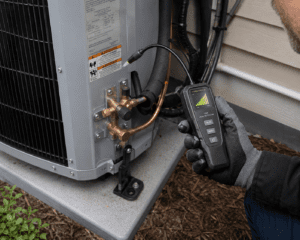
Is the unit covered in ice? Some frost on the outdoor coil is normal in heating mode. Heavy ice buildup is not. Heat pumps have defrost cycles to handle normal frost—if ice is accumulating, the defrost system may have failed.
Is airflow blocked? Clear any leaves, debris, or snow from around the outdoor unit. Maintain at least two feet of clearance on all sides.
Reversing Valve Problems
Heat pumps use a reversing valve to switch between heating and cooling modes. If this valve fails or gets stuck:
- The system may cool when it should heat (or vice versa)
- The system may not heat or cool effectively in either mode
Signs of reversing valve issues:
- Cold air when set to heat
- System works in one mode but not the other
- Hissing sound from the outdoor unit when switching modes
When to call a professional: Reversing valve diagnosis and replacement requires specialized knowledge and refrigerant handling. This is definitely a professional repair.
Refrigerant Issues
Heat pumps use refrigerant to transfer heat. Low refrigerant levels cause:
- Reduced heating capacity
- Ice buildup on the outdoor coil
- System running constantly without reaching set temperature
- Eventually, compressor damage
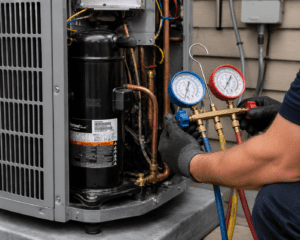
What you can check: Unfortunately, not much. Refrigerant issues require professional diagnosis with specialized gauges.
When to call a professional: If you suspect refrigerant issues, call for service. Refrigerant doesn’t “wear out”—low levels indicate a leak that needs repair before recharging.
Auxiliary/Emergency Heat
Heat pumps have backup heating elements (auxiliary heat or emergency heat) that activate when:
- Outdoor temperatures drop below the heat pump’s effective range
- The heat pump can’t keep up with demand
- The system is in defrost mode
- You manually select “Emergency Heat”
Check your thermostat: If “Aux Heat” or “Em Heat” indicators are constantly illuminated, your heat pump may not be functioning properly, forcing the backup heat to do all the work. This is expensive and indicates a problem.
When to call a professional: Constant auxiliary heat operation suggests the heat pump itself isn’t working. Schedule a diagnostic service call.
Warning Signs: When to Call Immediately
Some situations require immediate professional attention—or immediate evacuation:
Gas Smell
If you smell rotten eggs or sulfur (the odorant added to natural gas):
- Don’t operate any electrical switches or devices
- Don’t use your phone inside the house
- Leave immediately
- Call your gas company’s emergency line from outside
- Don’t return until cleared by the gas company
Gas leaks are life-threatening emergencies. Don’t attempt any troubleshooting.
Carbon Monoxide Detector Alarm
If your carbon monoxide detector alarms:
- Get everyone out of the house immediately
- Call 911 from outside
- Don’t return until emergency responders clear the home
Carbon monoxide is odorless and colorless. Trust your detector—it may save your life.
Burning Smell
A brief burning smell when you first turn on heat for the season (dust burning off) is normal. However:
- Persistent burning smell
- Smell of burning plastic or electrical
- Visible smoke
These indicate serious problems. Turn off your system and call for emergency service.
Unusual Noises
While some operational noise is normal, these sounds indicate problems:
| Sound | Possible Cause | Urgency |
|---|---|---|
| Loud banging or booming | Delayed ignition, dirty burners | High—call soon |
| Screeching or squealing | Belt or bearing failure | Medium—schedule service |
| Rattling or vibrating | Loose components, failing motor | Medium—schedule service |
| Clicking without ignition | Ignitor failure | Medium—system won’t heat |
| Continuous clicking | Electrical issue, relay problem | Medium—schedule service |
Visible Damage
If you notice:
- Cracks in the heat exchanger (visible rust, corrosion, or separation)
- Soot or scorch marks around the furnace
- Water pooling around the unit
- Damaged or disconnected flue pipe
Stop using the system and call for professional inspection.
What to Expect from a Professional Service Call
When DIY troubleshooting doesn’t solve the problem, here’s what happens when you call for heating repair in Summerville:
Diagnostic Process
A qualified technician will:
- Listen to your description of the problem and any troubleshooting you’ve attempted
- Check thermostat operation and settings
- Inspect the air filter and airflow
- Examine the furnace or heat pump for error codes, visible damage, and proper operation
- Test electrical components including ignitors, sensors, and safety switches
- Check gas pressure and combustion (for gas furnaces)
- Measure refrigerant levels and pressures (for heat pumps)
- Inspect the heat exchanger for cracks or damage
Diagnosis and Estimate
After diagnosis, the technician should:
- Explain what’s wrong in terms you understand
- Show you the failed component if possible
- Provide a written estimate before performing repairs
- Answer your questions without pressure
Red flag: If a technician pressures you to authorize expensive repairs immediately without clear explanation, get a second opinion. Legitimate professionals respect your right to understand and consider your options.
Common Repairs and Typical Costs
For reference, common heating repairs in the Summerville area typically cost:
| Repair | Typical Cost Range |
|---|---|
| Ignitor replacement | $150–$300 |
| Flame sensor cleaning/replacement | $100–$200 |
| Blower motor replacement | $300–$600 |
| Capacitor replacement | $150–$300 |
| Gas valve replacement | $300–$500 |
| Thermostat replacement | $150–$400 |
| Heat pump refrigerant recharge | $200–$500 |
| Reversing valve replacement | $400–$800 |
Costs vary based on equipment type, parts availability, and service timing.
Preventing Future Heating Problems
Once your current issue is resolved, these practices help prevent future breakdowns:
Schedule Annual Maintenance
Professional maintenance before heating season catches small problems before they become no-heat emergencies. A tune-up typically includes:
- Inspection of all components
- Cleaning of burners, sensors, and coils
- Testing of safety controls
- Verification of proper operation
- Filter replacement
Change Filters Regularly
Set a reminder to check your filter monthly and replace it when dirty. This single habit prevents the majority of heating problems.
Keep Vents Clear
Maintain clear space around all supply and return vents. Don’t close vents in unused rooms—this creates pressure imbalances that stress your system.
Address Small Problems Promptly
Strange noises, unusual odors, or minor performance issues often precede major failures. Addressing them early is cheaper than emergency repairs.
Know Your System
Familiarize yourself with your heating system’s basics:
- Where is the filter located?
- Where are the circuit breakers?
- Where is the gas shutoff (if applicable)?
- What type of system do you have (furnace, heat pump, dual fuel)?
This knowledge helps you troubleshoot effectively and communicate clearly with technicians.
How Coastal Carolina Comfort Can Help
When troubleshooting doesn’t solve the problem, Coastal Carolina Comfort provides honest, professional heating repair throughout Summerville and the Lowcountry.
What you can expect from us:
- Prompt response: We know cold houses can’t wait, especially when temperatures drop
- Clear diagnosis: We explain what’s wrong and why, in plain language
- Upfront pricing: Written estimates before we begin work—no surprises
- Honest recommendations: If a repair doesn’t make sense, we’ll tell you
- Quality work: Repairs done right the first time
We’ve been keeping Summerville families comfortable since 2005. From Cane Bay to Nexton to Historic Downtown, we know Lowcountry homes and the heating systems that serve them.
Furnace not blowing hot air? Contact us for diagnosis and repair—we’ll get your heat back on.
Frequently Asked Questions
Why is my furnace blowing cold air intermittently? Intermittent cold air often indicates a failing component that works sometimes but not consistently—commonly a dirty flame sensor, weak ignitor, or overheating issue causing the limit switch to cycle. The system heats until the problem triggers a shutdown, then restarts after cooling down. This pattern requires professional diagnosis.
Can a dirty filter really cause my furnace to stop heating? Yes. A severely clogged filter restricts airflow so much that the furnace overheats. Safety switches then shut down the burners to prevent damage, while the blower continues running to cool the system. This is the most common cause of “running but not heating” problems—and the easiest to fix.
How do I know if I have a furnace or a heat pump? Check your outdoor unit. If you have a large unit outside that runs in both summer and winter, you have a heat pump (or a dual fuel system with a heat pump). If your outdoor unit only runs in summer for air conditioning and you have a separate furnace inside, you have a traditional split system. Your thermostat may also indicate “Heat Pump” in its settings.
Is it safe to run my heat pump when it’s covered in ice? Light frost on the outdoor coil is normal and will be handled by the defrost cycle. Heavy ice buildup is not normal and can damage the unit. If your heat pump is heavily iced, turn it off and call for service. Running a severely iced unit can damage the compressor and fan motor.
How long can I wait to repair a heating problem? It depends on the problem and the weather. A minor issue during mild weather can wait a few days for a scheduled appointment. No heat during freezing temperatures is an emergency—pipes can freeze, and vulnerable family members face health risks. When in doubt, err on the side of urgency.