
Home of the $0 FREE Service Call Club | 0% Interest for 24 Months

Home of the $0 FREE Service Call Club | 0% Interest for 24 Months

Home of the $0 FREE Service Call Club | 0% Interest for 24 Months

HVAC problems can hit at the worst times, especially in places like Charleston where summer temperatures don’t give much grace. When your air conditioning stops working on a hot August afternoon, that’s not something you can afford to wait on. Things like broken AC units, strange noises, or sudden shutdowns can make your home uncomfortable and even unsafe for your family. That’s where understanding the signs of serious issues and knowing when to act quickly becomes important.

Emergency HVAC repair services can help homeowners avoid bigger problems and expensive damage if they’re handled right away. Not everything is an emergency, but when something doesn’t feel or sound right, waiting too long can turn a small fix into a costly disaster. Learning to pick up on red flags early can help keep your space cool, safe, and stress-free all year long.

Signs You Need Emergency HVAC Repairs

When something’s off with your HVAC system, your house usually lets you know right away. Catching these warning signs early can make the difference between a small repair and a full system meltdown. Here are some of the most common signs something needs to be handled fast:

– Loud or strange noises, like rattling, screeching, or banging, may point to loose or broken parts inside the unit

– Weak airflow coming through your vents can mean serious blockages or a failing fan

– Burning smells, or musty odors, may signal electrical problems or mold build-up

– Sudden rise in humidity around the house even with the AC on could mean that the system isn’t pulling moisture from the air like it should

– The system keeps shutting off or won’t turn on at all, which might be caused by a thermostat issue or something more serious

For example, if you come home and your house feels like an oven even though your thermostat was set to cool, and you notice the vents pushing barely any air, that could indicate a damaged blower motor. Ignoring this could result in the whole system overheating or shutting down altogether.

Problems don’t fix themselves. If any of these signs pop up, it’s a smart idea to get a professional to take a look as soon as possible.

Common Emergency HVAC Issues

Knowing what’s going wrong puts you in a better spot to ask for the right help and understand the scope of the repair. Emergency HVAC issues tend to fall into a few common categories. While each one needs proper attention, some indicate faster breakdowns than others.

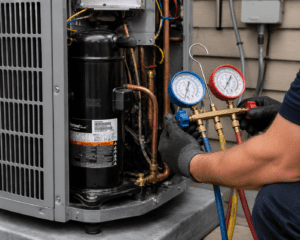
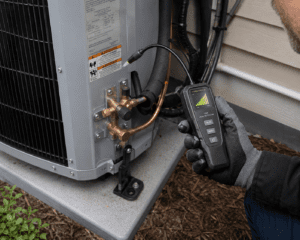
One major issue is compressor failure. Without a working compressor, your AC can’t push refrigerant through the system, leaving your home hot and humid. Another urgent problem comes from refrigerant leaks. If your system is low on refrigerant, it can’t cool your home, and the leak itself can be dangerous to the environment if not addressed.

Electrical problems are also big troublemakers. Faulty wiring or overloaded circuits can shut your unit off completely or cause it to cycle on and off. Left unfixed, this could harm other parts of the system. Dirty or clogged filters sometimes get overlooked, but they can restrict airflow so much that the unit has to work harder and may break down in the process. Lastly, thermostat malfunctions confuse the whole setup. Your system may not cool the house the way you expect, or it may run constantly without shutting off.

When these problems show up during the peak of summer, delays in fixing them can cause more than discomfort. A fast response is always better than waiting and hoping it works itself out.

What to Do in an HVAC Emergency

Facing an HVAC emergency can feel overwhelming, but knowing what steps to take can ease the stress. The first thing to do is remain calm and assess the situation. This will help you decide whether immediate action is required. If your system is completely shut down or if you smell something burnt, it’s wise to turn off the power to prevent further damage or potential safety hazards.

Next, perform a quick check of your thermostat settings. Sometimes issues arise from something as simple as incorrect settings. Make sure it’s set to the desired temperature and that all circuit breakers are in position. If everything looks fine there, it’s a good idea to have a professional take a closer look. DIY repairs can lead to bigger issues. Reaching out to experts ensures the problem gets fixed properly.

Having professionals manage repairs means getting to the root of the problem efficiently. You can also avoid the risk of causing further damage, keeping your system safe and reliable. When calling for help, be clear with your description of the problem. This will help the technicians prepare for what they need to check when they arrive.

How Coastal Carolina Comfort Can Help

In Charleston’s warm climate, a well-functioning HVAC system is more than a comfort. It’s a necessity. Our business specializes in quick and reliable HVAC repair services tailored to tackle the toughest of challenges. Whether it’s a sudden shutdown, odd noises, or thermostat troubles, we’ve got the expertise to handle it all with speed and care.

Our response teams are equipped with the tools and know-how to address any HVAC emergency efficiently. With deep understanding of local climate demands, we can offer service that is both timely and effective. You can rest easy knowing we prioritize getting your home back to a comfortable temperature without delay.

Protect Your HVAC System Proactively

Avoiding emergencies starts with regular care. Small habits can make a big difference in saving time and money down the road. One of the most effective strategies for maintaining your HVAC system involves scheduling routine check-ups. During these visits, a professional can identify potential issues before they turn into emergencies.

– Change your air filters regularly to keep airflow smooth and efficient

– Clear any debris around outdoor units to prevent blockages and maintain performance

– Schedule seasonal inspections to ensure systems are ready for changing weather conditions

These simple steps can extend your system’s lifespan and improve its performance, reducing the chance of unpleasant surprises. Taking action now can protect you from facing these unexpected issues during the heat of Charleston’s summer.

Ensuring Comfort in Charleston’s Hot Climate

Charleston summers come with high heat and even higher humidity. Your HVAC system works overtime just to keep your home feeling livable. With temperatures climbing, any hiccup in its performance can turn your space into a sweltering zone. That’s why it’s so important to stay on top of issues before they become emergencies.

At Coastal Carolina Comfort, we know what it takes to keep HVAC units running at their best in Charleston’s demanding climate. From regular tune-ups to quick emergency responses, we focus on delivering reliability when it matters most. If your system hasn’t had a check-up in a while, this is your sign to schedule one before the weather puts it to the test.

Ready to Handle HVAC Emergencies?

With better preparation and the right support, handling HVAC emergencies becomes manageable. By recognizing warning signs early and reacting promptly, homeowners can prevent severe system failures. Engaging trusted professionals ensures repairs are done correctly and safely, keeping your home environment comfortable and secure.

Staying ahead of problems with regular maintenance can boost the reliability of your HVAC system. When systems are well cared for, they’re less likely to face breakdowns that cause discomfort. Investing time into understanding your HVAC needs now can save you stress and expense when emergency situations arise. Keep cool and confident, knowing that reliable service is always within reach.

If unexpected system issues are making your Charleston home uncomfortable, Coastal Carolina Comfort is here to help. Whether you’re dealing with odd noises, electrical trouble, or a sudden AC failure, acting quickly can make all the difference. Learn how our emergency HVAC repair services can restore comfort and peace of mind when you need it most.
Share This Post

Get 10% Off Your First Service and a FREE Quote


More To Explore

A man in a polo shirt stands indoors, adjusting a switch on an open electrical panel while performing AC troubleshooting. The room features wooden floors and a hallway visible in the background.
Air Conditioning

My AC Won’t Turn On: Troubleshooting Before You Call a Technician

My AC Won’t Turn On: Troubleshooting Before You Call a Technician When your AC system won’t turn on at all — no fan, no compressor, no response to thermostat changes — the cause is either an interruption in the electrical supply reaching the system (tripped breaker, blown fuse, safety switch activation, thermostat failure) or a failure of a startup component within the system itself (dead capacitor, burned contactor, failed control board, or seized compressor). About 30% of “AC won’t start” calls that Coastal Carolina Comfort responds to across South Carolina are resolved by the homeowner checks described below. The remaining 70% require professional diagnosis and repair. Coastal Carolina Comfort provides same-day diagnostic service for systems that won’t start across Summerville, Charleston, Columbia, and the entire Lowcountry and Midlands. Our NATE-certified technicians carry the common startup components — capacitors, contactors, control boards — needed to restore your system in a single visit. Call (843) 708-8735. Homeowner Troubleshooting: 6 Checks Before You Call These checks are safe for any homeowner to perform and take less than 10 minutes total. Work through them in order. Check 1: Thermostat Power and Settings Start at the thermostat — it’s the most common cause of a system that appears dead. Verify it has power. If the display is blank, the thermostat has lost power. Check whether it uses batteries (replace them) or is wired to the system (a tripped breaker or blown fuse at the air handler may have cut power to the thermostat). Verify the settings. Ensure the system is set to “cool” (not “off,” “heat,” or “fan only”), the set temperature is at least 3–5°F below the current room temperature, and any scheduling or away modes aren’t overriding your settings. Try a hard reset. Turn the thermostat completely off, wait 30 seconds, then turn it back to cooling mode. For smart thermostats, a power cycle or factory reset can resolve software glitches that prevent the system from responding. If the thermostat appears to be working correctly — display is on, settings are correct, it shows “cooling” — but the system doesn’t respond, the issue is downstream. Check 2: Circuit Breakers Your AC system typically uses two circuit breakers in your main electrical panel: one for the indoor air handler and one for the outdoor condenser unit. Check both. Look for a tripped breaker. A tripped breaker sits in the middle position — not fully “on” and not fully “off.” Push it firmly to “off” first, then back to “on.” If the breaker holds and the system starts, monitor it. If the breaker trips again within minutes, do not reset it a third time — the system has an electrical fault that requires professional diagnosis. Check for a blown fuse at the air handler. Some air handlers have a small fuse (typically 3–5 amp) on the control board that protects the low-voltage circuit. If this fuse blows, the thermostat loses its ability to communicate with the system. This fuse is accessible inside the air handler’s front panel — but if you’re not comfortable opening the panel, skip this check and call for service. Check 3: Emergency Shutoff Switch Many AC installations include a wall-mounted emergency shutoff switch that looks like a standard light switch — typically located near the indoor air handler or in the utility closet. If someone accidentally flipped this switch off (during maintenance, painting, or cleaning), the entire system is disabled. Check for a switch near the air handler that might be in the “off” position. Flip it on and see if the system responds. Check 4: Condensate Drain Safety Switch Many South Carolina HVAC installations include a float switch on the condensate drain line that shuts the system down when the drain line clogs and water backs up. This is a safety feature designed to prevent water damage — but it also means a simple drain clog can make your entire AC system unresponsive. If your system has a visible float switch on the drain line (a small device with a float attached to the PVC pipe near the air handler), check whether standing water is visible in the drain pan. If the pan is full, the float switch has activated. Clearing the drain line may restore system operation. Our guide on AC leaking water inside your house covers drain line clearing in detail. Check 5: Outdoor Disconnect Box Near your outdoor condenser unit, there’s a disconnect box — a small metal box mounted on the wall within a few feet of the unit. This box contains either a pull-out fuse block or a breaker that supplies power specifically to the outdoor unit. Check that the disconnect is in the “on” position and that the fuses (if applicable) haven’t blown. A blown disconnect fuse is a common cause of a system where the indoor fan runs but the outdoor unit doesn’t respond at all. Check 6: Wait 5 Minutes After Any Reset Modern AC systems have built-in time delays that prevent the compressor from restarting too quickly after a shutdown — rapid cycling can damage the compressor. If you’ve reset a breaker, flipped a switch, or changed the thermostat, wait at least 5 minutes before concluding the system isn’t responding. The delay is protecting your equipment. If the Homeowner Checks Don’t Work: Common Professional Repairs When all homeowner-accessible checks fail to restore the system, one of these mechanical or electrical failures is typically the cause. Failed Capacitor The run capacitor provides the electrical boost the compressor and fan motors need to start. When it fails, the motors can’t overcome their starting inertia. You might hear a clicking sound from the outdoor unit as the contactor engages, followed by a hum and then silence — the system is trying to start but the capacitor can’t deliver. Capacitor failure is the single most common reason an AC system won’t start. It’s also one of the most affordable repairs: $150–$300 including parts and labor. In South Carolina’s long cooling season, capacitors endure more

A close-up view of an air conditioner evaporator coil covered with a thick layer of ice and frost, indicating a malfunction or freezing issue.
Air Conditioning

AC Frozen Evaporator Coil: Why Your Air Conditioner Ices Up in Humid SC Weather

AC Frozen Evaporator Coil: Why Your Air Conditioner Ices Up in Humid SC Weather A frozen evaporator coil occurs when the coil’s surface temperature drops below 32°F and moisture from your indoor air freezes on contact, building a layer of ice that blocks airflow and prevents heat absorption. The most common causes are restricted airflow from a clogged filter or dirty coil, low refrigerant charge from a leak, and blower motor failure that reduces air volume across the coil. In South Carolina’s high-humidity environment, frozen coils are both more common and more damaging than in drier climates — the heavy moisture content in Lowcountry and Midlands air means ice builds faster and produces more water when it melts. Coastal Carolina Comfort diagnoses and repairs frozen evaporator coils across Summerville, Charleston, Columbia, and all of South Carolina. Our NATE-certified technicians identify the root cause — not just thaw the ice — and provide upfront pricing before any repair begins. Call (843) 708-8735. How a Frozen Coil Damages Your AC System A frozen evaporator coil isn’t just a temporary inconvenience — it creates a cascade of problems that can damage multiple components if the system continues running. The compressor is at greatest risk. Under normal operation, liquid refrigerant enters the evaporator coil, absorbs heat, and exits as a gas before returning to the compressor. When the coil freezes, this heat exchange stops. Liquid refrigerant passes through the coil without vaporizing and reaches the compressor in liquid form. Compressors are designed to pump gas, not liquid. Liquid refrigerant entering the compressor — called liquid slugging — can crack valves, damage pistons, and cause catastrophic compressor failure. A compressor replacement typically costs $1,500–$3,000+. Water damage when the ice melts. A frozen coil accumulates a surprising amount of ice. When the system shuts off or the ice begins to melt, the resulting water can easily overwhelm the drain pan — especially if the drain line is also partially clogged (a common combination in South Carolina). Water overflows onto floors, into ceilings, or through walls. Read our guide on AC leaking water inside your house for immediate steps if you’re already dealing with water. Reduced system life. Repeated freeze-thaw cycles stress the coil fins, degrade the coil’s protective coating, and can eventually cause refrigerant leaks in the coil itself — one of the most expensive AC repairs. The 5 Causes of Frozen Evaporator Coils in South Carolina 1. Clogged Air Filter This is the most common cause — and the most preventable. A clogged filter restricts the volume of warm air passing over the evaporator coil. Without sufficient warm air, the coil’s temperature drops below the freezing point. Moisture in the air freezes on contact, and the ice layer further restricts airflow, accelerating the freeze. In South Carolina, where pet dander, pollen, dust, and high humidity all contribute to faster filter loading, a filter that might last 90 days in a drier climate may need replacement every 30 days during peak cooling season. The fix: Replace the filter, turn the system off for 2–3 hours to allow complete thawing, then restart. If the system runs normally and doesn’t refreeze, the filter was the sole cause. If ice returns within 24 hours, there’s an additional underlying issue. 2. Low Refrigerant From a Leak Low refrigerant charge causes the evaporator coil’s temperature to drop below normal operating range. When the coil is too cold, moisture freezes on its surface instead of condensing into liquid and draining away. The ice insulates the coil, making it even colder, and the freeze accelerates until the coil is completely encased. This is the most common mechanical cause of frozen coils, and it requires professional repair. A technician will thaw the coil, test for leaks, repair the leak source, and recharge the system to manufacturer specifications. Simply adding refrigerant without fixing the leak guarantees the problem will return. In South Carolina’s coastal environment, refrigerant line corrosion from salt air is a significant contributor to leaks — particularly on homes within a few miles of Charleston Harbor, James Island, or the Isle of Palms. 3. Dirty Evaporator Coil Even with regular filter changes, the evaporator coil accumulates dust, biological growth, and particulate matter over time — especially in South Carolina’s humid environment where mold and mildew thrive on the constantly damp coil surface. A dirty coil insulates itself from the warm air passing over it. The coil can’t absorb enough heat, its temperature drops, and the same freeze cycle begins. The difference is that a dirty-coil freeze develops more gradually than a low-refrigerant freeze — you might notice declining performance for weeks before ice becomes visible. The fix: Professional coil cleaning. This requires access to the indoor unit, coil-specific cleaning solution, and careful handling to avoid damaging the delicate aluminum fins. Coil cleaning is typically included in comprehensive maintenance visits that prevent frozen coils and costs $150–$300 as a standalone service. 4. Blower Motor Failure or Reduction The blower motor moves air across the evaporator coil. If it fails entirely, airflow stops completely and the coil freezes rapidly. A partially failing motor — running at reduced speed due to worn bearings, a failing capacitor, or a winding issue — moves insufficient air, causing a slower but equally damaging freeze. In multi-speed systems, a motor stuck on low speed may provide enough airflow for mild days but insufficient volume on high-demand days, creating intermittent freezing that’s harder to diagnose. 5. Collapsed or Blocked Return Ductwork If the return duct — the large duct that carries warm room air back to the air handler — is crushed, disconnected, or severely blocked, the volume of air reaching the evaporator coil drops below the minimum threshold. This can happen when stored items are placed on flex duct in an attic, when a duct joint separates due to age or poor installation, or when a return vent is blocked by furniture or closed. This cause is more common in homes with ductwork routed through attics — a standard

SCHEDULE A $0 FREE SERVICE CALL AND GET A FREE QUOTE


GET A FREE ESTIMATE and schedule service


GET A FREE ESTIMATE and schedule service