

Why Is My AC Leaking Water Inside My House?
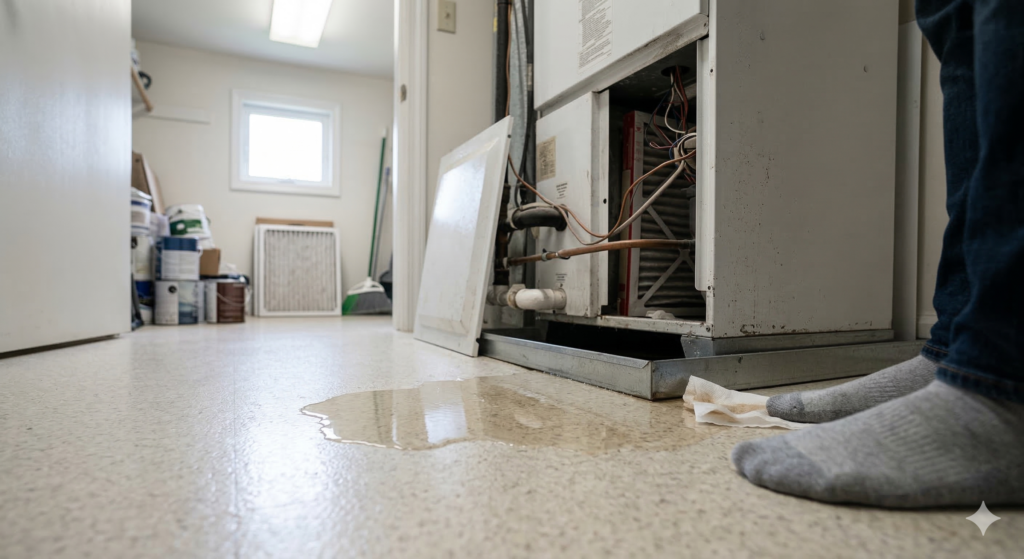
Why Is My AC Leaking Water Inside My House? Water pooling around your indoor AC unit is almost always caused by a clogged condensate drain line, a cracked or overflowing drain pan, or a frozen evaporator coil that’s melting faster than the drainage system can handle. In South Carolina’s high-humidity climate, your AC removes significantly more moisture from the air than systems in drier regions — often producing 5–20 gallons of condensate per day during peak summer. That volume of water needs a clear path out of your home, and when anything blocks or breaks that path, the water ends up on your floors. Coastal Carolina Comfort diagnoses and repairs AC water leaks across Summerville, Charleston, Columbia, and the entire South Carolina Lowcountry and Midlands. Most condensate-related repairs are completed in a single same-day visit. Call (843) 708-8735. Why South Carolina Homes See More AC Water Leaks Understanding why this problem is so common in our region starts with understanding how much moisture your AC handles. A residential air conditioning system in South Carolina processes far more humidity than the same system would in Colorado, Arizona, or even the mid-Atlantic states. When warm, humid Lowcountry or Midlands air passes over the cold evaporator coil, moisture condenses on the coil’s surface — the same way water beads on a cold glass on a summer day. That condensation collects in a drain pan below the coil and flows through a drain line to the outside of your home. During a typical South Carolina summer day with 80%+ relative humidity, your system may remove 5–20 gallons of water from your indoor air. That’s a tremendous amount of water flowing through a ¾-inch PVC pipe every day for six months. The warm, wet environment inside that drain line is ideal for algae, mold, and bacterial growth — which is exactly what clogs it. This is why AC water leaks are one of the most common repair calls Coastal Carolina Comfort receives across the region, and why regular AC maintenance that includes drain line treatment is so important here. The 5 Most Common Causes of AC Water Leaks 1. Clogged Condensate Drain Line This is the cause in roughly 70% of AC water leak calls we respond to across South Carolina. The drain line — typically a ¾-inch PVC pipe running from the drain pan to an exterior exit point — becomes blocked by algae, mold, rust, or mineral deposits. Water backs up behind the clog, fills the drain pan, and overflows onto your floors. South Carolina’s humidity makes drain clogs far more common than in drier climates because the warm, constantly wet interior of the drain line is a perfect incubator for biological growth. In the Lowcountry, we see drain lines that clog within 3–6 months of cleaning if no preventive treatment is applied. The fix: A technician clears the clog using a wet/dry vacuum, nitrogen flush, or manual snake, then treats the line with an algaecide tablet or solution to inhibit regrowth. This is one of the most affordable AC repairs — typically $100–$200. The best prevention is flushing the drain line with vinegar monthly during cooling season and scheduling professional treatment during your annual maintenance visit. 2. Cracked or Rusted Drain Pan The drain pan sits beneath the evaporator coil and catches condensation before it reaches the drain line. Over time — especially in the high-moisture environment inside a South Carolina air handler — metal drain pans rust through and plastic pans can crack. When the pan is compromised, water bypasses the drain line entirely and drips directly onto the floor, into the ceiling, or into the crawl space below. The fix: Drain pan replacement. Secondary drain pans (the backup pan beneath the air handler) are accessible and relatively inexpensive to replace. Primary drain pans (integrated into the coil assembly) are more involved and may require partial disassembly of the air handler. Costs typically range from $200–$600 depending on accessibility and pan type. 3. Frozen Evaporator Coil Melting When the evaporator coil freezes — due to low refrigerant, restricted airflow, or a blower motor failure — the ice buildup can be substantial. When the system shuts off or the ice begins to melt, the volume of water released can overwhelm the drain pan and flood the area around the unit. This is different from a normal condensate leak because the water volume is much larger and more sudden. If you see ice on the indoor unit or the copper refrigerant lines, you’re dealing with a coil freeze — not a simple drain clog. Read our complete guide on frozen evaporator coils in humid South Carolina weather. The fix: Turn the system off to allow the coil to thaw completely (2–3 hours minimum). Place towels or a shallow pan to catch the meltwater. Then call for professional diagnosis to identify why the coil froze in the first place — the freeze is a symptom, not the root cause. 4. Disconnected or Damaged Drain Line The PVC drain line can become disconnected from the drain pan fitting, cracked from physical impact, or separated at a joint due to poor installation or settling of the home. When this happens, condensate exits the system but misses the drain path — flowing instead into ceilings, walls, or onto floors at the point of disconnection. This is more common in homes where the air handler is located in the attic — found frequently across Charleston, Summerville, and Columbia — because the drain line has a longer run and more joints that can separate over time. The fix: Reattach, reseal, or replace the damaged drain line section. This is typically a straightforward repair costing $100–$300 depending on accessibility and the extent of the damage. 5. Condensate Pump Failure Some AC installations — particularly where the air handler is in a basement, crawl space, or interior closet below the level of the exterior drain exit — use a condensate pump to move water uphill to an exit point. When