

Emergency AC Repair in Columbia & the South Carolina Midlands
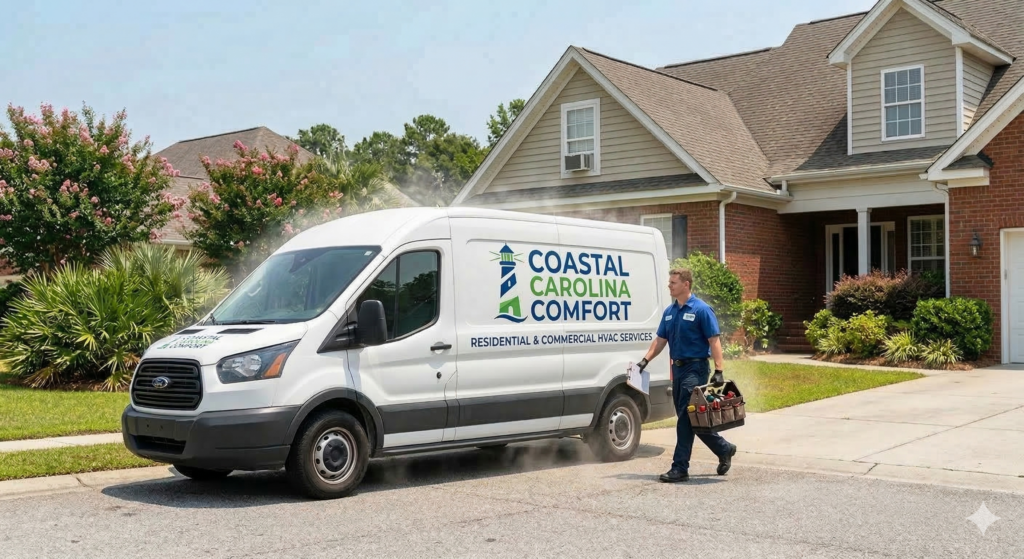
Emergency AC Repair in Columbia & the South Carolina Midlands When your air conditioning fails in Columbia, SC, during a 100°F heat index afternoon, you need a technician at your door — not a voicemail. Emergency AC repair in Columbia addresses sudden cooling system failures that create unsafe indoor conditions, including complete system shutdowns, compressor failures, refrigerant leaks, and electrical malfunctions that leave Midlands homes dangerously hot within hours. Coastal Carolina Comfort provides same-day emergency AC repair across Columbia, Lexington, Irmo, West Columbia, Cayce, and all of Richland, Lexington, and Calhoun counties. Our NATE-certified technicians carry the diagnostic equipment and common replacement parts needed to resolve most emergency repairs in a single visit — because when it’s 97°F outside and climbing inside your home, waiting for a second trip isn’t an option. Call (843) 708-8735 for same-day emergency AC repair in the Columbia area. What Counts as an AC Emergency in Columbia? Not every AC problem is an emergency — but in the Midlands’ extreme summer heat, certain situations demand same-day response. Coastal Carolina Comfort treats the following as emergency service calls. Complete system failure with vulnerable residents at home. If your AC stops working entirely and you have elderly family members, infants, or anyone with a heat-sensitive medical condition in the home, that qualifies as an emergency. Columbia’s summer heat index regularly exceeds 105°F. The CDC classifies indoor temperatures above 80°F as a health risk for vulnerable populations. AC running but blowing hot air during extreme heat. When outdoor temperatures exceed 95°F and your system is pushing warm air instead of cool, the cause is typically a refrigerant leak, compressor failure, or a failed reversing valve on a heat pump. Each of these conditions worsens the longer the system runs without correction. Burning smell or visible smoke from the system. Electrical failures in the air handler, a seized blower motor, or a short circuit can create fire hazards. Turn the system off at the breaker immediately and call for emergency service. Water actively flooding from the indoor unit. A burst condensate line, cracked drain pan, or catastrophic coil failure can release significant water into your home. In Columbia homes with crawl spaces — common in neighborhoods like Shandon, Rosewood, and Eau Claire — this water can cause structural damage quickly. Tripped breaker that resets and immediately trips again. This indicates a serious electrical fault — a ground fault in the compressor, a shorted capacitor, or damaged wiring. Do not keep resetting the breaker. Each reset risks further damage to the system and creates potential electrical hazards in the home. If you’re unsure whether your situation qualifies as an emergency, call (843) 708-8735 and describe what’s happening. We’ll help you determine the right next step — and if it’s urgent, we’ll dispatch a technician immediately. Why Columbia’s Climate Creates More AC Emergencies Columbia sits in the heart of South Carolina’s Midlands, one of the hottest regions in the southeastern United States. Unlike the Lowcountry coast where ocean breezes moderate peak temperatures, Columbia’s inland location means summer heat builds relentlessly. Average July highs reach 93°F, but the combination of humidity and direct sun exposure pushes the heat index above 105°F on the worst days. This heat profile creates specific emergency patterns Coastal Carolina Comfort sees every summer across the Midlands. Heat pump reversing valve failures peak in June and July. Many Columbia-area homes — particularly in Lexington, Irmo, and the newer subdivisions around Lake Murray — rely on heat pumps for year-round climate control. When the reversing valve sticks or fails, the system blows warm air instead of cool. During a Midlands heat wave, this turns from an inconvenience to a genuine safety concern within hours. Compressor burnout from extended run times. Columbia’s sustained high temperatures force compressors to run continuously for 10–14 hours per day during peak summer. Compressors already weakened by age or low refrigerant levels often fail during these marathon run cycles — usually on the hottest day of the week, when the demand is highest. Power surge damage after summer storms. The Midlands’ afternoon thunderstorm pattern is predictable but punishing. Lightning strikes and associated power surges damage capacitors, contactors, and control boards in outdoor AC units. Coastal Carolina Comfort sees a spike in emergency calls every time a strong storm rolls through Richland or Lexington County. Understanding the signs your AC needs professional repair before these situations escalate can help you catch problems early — but when an emergency does hit, fast response matters more than anything. Coastal Carolina Comfort’s Emergency Response Process When you call (843) 708-8735 for emergency AC service in the Columbia area, here’s exactly what happens. Step 1 — Phone triage. Our team asks targeted questions about your system’s behavior, your home’s current conditions, and whether vulnerable individuals are present. This helps us prioritize dispatch and ensure the responding technician brings the right equipment. Step 2 — Same-day dispatch. We dispatch a NATE-certified technician to your Columbia-area home the same day. Our technicians arrive equipped with diagnostic tools, common replacement parts — capacitors, contactors, fan motors, refrigerant — and the expertise to handle the diverse systems found across the Midlands. From older central air units in Eau Claire and Rosewood to high-efficiency heat pumps in Chapin and Ballentine, we’ve worked on them all. Step 3 — Rapid diagnosis. Your technician performs a systematic diagnostic to identify the root cause — not just the symptom. In emergency situations, we prioritize getting your system operational safely. If a temporary solution can restore cooling while a part is ordered, we’ll discuss that option honestly. Step 4 — Upfront pricing before any work begins. Even in an emergency, you get a written estimate before we start repairs. No surprises, no pressure. If the repair cost approaches replacement territory on an older system, we’ll tell you that too — and help you understand how much emergency AC repair costs in South Carolina so you can make an informed decision. Step 5 — Repair, test, and verify. We complete the repair using manufacturer-specified parts, run a full system verification including temperature differential testing, and confirm
Emergency AC Repair: What to Do When Your AC Breaks Down in the Lowcountry Heat
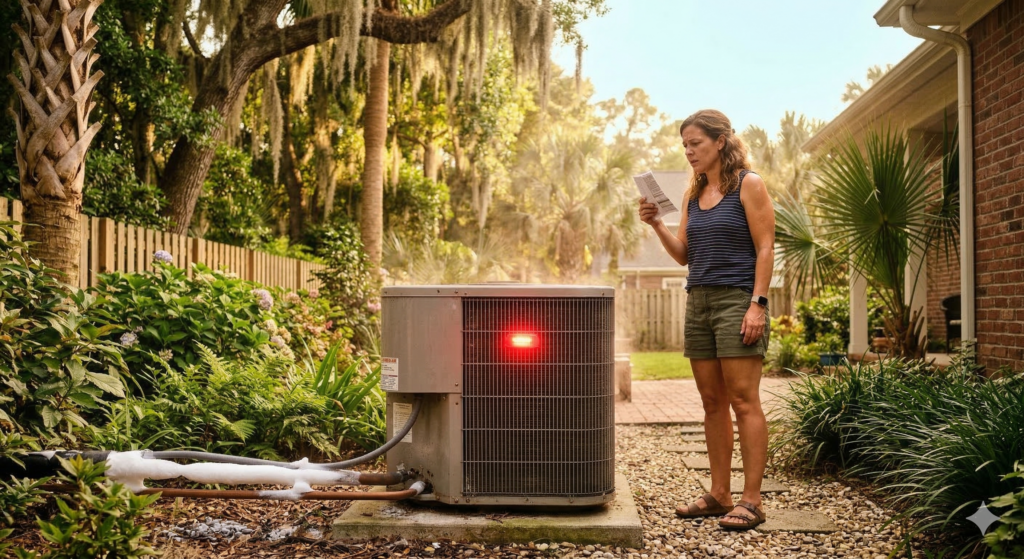
Emergency AC Repair: What to Do When Your AC Breaks Down in the Lowcountry Heat A complete AC failure in the South Carolina Lowcountry during summer is not just an inconvenience — it can become a genuine health and safety concern within hours. When outdoor temperatures reach 95°F or higher and relative humidity pushes past 80%, indoor temperatures in an uncooled home can exceed 90°F in as little as two to three hours. For households with elderly family members, young children, or anyone with respiratory or cardiovascular conditions, this creates real risk. Coastal Carolina Comfort provides same-day emergency AC repair across Summerville, Charleston, and the entire Lowcountry, with NATE-certified technicians who carry the most common replacement parts on their trucks so we can resolve the majority of emergency calls in a single visit. This guide covers exactly what to do when your AC fails unexpectedly, what steps to take immediately to protect your family and your home, and how to get professional help quickly. What Qualifies as an AC Emergency? Not every AC issue is an emergency, and knowing the difference helps you make smart decisions about urgency and cost. An AC emergency is any situation where the loss of cooling creates a safety risk or where continued operation could cause significant damage to the system or your home. True emergencies — call immediately: Your system has completely stopped working during a heat advisory or when outdoor temperatures exceed 90°F. The indoor temperature is climbing and you have vulnerable household members. You smell burning or see smoke coming from your indoor air handler or outdoor condenser unit. Your system is actively leaking water into living spaces, ceilings, or near electrical panels. You hear loud banging, grinding, or popping sounds that suddenly started during operation. Urgent but not emergency — call within 24 hours: Your AC is running but only producing lukewarm air. You notice ice forming on the refrigerant lines or evaporator coil. Short cycling has started but the system is still providing some cooling. A gradual decline in cooling performance over the past few days. If you’re unsure whether your situation is an emergency, it’s always better to call and describe what’s happening. Our team can help you assess the urgency over the phone and advise on immediate steps while we dispatch a technician. Immediate Steps When Your AC Fails When your AC stops working, taking the right steps in the first 30 minutes can protect your family, prevent secondary damage, and give your technician a head start on diagnosis. Step 1: Check the Thermostat and Breaker Before assuming the worst, rule out the simplest causes. Verify your thermostat is set to “cool” mode, the temperature is set below the current room temperature, and the fan is set to “auto.” Then check your electrical panel — AC systems use dedicated breakers, and a tripped breaker is one of the most common reasons for a sudden shutdown. Reset it once. If it trips again immediately, do not reset it a second time — a repeatedly tripping breaker indicates an electrical fault that requires professional attention. Step 2: Check Your Air Filter A severely clogged air filter can cause the evaporator coil to freeze, which eventually triggers a system shutdown. If your filter is visibly dirty or clogged, replace it and then set your thermostat to “fan only” for 30 to 60 minutes. This circulates air across the frozen coil to help it thaw. After thawing, try running the system in cooling mode again. Step 3: Inspect the Outdoor Unit Go outside and look at your condenser unit. Make sure it’s running — you should hear the fan and compressor. Check for obvious issues like vegetation growing against the unit (maintain at least two feet of clearance), a visibly damaged fan blade, or standing water around the base from a recent storm. If the outdoor unit isn’t running at all but the indoor fan is blowing, the issue is likely in the condenser, the compressor, or the electrical connection between the two units. Step 4: Protect Your Home Close blinds and curtains on sun-facing windows to reduce solar heat gain. Close doors to unused rooms to concentrate whatever cool air remains in the spaces you’re actively using. Avoid using the oven, dishwasher, dryer, or any heat-generating appliance. If you have ceiling fans, run them counterclockwise to create a wind-chill effect. Step 5: Protect Vulnerable Household Members Move elderly family members, infants, and pets to the coolest room in the house — usually a ground-floor room on the north-facing side. Provide plenty of water. If indoor temperatures exceed 85°F and you have high-risk individuals in the home, consider relocating to a cooled space — a neighbor’s home, a community center, or even a public library — until the repair is completed. Why Lowcountry AC Emergencies Are Different An AC breakdown in South Carolina’s Lowcountry presents challenges that homeowners in other regions simply don’t face, and understanding these factors helps explain why fast response matters here more than in most places. Extreme Heat and Humidity Combination It’s not just the temperature — it’s the combination. A 95°F day with 85% relative humidity produces a heat index well above 100°F. When your indoor environment mirrors these conditions, the risk of heat exhaustion and heat stroke rises significantly, especially for vulnerable populations. The Lowcountry’s cooling season runs from April through October, which means your AC system bears a heavier workload than systems in most other U.S. markets. Moisture and Mold Risk When your AC stops running, it also stops dehumidifying your indoor air. In a region where outdoor humidity routinely exceeds 80%, your indoor humidity can climb above 60% within hours of an AC shutdown. Elevated indoor humidity creates ideal conditions for mold and mildew growth — especially in ductwork, on evaporator coils, and in crawl spaces. The longer the system stays down, the greater the moisture damage risk. System Stress During Peak Season Lowcountry AC systems work harder and run longer than systems