

Signs Your AC Needs Repair (And When to Call a Pro)
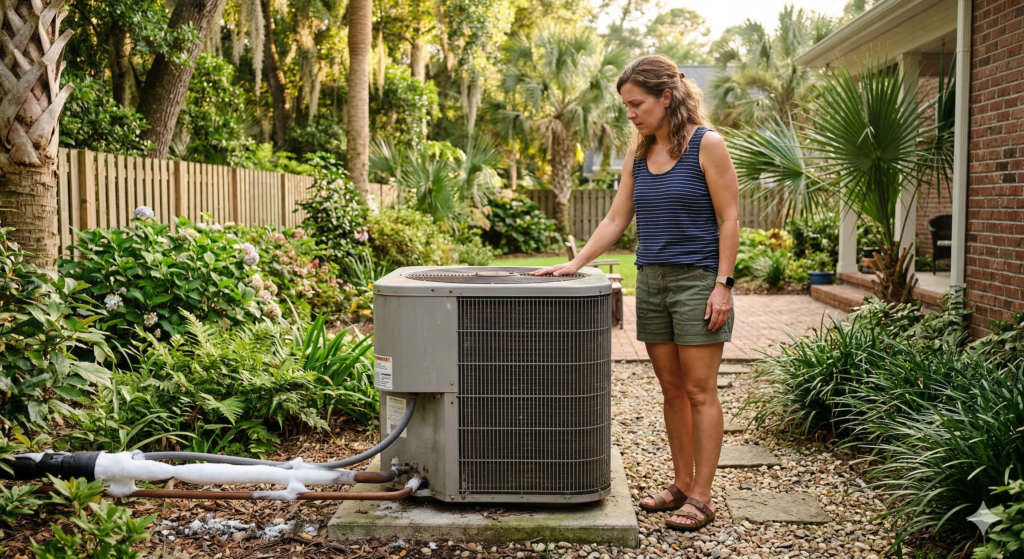
Signs Your AC Needs Repair (And When to Call a Pro) An air conditioner rarely fails without warning. In most cases, your cooling system will show clear signs that something is wrong — warm air from the vents, unusual sounds, higher-than-normal electric bills, or moisture where it shouldn’t be — days or even weeks before a complete breakdown occurs. Recognizing these AC repair warning signs early gives you time to schedule a professional diagnosis and fix the problem before it escalates into an expensive emergency. Here in the Lowcountry, where our cooling systems run six to seven months straight, catching problems early is especially important. Coastal Carolina Comfort’s NATE-certified technicians see these issues every day across Summerville, Charleston, and the surrounding communities, and we can tell you from experience: the homeowners who call at the first sign of trouble almost always pay less and stay more comfortable than those who wait. Below are the eight most common signs that your air conditioner needs professional repair — and guidance on when each situation warrants a call. 1. Your AC Is Blowing Warm or Lukewarm Air This is the most obvious symptom and the one that sends most Lowcountry homeowners reaching for the phone. If your system is running but the air coming from your vents feels warm or barely cool, several things could be happening. A refrigerant leak is one of the most common causes. Your AC system relies on a precise charge of refrigerant — typically R-410A in newer systems — to absorb heat from indoor air and transfer it outside. When the refrigerant level drops due to a leak in the evaporator coil, condenser coil, or refrigerant lines, the system simply cannot cool effectively. Other potential causes include a failing compressor, a malfunctioning expansion valve, or restricted airflow from a severely clogged air filter. Before calling a technician, check your thermostat settings and replace your air filter if it’s been more than 30 days. If neither fixes the issue, it’s time for a professional diagnosis. When to call: If warm air persists after checking your thermostat and filter, call for AC repair in Summerville, SC or AC repair in Charleston, SC — a refrigerant leak will only get worse and can damage the compressor if left unaddressed. 2. Strange or Unusual Noises Your air conditioner should produce a consistent, low hum when running. When you start hearing sounds that are new, loud, or rhythmic, your system is telling you something specific is going wrong. Grinding or metal-on-metal screeching typically indicates a problem with the blower motor bearings or the fan motor inside the condenser unit. When bearings wear out, the motor has to work harder, generating heat and friction that can eventually burn out the motor entirely. Banging or clanking often points to a loose or broken component inside the compressor, the blower assembly, or a disconnected fan blade hitting other parts. This is a sound you should never ignore — loose parts cause cascading damage. Buzzing can indicate electrical issues such as a failing contactor, loose wiring, or a capacitor that’s starting to fail. Electrical components are some of the most common failure points in South Carolina AC systems because our high humidity accelerates corrosion on connections and terminals. Hissing or bubbling sounds frequently point to a refrigerant leak, especially if the sound comes from the area near the indoor evaporator coil. When to call: Any new or unusual sound warrants a diagnostic call. Some of these — especially grinding and banging — can turn a $200 repair into a $2,000 compressor replacement if ignored for even a few weeks. 3. Short Cycling — Your AC Turns On and Off Rapidly Short cycling happens when your AC compressor kicks on, runs for a few minutes (or less), shuts off, and then restarts the cycle almost immediately. This is not how a healthy cooling system operates. A properly functioning air conditioner should run in cycles of roughly 15 to 20 minutes before reaching the thermostat set point and shutting off. Short cycling puts enormous stress on the compressor — the most expensive component in your AC system. Each startup draws a surge of electrical current, and frequent cycling causes premature wear on the compressor motor, the capacitor, and the contactor. Common causes include an oversized AC unit, a failing run capacitor, a dirty evaporator coil that’s causing the system to overheat and trigger a safety shutdown, or a refrigerant issue that’s causing the low-pressure safety switch to trip. In the Lowcountry, we also see short cycling caused by thermostat placement issues. If your thermostat is near a window receiving direct afternoon sun or positioned above a heat-generating appliance, it can create false temperature readings that confuse the system. When to call: Short cycling should be addressed within a week. Every cycle puts unnecessary wear on your compressor, and a new compressor can cost $1,500 to $3,000 installed. 4. Your Energy Bills Have Spiked Unexpectedly A gradual increase in your electric bill during peak cooling season is normal — we expect higher bills from May through September here in South Carolina. What isn’t normal is a sudden, unexplained spike when your usage habits haven’t changed. When an AC system is struggling — whether from low refrigerant, a dirty coil, a failing motor, or aging components — it compensates by running longer and harder to maintain the same temperature. That extra runtime translates directly into higher electricity consumption. We recommend comparing your current bill to the same month in the previous year. If you see a 20% or greater increase without a corresponding change in usage or rate, your cooling system is likely working harder than it should be. When to call: A spike of 20% or more over the same billing period last year is a strong indicator that your system needs professional AC repair. The longer you wait, the more you pay in both energy costs and accumulated system wear. 5. Weak Airflow From Your Vents If you