

AC Unit Making Strange Noises: What Each Sound Means and When to Call for Repair
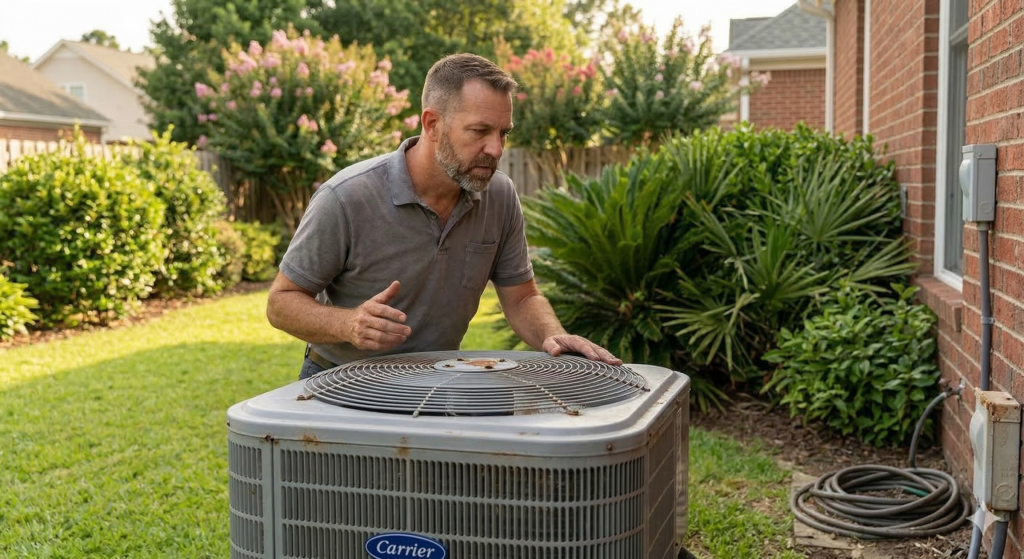
AC Unit Making Strange Noises: What Each Sound Means and When to Call for Repair A healthy air conditioning system produces a consistent, low-level hum during operation. When you hear new sounds — grinding, buzzing, clicking, banging, hissing, or screeching — each noise points to a specific mechanical or electrical problem. Identifying what the sound is and where it’s coming from helps determine whether you need immediate service, can schedule a repair within a few days, or simply have a minor issue that’s easy to resolve. Coastal Carolina Comfort’s NATE-certified technicians diagnose and repair noisy AC systems across Summerville, Charleston, Columbia, and the entire South Carolina Lowcountry and Midlands. We identify the source of the sound, explain what’s causing it, and provide upfront pricing before any work begins. Call (843) 708-8735. A Sound-by-Sound Diagnostic Guide Grinding: Failing Motor Bearings What it sounds like: A metallic grinding, scraping, or growling that gets louder over time. It may be intermittent at first and become constant. Where it comes from: Usually the indoor blower motor or the outdoor condenser fan motor. What’s happening: The motor bearings that allow the shaft to spin freely are wearing out. As the bearings degrade, metal contacts metal, creating the grinding sound. Eventually the motor seizes completely — which turns a $350–$700 motor replacement into a potential compressor failure if the system overheats. Urgency level: Schedule within 1–3 days. A grinding motor can fail at any time. Continuing to run the system accelerates the damage but won’t cause an immediate safety hazard. The longer you wait, the higher the chance the motor seizes during a peak-heat day when you need it most. South Carolina note: The extended cooling season in the Lowcountry and Midlands puts more annual hours on motor bearings than most of the country. A motor that might last 15 years in a cooler climate may wear out in 10–12 years here because it runs 6+ months per year. Buzzing: Electrical Problems What it sounds like: A steady electrical buzz or hum, louder than the system’s normal operating sound. May come from the outdoor unit, indoor unit, or both. What’s happening: Buzzing from the outdoor unit most commonly indicates a failing contactor (the electrical relay that starts the compressor) or loose wiring connections vibrating during operation. Buzzing from the indoor unit may point to a failing transformer, a relay issue, or a blower motor with electrical problems. Urgency level: Schedule within 1–2 days. Electrical issues can worsen without warning. A contactor that’s arcing or buzzing can weld itself shut (causing the system to run nonstop), fail open (causing a complete shutdown), or create a fire risk if left unaddressed. If the buzzing is accompanied by a burning smell, turn the system off at the breaker and call for emergency AC repair in the Lowcountry. Clicking: Capacitor or Control Board Issues What it sounds like: Repeated clicking sounds at startup — the system tries to start, clicks, pauses, tries again, clicks. Or a single click followed by silence instead of the compressor engaging. What’s happening: This is typically a failed run capacitor trying and failing to deliver the electrical boost the compressor needs to start. The click is the contactor engaging, but without sufficient capacitance, the compressor can’t turn over. The system tries repeatedly, clicking each time. Less commonly, clicking indicates a control board relay failure — the electronic brain of the system is sending the start signal but a relay on the board isn’t completing the circuit. Urgency level: Same-day to next-day. The system won’t cool in this state. If the weather is mild, next-day service is fine. In South Carolina summer heat, this is a same-day call. A failed capacitor is one of the quickest and most affordable repairs — typically $150–$300 including parts and labor. Banging or Clanking: Loose or Broken Internal Components What it sounds like: A rhythmic banging, clanking, or knocking — usually from the outdoor unit. The sound follows the fan’s rotation cycle. What’s happening: Something inside the unit is loose and making contact with a moving part. The most common causes are a broken fan blade striking the housing, a loose compressor mounting bolt allowing the compressor to vibrate excessively, or debris (a stick, acorn, or small animal) caught inside the condenser housing. Urgency level: Turn off and schedule same-day. A broken fan blade or loose component can cause escalating damage to other parts with every rotation. Turn the system off at the thermostat and call for service. Do not reach inside the unit to investigate. Hissing or Bubbling: Refrigerant Leak What it sounds like: A persistent hiss from the indoor or outdoor unit, or a bubbling/gurgling sound from the refrigerant lines. What’s happening: Refrigerant is escaping through a hole or crack in the copper lines, coil, or fittings. A hiss indicates gas-phase refrigerant escaping under pressure. A bubbling sound indicates the leak is in a section where refrigerant is in liquid phase. Urgency level: Schedule within 1–2 days. A refrigerant leak won’t cause immediate damage to your home, but every day it leaks reduces cooling capacity and forces the compressor to work harder. Running a system with critically low refrigerant can cause compressor damage. If you also notice ice forming on the indoor unit, turn the system off. In South Carolina’s coastal and humid environment, refrigerant line corrosion is more common than in drier climates — particularly on homes near the coast where salt air accelerates copper degradation. Our guide on what South Carolina humidity does to your cooling system explains why. Screeching or Squealing: Belt or Motor Issues What it sounds like: A high-pitched screech or squeal, usually at startup, that may fade as the system reaches operating speed. What’s happening: In older systems with belt-driven blower motors, a worn or misaligned belt slips and squeals — similar to a car’s serpentine belt. In newer direct-drive systems, the screech may indicate a failing motor bearing or a blower wheel rubbing against its housing. Urgency level: Schedule within