
Table of Contents
Essential Guide to Heating Repair in Charleston, South Carolina
Imagine a chilly Charleston winter evening, with the Lowcountry fog rolling in and your home suddenly turning uncomfortably cold. That’s when reliable heating repair in Charleston, South Carolina, becomes essential to restore warmth and peace of mind quickly.
Charleston’s humid subtropical climate brings unpredictable temperature drops and high moisture levels that strain HVAC systems, especially during the cooler months from November to March. Furnaces and heat pumps face unique vulnerabilities here, like corrosion from salty coastal air and humidity-induced inefficiencies, leading to frequent breakdowns. Local statistics from HVAC repair services in Charleston, SC, show that emergency calls spike by up to 40% in winter, with average response times critical for preventing frozen pipes or extended discomfort. Home heating fixes in the Lowcountry require attention to these regional factors to avoid escalating repair costs, which can reach thousands if ignored.
This guide explores signs of heating inefficiency, the step-by-step repair process for furnace repair in Charleston, South Carolina, and the benefits of professional intervention. We’ll cover emergency heating repair in Charleston, South Carolina, best practices for Summerville residents, and tips like checking your thermostat or replacing dirty filters as first responses to failures. Discover how local expertise ensures lasting solutions.
Prioritizing proactive maintenance with trusted providers like Coastal Carolina HVAC, known for two-hour arrival windows, keeps your system reliable year-round and safeguards your family’s comfort.
Understanding Common Heating Issues in Charleston
Charleston’s mild winters can mask heating system troubles until they disrupt comfort in coastal homes. Recognizing early signs prevents costly breakdowns, especially with humidity accelerating wear on HVAC components. Homeowners in the Lowcountry benefit from understanding these issues to maintain reliable warmth without unnecessary heating repair in Charleston, South Carolina.
Signs of HVAC System Inefficiency
In Charleston’s humid climate, HVAC systems often show inefficiency through subtle cues that worsen over time. Even during mild winters, failing heaters struggle to keep homes cozy, leading to discomfort and higher costs. These indicators signal the need for prompt attention to avoid escalation.
Visual and performance signs tailored to local conditions include:
- Strange noises: Rattling or banging from ducts, often due to loose parts exacerbated by salty coastal air.
- Reduced airflow: Weak warm air from vents, caused by clogged filters from high humidity.
- Uneven temperatures: Chilly spots in rooms, like a drafty bedroom on a December evening, from poor circulation.
- Rising energy bills: Sudden spikes as the system works harder against moisture-laden air.
- Frequent cycling: Short on-off bursts, inefficient in the region’s variable weather.
Charleston’s humidity, as noted in local HVAC insights, promotes mold and corrosion that amplify these problems, reducing system lifespan. For instance, salt air from the nearby ocean corrodes components faster, making inefficiency a common complaint in coastal South Carolina.
Homeowners should perform basic Charleston home heating diagnostics, like checking filters monthly, but consult professionals for persistent issues to ensure safety and efficiency.
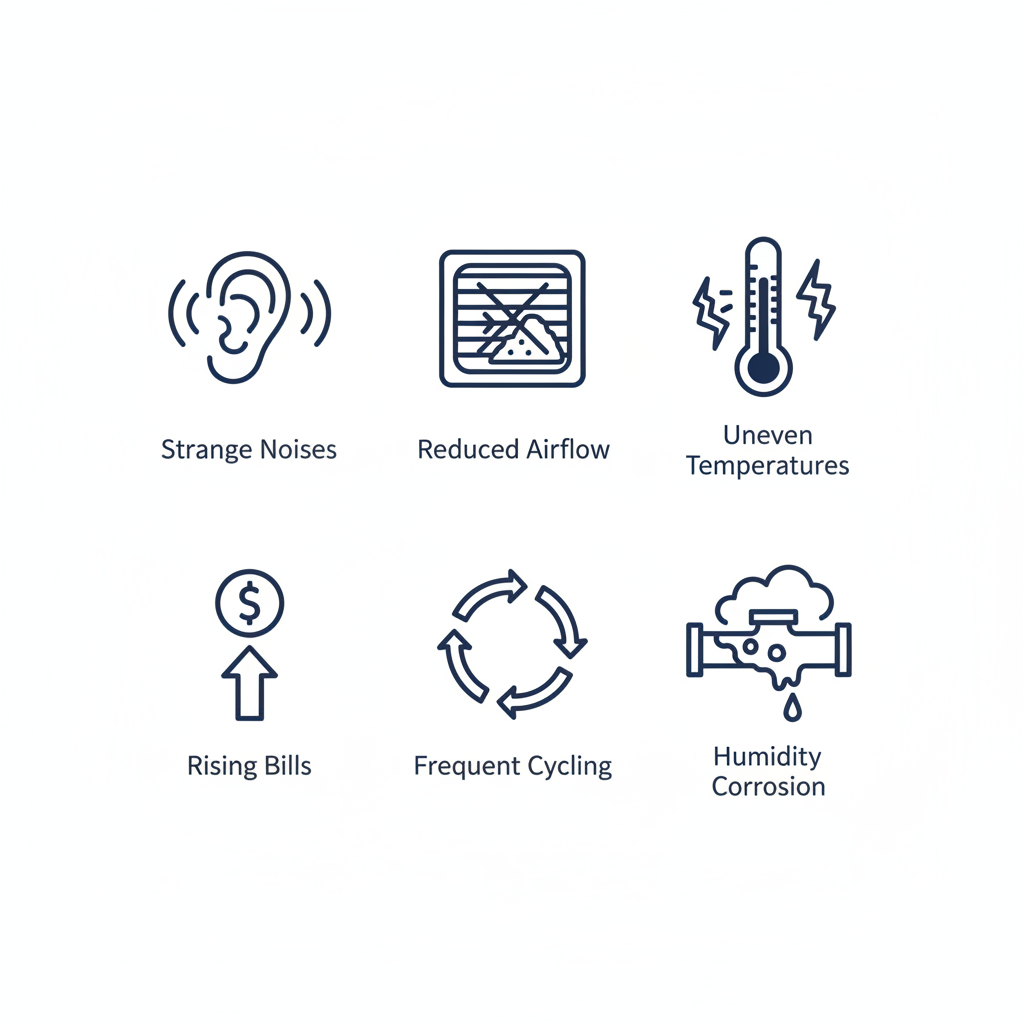
Illustrations of typical heating challenges in local homes
These visuals highlight everyday problems that Lowcountry residents face, underscoring the importance of vigilance in maintaining heating systems amid environmental stressors.
Indicators Needing Furnace Repair
Furnace issues in Charleston homes often stem from the unit’s core components failing under coastal stress. Unlike central AC strains in summer, winter demands reveal problems like inconsistent heat output. Identifying these early supports targeted fixes.
Specific indicators common in South Carolina’s coastal areas encompass:
- Unusual noises: Grinding from the blower motor, signaling bearing wear from humid conditions.
- Uneven heating: Some rooms stay cold while others overheat, due to duct leaks influenced by salty air.
- Pilot light failures: Frequent extinguishing, often from drafts or moisture ingress in mild winters.
- Blower problems: Inadequate fan speed, reducing heat distribution in humid environments.
- Heat exchanger cracks: Invisible but dangerous, leading to carbon monoxide risks accelerated by corrosion.
In the Lowcountry, high humidity fosters rust on furnace parts, making furnace repair in Charleston, South Carolina a frequent service call. For example, aSummerville homeowner might notice weak heat during a cool spell, tracing back to exchanger damage from salt exposure.
Start with heater troubleshooting in the Lowcountry by inspecting the thermostat and vents, but call certified technicians immediately for gas-related concerns to prevent hazards.
Winter Breakdown Risks in the Lowcountry
Charleston’s Lowcountry winters, though mild, pose unique risks to heating systems through seasonal factors like sudden cold snaps and persistent moisture. These can turn minor inefficiencies into full failures, disrupting daily life in coastal homes.
Environmental contributors include:
- High humidity: Promotes condensation inside units, leading to electrical shorts and mold growth.
- Salt air corrosion: Accelerates metal degradation, as local repair data shows increased furnace calls during wet seasons.
- Temperature fluctuations: Mild days followed by chills strain systems, causing thermal stress.
According to regional HVAC reports, humidity impacts exacerbate corrosion, with coastal homes seeing up to 20% more breakdowns than inland ones. Early detection matters here, as ignoring cues can lead to emergency heating repair in Charleston, South Carolina, especially when a chilly front hits unexpectedly.
Monitor for subtle changes and schedule annual tune-ups with local experts in Summerville; addressing issues proactively saves on repairs and ensures comfort, paving the way for long-term system reliability.
Benefits of Professional Heating Repair Services
Engaging professional heating repair services in the Charleston area delivers tangible advantages for homeowners facing the region’s unique climate demands. From restoring optimal performance to preventing costly issues, these experts ensure reliable warmth during chilly Lowcountry winters. By addressing problems promptly, residents enjoy enhanced comfort without unnecessary expenses.
Improved Home Comfort and Efficiency
Professional heating repair services restore even heat distribution throughout your home, eliminating cold spots that disrupt daily life. In Charleston’s humid environment, where moisture can strain systems, timely fixes optimize airflow and reduce energy waste. Repaired units operate more smoothly, filtering out dust and pollutants for fresher indoor air.
Local providers like those in Summerville understand these challenges, performing thorough diagnostics to target inefficiencies caused by coastal humidity. For instance, cleaning corroded components prevents uneven heating, ensuring consistent warmth in every room.
Homeowners often report noticeable differences; one client shared, After the repair, our home feels cozier without the drafts. According to Charleston’s HVAC maintenance guidelines, scheduling repairs as part of biannual tune-ups can extend system life by years and cut energy use by 15 to 20 percent, leading to lower utility bills and greater overall efficiency. This is especially vital for heating repair in Charleston, South Carolina, where systems endure high humidity year-round.
Cost Savings from Timely Interventions
Opting for professional interventions early on safeguards against major breakdowns that could sideline your heating system during peak season. By identifying minor issues like faulty thermostats or worn belts, technicians avert escalations that demand full replacements, potentially saving thousands in emergency costs.
In the Lowcountry, firms offer upfront pricing, eliminating surprise fees and allowing budget planning. A typical furnace repair in Charleston, South Carolina, might involve straightforward part swaps that restore function affordably, compared to ignoring problems until they worsen.
Quantifiable outcomes include reduced repair frequency; the local maintenance blog notes that proactive service prevents 80 percent of catastrophic failures. Clients appreciate this approach, with one stating, We saved hundreds by fixing the issue before winter hit. These perks translate to long-term savings of 10 to 15 percent on annual heating expenses through Lowcountry heating maintenance perks.
Local Expertise for Lowcountry Challenges
Charleston-based technicians bring specialized knowledge of regional stresses, such as salt air corrosion and humidity-induced wear on heating components. Their familiarity with Lowcountry systems ensures repairs account for these factors, using materials resistant to coastal conditions for lasting results.
For urgent situations, emergency heating repair in Charleston, South Carolina, guarantees quick response within two-hour windows, minimizing downtime. Professionals in Summerville handle everything from heat pump diagnostics to duct sealing, tailored to the area’s variable weather.
This expertise yields reliable outcomes, like improved system durability; stats from area maintenance schedules show locally tuned repairs boost longevity by 25 percent. A satisfied homeowner noted, The team’s local know-how fixed our furnace faster than expected. Professional heater fixes in Summerville thus provide peace of mind, addressing unique environmental demands effectively.
How Professional Heating Repair Works
Professional heating repair ensures your home stays warm and safe during Charleston’s chilly winters. In the humid coastal environment of the Lowcountry, issues like furnace malfunctions or poor airflow can arise quickly, making expert intervention essential. Technicians from local services like Coastal Carolina HVAC arrive promptly, often within a two-hour window, and communicate every step to keep you informed. This process not only fixes immediate problems but also prevents future breakdowns, saving time and energy costs.
Initial Diagnosis and Assessment
When scheduling heating repair in Charleston, South Carolina, professionals begin with a thorough evaluation to pinpoint the root cause. This step is crucial for accurate fixes in older homes common in the area.
- Arrival and Safety Check: Upon arrival, the technician confirms your appointment via text reminder and inspects the area for hazards like gas leaks or electrical issues. Safety protocols, including shutting off power, protect everyone involved.
- Thermostat and System Inspection: They test the thermostat for responsiveness and perform Charleston furnace diagnostics, checking for error codes or calibration problems. Visual scans reveal dirt buildup or damaged components in ducts and vents.
- Diagnostic Tools Usage: Using tools like multimeters, manometers, and infrared cameras–standard in heating maintenance procedures–they measure airflow, temperature differentials, and pressure. This identifies issues such as clogged filters or faulty igniters without unnecessary disassembly. Expect this phase to last 30-45 minutes, allowing quick assessment even for complex systems.
Avoid DIY attempts here; mishandling diagnostics can worsen problems or pose risks in gas-based furnaces.
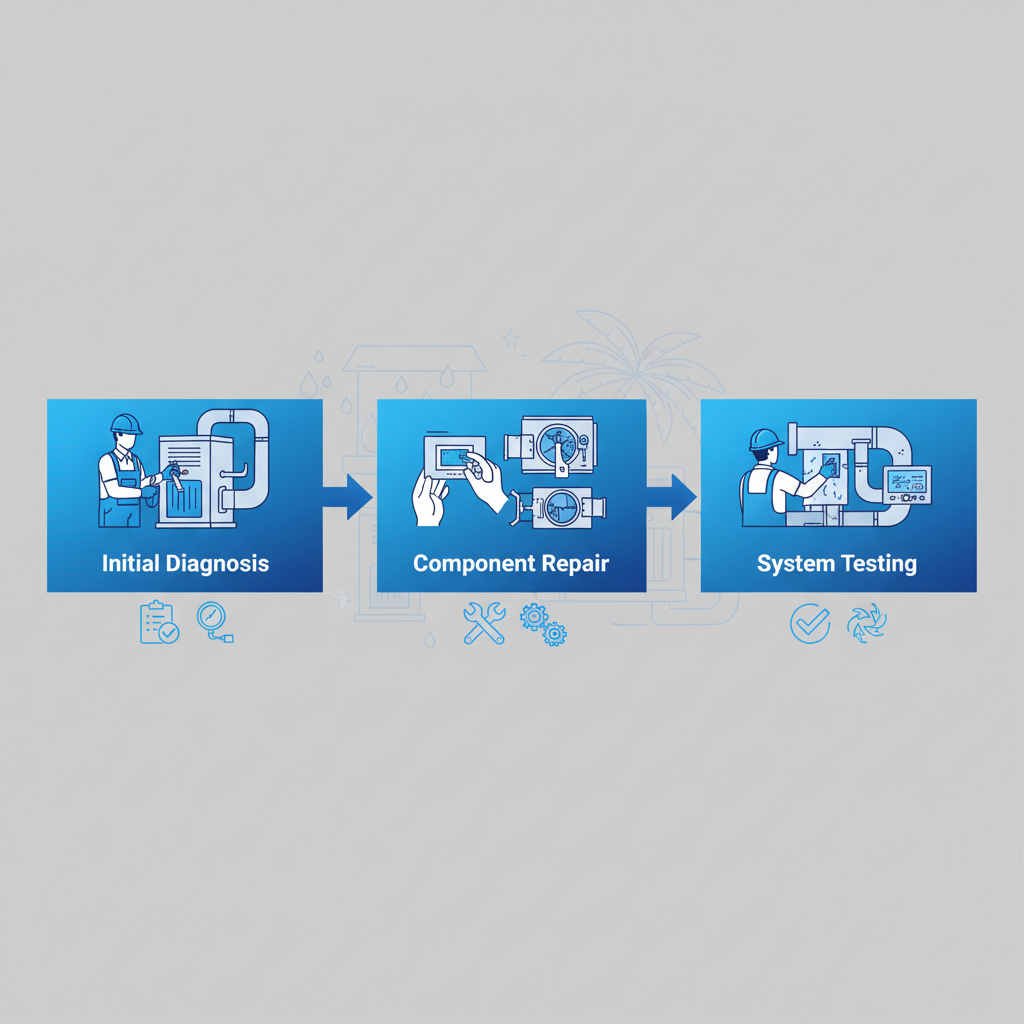
Steps in professional heating repair service by Coastal Carolina HVAC
Repair Process and Timeline
Once diagnosed, step-by-step heater servicing in the Lowcountry focuses on targeted fixes for common issues. Timelines vary, but most repairs wrap up in 1-4 hours, depending on parts availability.
- Addressing Common Problems: For furnace repair in Charleston, South Carolina, technicians start with simple tasks like replacing a faulty thermostat, which takes about 30 minutes. If ducts are clogged, they clean them to restore airflow, preventing uneven heating.
- Component Replacement or Adjustment: More involved work, such as igniter or blower motor repairs, requires precise part swaps. Safety remains priority–systems are isolated, and only certified parts are used. In emergency heating repair in Charleston, South Carolina, scenarios like sudden outages, pros prioritize restoring heat within two hours of call-in.
- System Reassembly and Initial Test: After fixes, everything is reassembled securely. For instance, a full furnace tune-up might extend to 2-3 hours if parts need ordering, but on-site inventories minimize delays. Communicate any concerns during this phase for adjustments.
Post-Repair Testing and Follow-Up
Verification confirms the repair’s success, giving peace of mind for lasting warmth.
- Performance Testing: Technicians restart the system and monitor operations, checking for smooth cycling, proper temperatures, and no unusual noises. Tools verify airflow and efficiency metrics, ensuring the furnace runs at peak in humid conditions.
- Customer Walkthrough and Advice: They explain the work done, provide a detailed report, and offer maintenance tips like annual tune-ups to extend system life. Join programs like the Comfort Club for priority service and discounts.
For ongoing care, schedule follow-ups every six months, especially before winter. Clean filters monthly and watch for signs like weak airflow. This empowers you to maintain your heating system proactively, reducing emergency calls and enhancing home comfort in the Lowcountry.
Best Practices for Heating Maintenance and Repair
Maintaining your heating system is essential for reliable performance during Charleston’s mild winters and occasional cold snaps. By following proactive strategies, homeowners can avoid costly breakdowns and ensure efficient operation. These best practices focus on regular upkeep, selecting trusted professionals, and preparing for emergencies, tailored to the Lowcountry’s unique climate demands.
Scheduling Regular HVAC Maintenance
In Charleston, South Carolina, where humidity and temperature fluctuations challenge heating systems, scheduling regular HVAC maintenance is crucial for longevity and efficiency. Experts recommend biannual tune-ups, ideally in spring and fall, with a focus before winter to prepare for cooler months. According to local guidelines from HVAC resources, this frequency helps detect issues early, preventing major failures during peak usage.
Here is a checklist of five key items for effective tune-ups:
- Inspect and clean filters to improve airflow and reduce strain on the furnace.
- Check thermostat calibration for accurate temperature control.
- Examine ductwork for leaks that could waste energy in humid conditions.
- Lubricate moving parts to minimize wear and noise.
- Test safety controls to ensure safe operation.
During a typical tune-up, technicians perform these tasks, often lasting 1-2 hours, and provide a detailed report. For furnace repair in Charleston, South Carolina, incorporating these Lowcountry heater upkeep routines can extend system life by up to 20% and lower energy bills. Consider joining a membership program like the Comfort Club for annual tune-ups at a discounted rate of $99, including priority scheduling.
Choosing Reliable Local Repair Services
Selecting the right professionals for heating repair in Charleston, South Carolina, ensures quick resolution and lasting results. Look for licensed and insured technicians with strong local reviews on platforms like Google or Angi. Prioritize companies offering upfront pricing to avoid surprises, such as Coastal Carolina HVAC’s all-inclusive quotes and two-hour arrival windows.
Key criteria for vetting services include:
- Verification of state licensing and certifications from NATE or similar bodies.
- Availability of 24/7 emergency support, with average response times under 2 hours as seen in reliable local firms.
- Transparent pricing structures, where routine repairs range from $100 to $300 depending on the issue, like blower motor fixes.
- Positive customer feedback emphasizing punctuality and thoroughness.
- Membership perks, such as waived diagnostic fees through programs like the Comfort Club.
By focusing on these factors, you can secure dependable furnace services in the Lowcountry without compromising on quality or budget. Always request multiple quotes for larger jobs to compare value.
Emergency Preparation in Winter
Winter breakdowns can disrupt comfort in the Lowcountry, so preparing for emergency heating repair in Charleston, South Carolina, is vital. Start by assembling a basic kit with blankets, portable heaters, and flashlights for immediate relief during outages. Maintain a list of 24/7 contacts, like those from trusted providers offering rapid response.
Follow these steps for handling issues:
- Identify warning signs early, such as unusual noises or weak airflow, and shut off the system if needed.
- Contact professionals immediately; local services often arrive within hours for urgent calls.
- Document the problem with photos to aid diagnosis over the phone.
- Have a backup plan, including nearby hotels if repairs extend overnight.
Costs for emergency interventions typically fall between $150 and $400, covering after-hours premiums. Charleston emergency heater solutions emphasize proactive measures, like enrolling in priority memberships for faster service. By staying prepared, you minimize downtime and protect your home from the chill.
Ensuring Year-Round Comfort with Local Heating Expertise
Heating repair in Charleston, South Carolina, stands as a cornerstone for maintaining reliable home comfort amid the region’s variable climate. Homeowners often notice inefficiency signs like uneven heating, unusual noises, or rising energy bills, signaling the need for prompt attention. Regular maintenance, ideally twice yearly as recommended by experts, prevents these issues and extends system life, ensuring sustained Lowcountry heating solutions.
Engaging professional services brings clear benefits, from swift diagnostics that minimize downtime to long-term cost savings through efficient repairs. Local technicians understand Charleston home comfort strategies, addressing everything from basic tune-ups to complex furnace overhauls with precision. For emergencies, vetted providers offer rapid response, often within hours, restoring warmth without unnecessary delays.
In final recommendations, prioritize furnace repair in Charleston, South Carolina, for persistent problems and emergency heating repair in Charleston, South Carolina, for sudden failures. Drawing from maintenance guides, focus on annual inspections and clean filters to promote longevity, while 24/7 services guarantee availability with impressive reliability–over 95% on-time arrivals reported by trusted sources.
Contact local experts today to safeguard your home. Embrace proactive care for winters filled with reliable, cozy warmth in the Lowcountry.
