
 Heat Pump vs. Furnace: Which Is Right for Summerville Homes?
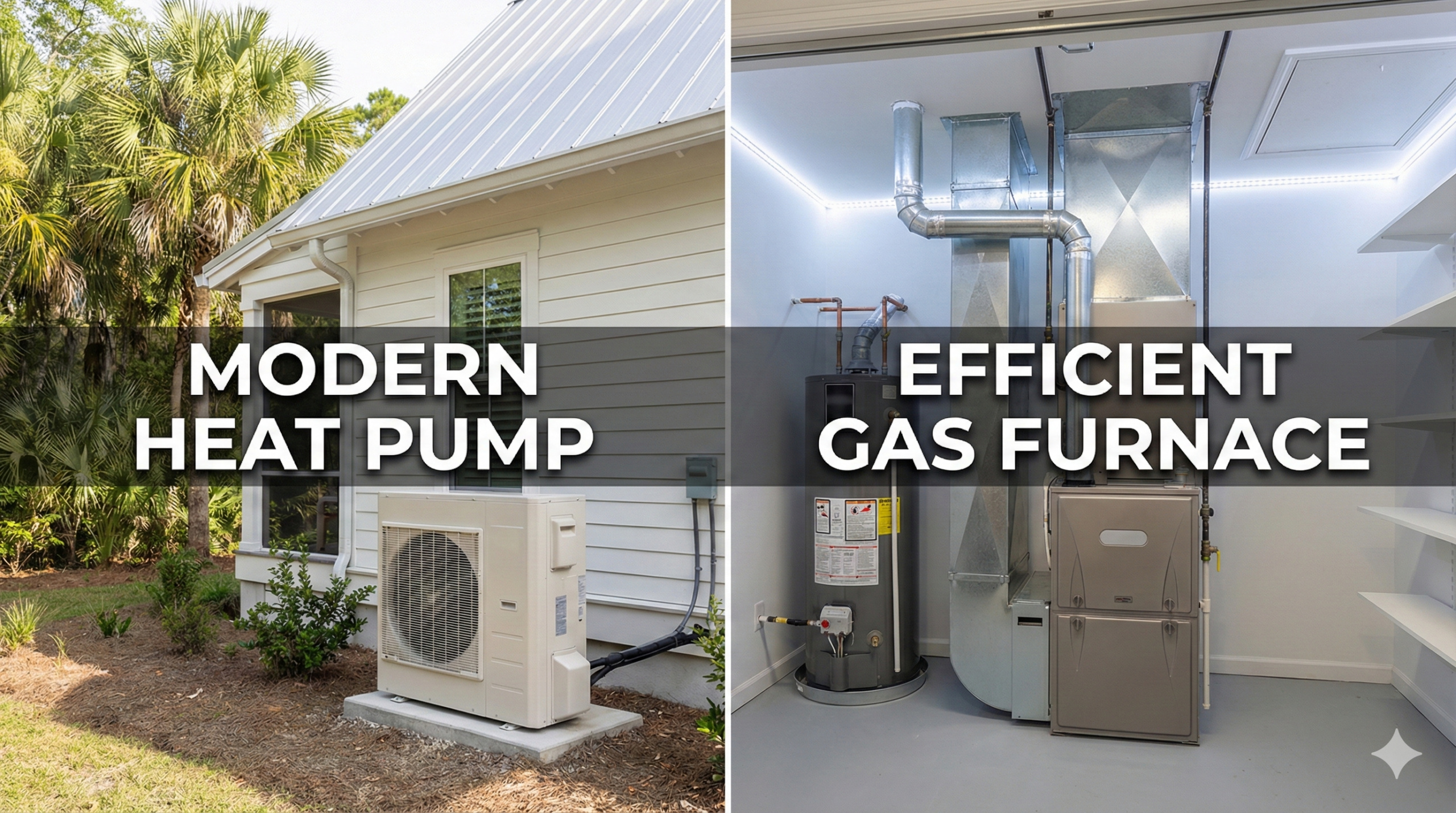
For most Summerville homes, heat pumps are the better choice—they provide both heating and cooling, operate more efficiently in our mild Lowcountry climate, and cost less to run than furnaces for the majority of the year. Furnaces make sense primarily for homes with existing natural gas infrastructure or for homeowners who prefer the warmer air output furnaces provide. Many Lowcountry homes use dual fuel systems that combine a heat pump with a gas furnace backup for optimal efficiency across all temperatures. Understanding how each system works helps you make informed decisions about heating repair, replacement, and ongoing maintenance.
Why This Comparison Matters in the Lowcountry
If you live in Minnesota, the heat pump vs. furnace debate has a clear answer: you need a furnace. Winters are too cold for standard heat pumps to operate efficiently.
But Summerville isn’t Minnesota.
Our mild winters—with average lows in the mid-30s to low-40s and only occasional dips below freezing—create ideal conditions for heat pump operation. This changes the calculus entirely.
Understanding the differences between these systems helps you:
- Make smarter decisions when your current system needs replacement
- Know what to expect from your existing equipment
- Communicate effectively with HVAC technicians
- Optimize your energy costs year-round
Whether you’re troubleshooting a problem, planning a replacement, or just curious about what’s heating your home, this guide breaks down everything Summerville homeowners need to know.
How Furnaces Work
A furnace generates heat by burning fuel or using electric resistance, then distributes that heat through your ductwork.
Gas Furnaces
Gas furnaces burn natural gas or propane to create heat:
- The thermostat calls for heat
- The gas valve opens and burners ignite
- Flames heat a metal heat exchanger
- The blower fan pushes air across the hot heat exchanger
- Heated air (typically 120–140°F) flows through ducts to your rooms
- Combustion gases exhaust through a flue pipe to the outside
Pros:
- Produces very warm air quickly
- Works effectively regardless of outdoor temperature
- Lower operating costs than electric furnaces (where gas is available)
- Long lifespan (15–20 years with proper maintenance)
Cons:
- Requires natural gas or propane infrastructure
- Combustion creates carbon monoxide risk (requires proper venting and detectors)
- Only provides heating—separate AC system needed for cooling
- Less efficient than heat pumps in mild climates
Electric Furnaces
Electric furnaces use resistance heating elements—essentially large versions of the coils in a toaster:
- The thermostat calls for heat
- Electric heating elements energize and get hot
- The blower fan pushes air across the hot elements
- Heated air flows through ducts to your rooms
Pros:
- No combustion, no carbon monoxide risk
- Lower installation cost than gas furnaces
- No gas line required
- Simple, reliable operation
Cons:
- Expensive to operate (electricity costs more than gas per BTU)
- Only provides heating—separate AC needed
- Less efficient than heat pumps
- Can strain electrical systems during peak demand
How Heat Pumps Work
Heat pumps don’t generate heat—they move it. Using refrigerant and a compression cycle, they extract heat from outdoor air and transfer it inside. Yes, even cold air contains heat energy that can be extracted.
The Heating Cycle
- The thermostat calls for heat
- Liquid refrigerant in the outdoor coil absorbs heat from outside air
- The compressor pressurizes the refrigerant, raising its temperature
- Hot refrigerant flows to the indoor coil
- The blower fan pushes air across the warm indoor coil
- Heated air (typically 90–100°F) flows through ducts to your rooms
- Refrigerant returns outside to repeat the cycle
The Cooling Cycle
In summer, the process reverses:
- The reversing valve switches refrigerant flow direction
- The indoor coil absorbs heat from inside air
- The outdoor coil releases that heat outside
- Your home cools down
This dual functionality is a heat pump’s biggest advantage—one system handles both heating and cooling.
Auxiliary and Emergency Heat
Heat pumps include backup electric heating elements (similar to an electric furnace) that activate when:
- Outdoor temperatures drop below the heat pump’s efficient operating range
- The heat pump can’t keep up with heating demand
- The system runs a defrost cycle
- You manually select “Emergency Heat” mode
Important distinction:
- Auxiliary heat: Supplements the heat pump automatically when needed
- Emergency heat: Bypasses the heat pump entirely, using only electric resistance heat
Emergency heat should only be used when the heat pump itself has failed. It’s expensive to operate and isn’t meant for regular use.
Head-to-Head Comparison
Efficiency Ratings Explained
Different systems use different efficiency metrics:
| System Type | Efficiency Metric | What It Measures |
|---|---|---|
| Gas Furnace | AFUE (Annual Fuel Utilization Efficiency) | Percentage of fuel converted to heat |
| Heat Pump (Heating) | HSPF (Heating Seasonal Performance Factor) | BTUs of heat per watt-hour of electricity |
| Heat Pump (Cooling) | SEER (Seasonal Energy Efficiency Ratio) | BTUs of cooling per watt-hour of electricity |
Typical ratings:
- Standard gas furnace: 80% AFUE
- High-efficiency gas furnace: 90–98% AFUE
- Standard heat pump: 8–9 HSPF
- High-efficiency heat pump: 10+ HSPF
What the numbers mean:
- An 80% AFUE furnace converts 80% of gas energy to heat (20% goes up the flue)
- A heat pump with 10 HSPF produces 10 BTUs of heat for every watt-hour of electricity
Here’s where it gets interesting: heat pumps can exceed 100% efficiency in mild weather because they’re moving heat rather than creating it. A heat pump might deliver 3–4 units of heat energy for every unit of electrical energy consumed.
Operating Costs in Summerville
Operating costs depend on local energy prices and weather patterns. In the Summerville area:
Current approximate energy costs:
- Electricity: ~$0.12–0.14 per kWh (Dominion Energy)
- Natural gas: ~$1.20–1.50 per therm
Cost comparison for a typical 2,000 sq ft home:
| System | Estimated Annual Heating Cost |
|---|---|
| Heat pump (primary) | $400–600 |
| Gas furnace (90% AFUE) | $500–700 |
| Electric furnace | $900–1,200 |
Costs vary based on home efficiency, thermostat settings, and weather patterns.
Heat pumps typically win on operating costs in the Lowcountry because:
- Our mild winters keep heat pumps in their efficient operating range most of the time
- Heat pumps provide cooling too, eliminating the need for a separate AC system
- Electricity prices in South Carolina are relatively moderate
Comfort Differences
The systems feel different in operation:
Furnace-heated air:
- Exits vents at 120–140°F
- Feels noticeably warm, almost hot
- Heats spaces quickly in short bursts
- Cycles on and off more frequently
Heat pump-heated air:
- Exits vents at 90–100°F
- Feels warm but not hot
- Runs longer, more continuous cycles
- Provides more consistent temperatures
Some homeowners accustomed to furnaces find heat pump air “not warm enough.” The air is absolutely heating your home—it just doesn’t feel as dramatic coming from the vents. This is normal heat pump operation, not a malfunction.
Installation Considerations
Heat pump installation requires:
- Outdoor unit placement with adequate clearance
- Refrigerant line connections between indoor and outdoor units
- Proper electrical service (typically 240V)
- Compatible ductwork
Gas furnace installation requires:
- Natural gas or propane supply line
- Proper venting for combustion gases
- Adequate combustion air supply
- Separate AC system for cooling (additional cost)
Installation cost comparison:
| System | Typical Installation Cost |
|---|---|
| Heat pump (complete system) | $5,000–10,000 |
| Gas furnace + AC | $6,000–12,000 |
| Electric furnace + AC | $4,500–8,000 |
Costs vary significantly based on equipment quality, home size, and installation complexity.
Lifespan and Reliability
Average equipment lifespan:
- Gas furnace: 15–20 years
- Heat pump: 10–15 years
- Electric furnace: 20–30 years
Heat pumps have shorter lifespans because they run year-round (heating and cooling), while furnaces only operate during heating season. The compressor and outdoor components also face more wear from constant operation and weather exposure.
Lowcountry-specific factors:
- Salt air accelerates corrosion on outdoor equipment
- High humidity can affect electrical components
- Mild winters mean less extreme stress on heating components
- Long cooling seasons mean more wear on heat pump compressors
Dual Fuel Systems: The Best of Both Worlds
Many Summerville homes use dual fuel systems (also called hybrid systems) that combine a heat pump with a gas furnace:
How Dual Fuel Works
- Above ~35–40°F: Heat pump provides all heating (most efficient)
- Below ~35–40°F: System switches to gas furnace (more effective in cold)
- Cooling season: Heat pump handles all air conditioning
The switchover point (called the “balance point”) can be adjusted based on local energy costs and homeowner preferences.
Why Dual Fuel Makes Sense in the Lowcountry
Summerville’s climate is ideal for dual fuel:
- Most winter days: Temperatures stay above 40°F, so the heat pump runs efficiently
- Cold snaps: When temperatures drop into the 20s or 30s, the furnace takes over
- Result: You get heat pump efficiency most of the time with furnace reliability when you need it
Dual Fuel Considerations
Pros:
- Optimal efficiency across all temperatures
- Reliable heating even in unusual cold snaps
- Lower operating costs than furnace-only systems
- Backup heating if one system fails
Cons:
- Higher installation cost (two heating systems)
- More components to maintain
- More complex system to troubleshoot
- Requires gas infrastructure
Which System Is in Your Home?
Not sure what you have? Here’s how to identify your heating system:
You Have a Heat Pump If:
- Your outdoor unit runs in both summer AND winter
- Your thermostat has “Heat Pump” settings or “Aux Heat” / “Em Heat” indicators
- You don’t have a separate furnace unit inside
- Heated air feels warm but not hot (90–100°F)
You Have a Furnace If:
- Your outdoor unit only runs in summer (for AC)
- You have a separate furnace unit inside (often in a closet, basement, or attic)
- You can see burners or a pilot light in the indoor unit
- Heated air feels hot (120–140°F)
You Have a Dual Fuel System If:
- Your outdoor unit runs in winter (heat pump mode)
- You ALSO have a gas furnace inside
- Your thermostat may show “Dual Fuel” settings
- The system switches between heat pump and furnace based on temperature
Still Not Sure?
Check your equipment labels or owner’s manuals. The outdoor unit will be labeled as either an “air conditioner” (AC only) or “heat pump.” The indoor unit will be labeled as a “furnace,” “air handler,” or “fan coil.”
When in doubt, ask during your next heating repair or maintenance visit—a technician can identify your system and explain how it operates.
Choosing the Right System for Your Situation
Heat Pump Is Usually Best If:
- You’re building new or replacing an entire system
- You don’t have existing natural gas service
- You want one system for heating AND cooling
- You prioritize energy efficiency and lower operating costs
- You’re comfortable with longer, gentler heating cycles
Gas Furnace May Be Better If:
- You already have natural gas infrastructure
- You strongly prefer the feel of hot air from vents
- You live in an unusually cold microclimate
- You’re only replacing the heating component (keeping existing AC)
- Gas prices in your area are significantly lower than electricity
Dual Fuel Is Worth Considering If:
- You have or can easily add natural gas service
- You want maximum efficiency AND reliability
- You’re concerned about performance during cold snaps
- You’re installing a complete new system and can absorb higher upfront cost
- You want backup heating capability
Electric Furnace Is Rarely the Best Choice
Electric furnaces make sense only when:
- Heat pump installation isn’t feasible
- Natural gas isn’t available
- Upfront cost is the primary concern
- The home is very small or heating needs are minimal
For most Summerville homes, a heat pump will cost less to operate than an electric furnace while providing better comfort.
Common Misconceptions
“Heat Pumps Don’t Work in Cold Weather”
This was true of older heat pumps but is increasingly outdated. Modern heat pumps operate effectively down to 25–30°F, and cold-climate models work even in sub-zero temperatures.
In Summerville, where temperatures rarely drop below freezing for extended periods, standard heat pumps handle our winters easily. The few cold nights each year are managed by auxiliary heat strips.
“Furnace Heat Is Better Quality”
Furnace air is hotter, but that doesn’t mean it’s “better.” Heat pump heating is gentler and more consistent—your home maintains temperature without the hot/cold cycling that furnaces produce.
Some people prefer the blast of hot air from a furnace. That’s a valid preference, but it’s not a quality difference—just a different heating experience.
“Heat Pumps Are More Expensive”
Heat pumps cost more than furnaces alone, but furnaces require a separate AC system for cooling. When you compare total system costs (heating + cooling), heat pumps are often comparable or less expensive.
Operating costs favor heat pumps in mild climates like ours.
“You Can’t Have a Heat Pump With Gas Backup”
Dual fuel systems combine heat pumps with gas furnaces, giving you the efficiency of a heat pump with the reliability of gas backup. This is actually a popular configuration in the Lowcountry.
Repair and Maintenance Differences
Understanding your system type helps you communicate with technicians and understand repair needs:
Heat Pump Maintenance Needs
- Twice yearly: Professional maintenance (before cooling and heating seasons)
- Monthly: Filter checks and replacement
- Ongoing: Keep outdoor unit clear of debris
- Refrigerant: Requires proper charge levels; leaks need professional repair
- Defrost system: Must function properly for winter operation
Furnace Maintenance Needs
- Annually: Professional maintenance before heating season
- Monthly: Filter checks and replacement
- Gas furnace specific: Burner cleaning, heat exchanger inspection, combustion analysis
- Safety critical: Carbon monoxide testing, flue inspection
Common Repairs by System Type
Heat pump common repairs:
- Refrigerant leak repair and recharge
- Compressor replacement
- Reversing valve repair
- Defrost control issues
- Capacitor replacement
Furnace common repairs:
- Ignitor replacement
- Flame sensor cleaning/replacement
- Blower motor repair
- Gas valve issues
- Heat exchanger problems
When you call for heating repair in Summerville, knowing your system type helps technicians prepare with the right parts and expertise.
The Bottom Line for Summerville Homeowners
For most Lowcountry homes, heat pumps are the smart choice:
- Our mild climate keeps them operating efficiently
- One system handles heating AND cooling
- Operating costs are typically lower than alternatives
- Modern heat pumps are reliable and effective
Gas furnaces make sense for homes with existing gas infrastructure, homeowners who prefer hotter air output, or as part of a dual fuel system.
Dual fuel systems offer the best of both worlds for homeowners willing to invest in the additional upfront cost.
Electric furnaces are rarely the best option—heat pumps cost similar amounts to install and much less to operate.
Whatever system heats your home, proper maintenance and prompt repairs keep it running efficiently. If you’re experiencing heating problems or considering system replacement, contact Coastal Carolina Comfort for honest advice tailored to your situation and budget.
Frequently Asked Questions
Can I switch from a furnace to a heat pump? Yes. If you’re replacing your heating system, switching to a heat pump is straightforward—you’ll need an outdoor unit installed and refrigerant lines run to your indoor air handler. If you currently have a gas furnace and want to keep gas backup capability, consider a dual fuel system instead.
Why does my heat pump air feel lukewarm compared to my old furnace? Heat pumps deliver air at 90–100°F, while furnaces deliver air at 120–140°F. The heat pump air is absolutely warming your home—it just doesn’t feel as hot at the vent. This is normal operation. If your home isn’t reaching the set temperature, that’s a different issue requiring diagnosis.
How do I know if my heat pump is running efficiently? Signs of efficient operation include: reaching set temperature without constant “Aux Heat” indication, reasonable electric bills compared to previous years, outdoor unit running smoothly without unusual noises, and consistent comfort throughout your home. If auxiliary heat runs constantly or your bills spike unexpectedly, schedule a professional evaluation.
Should I replace my working furnace with a heat pump? If your furnace works well and you have a functioning AC system, replacement isn’t urgent. However, when either system needs replacement, that’s an ideal time to evaluate switching to a heat pump or dual fuel system. The efficiency gains often justify the investment, especially if your furnace is over 15 years old.
What’s the ideal thermostat setting for a heat pump? Heat pumps work best with consistent set temperatures rather than dramatic setbacks. Setting back 10 degrees at night (common with furnaces) can trigger expensive auxiliary heat when the system tries to recover. A 2–3 degree setback is more appropriate for heat pumps, or use a “smart recovery” thermostat designed for heat pump operation.