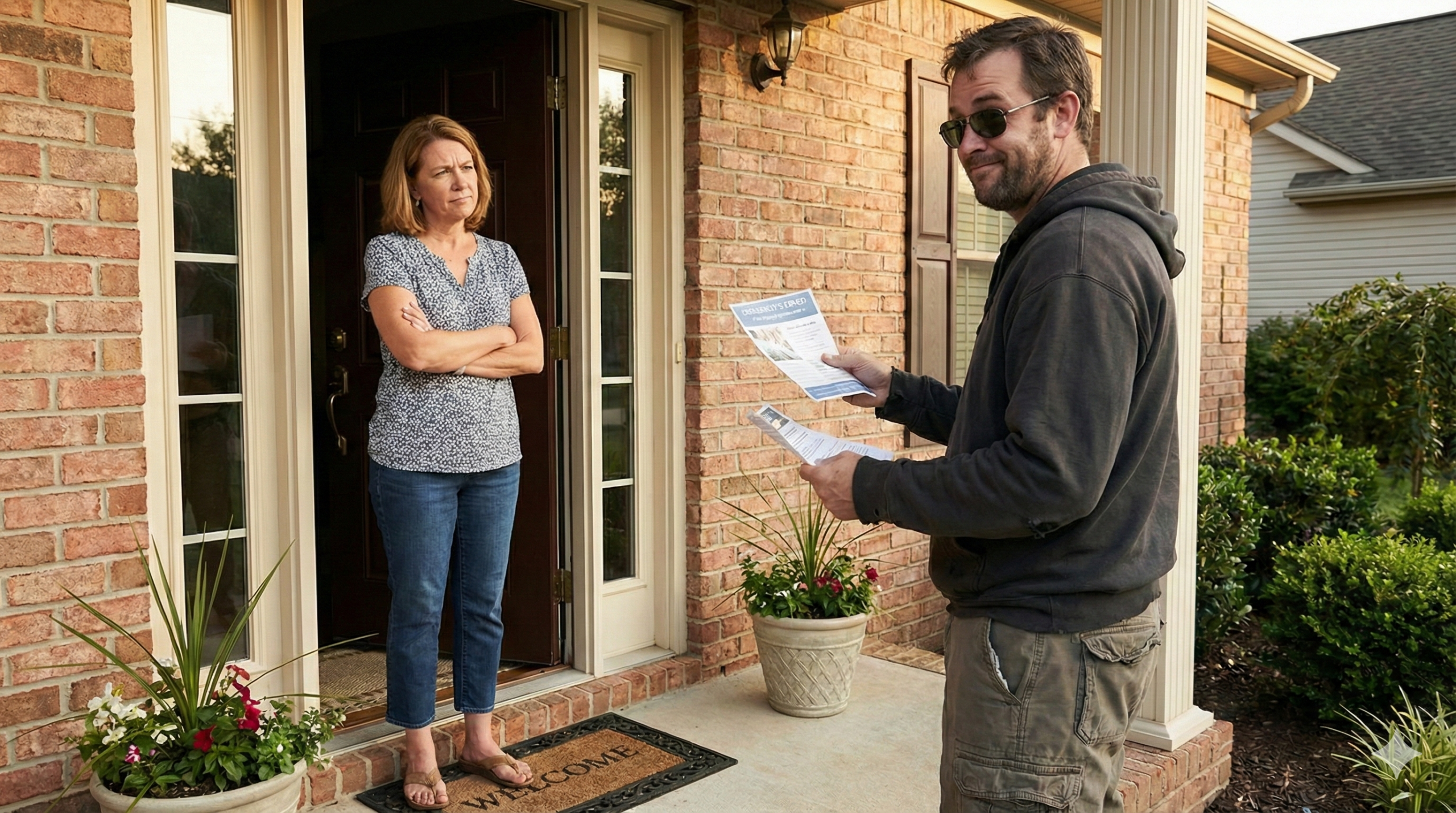
 Duct Cleaning Scams: How to Spot Them Before You Get Burned
Duct cleaning scams typically start with an unbelievably low price—often $49 to $249 for “whole-house” cleaning—then escalate through high-pressure upselling, fake mold discoveries, or bait-and-switch tactics. Legitimate duct cleaning for a standard home costs $300–$500, reflecting the specialized equipment and time required. Red flags include unsolicited phone calls or door-to-door sales, quotes given without inspection, pressure to decide immediately, and technicians who “discover” urgent problems requiring expensive repairs. Protect yourself by verifying NADCA certification, checking Better Business Bureau ratings, getting written estimates, and never paying the full amount upfront.
The $249 Duct Cleaning Trap
You’ve seen the ads. Maybe a postcard in your mailbox, a Facebook ad, or a door-hanger on your front porch:
“Whole-House Duct Cleaning – Only $249!”
“Air Duct Special – $49 for Unlimited Vents!”
It sounds like a great deal. Your ducts probably need cleaning, and who wouldn’t want to save a few hundred dollars?
Here’s the problem: legitimate duct cleaning can’t be done for $249. The equipment alone—truck-mounted vacuums, HEPA filtration systems, rotary brushes—costs tens of thousands of dollars to purchase and maintain. A thorough cleaning of an average home takes two to four hours of skilled labor.
At $249, the math doesn’t work. So how do these companies make money?
By not delivering what they promise—and by pressuring you into services you don’t need.
How Duct Cleaning Scams Work
Scam operators follow predictable patterns. Understanding their tactics helps you recognize them before you become a victim.
The Bait and Switch
This is the most common scam. Here’s how it unfolds:
- The bait: You schedule service based on an advertised low price ($49–$249)
- The arrival: Technicians show up and begin a cursory inspection
- The switch: They inform you the advertised price covers only a few vents, or only “basic” cleaning. The “real” cleaning costs $300, $500, or more
- The pressure: They emphasize that since they’re already there, you might as well pay for the full service
You’re now in an uncomfortable position. You’ve taken time off work, the technicians are in your home, and you feel obligated. Many people pay just to end the awkward situation.
The Fake Mold Discovery
This scam exploits homeowners’ legitimate concerns about mold:
- The setup: Technicians arrive for routine duct cleaning
- The “discovery”: They show you photos or video of “mold” in your ducts—often using images from other homes or misidentifying ordinary dust and debris
- The fear: They warn about health dangers, structural damage, or liability issues
- The upsell: They offer mold remediation services for $500–$2,000 or more
Important context: Legitimate mold assessment requires certified professionals and laboratory testing. A duct cleaning technician cannot definitively identify mold species or determine whether remediation is necessary. If someone claims to find mold during a duct cleaning, get a second opinion from a certified mold assessment professional before authorizing any work.
The Unnecessary Repair Scam
Similar to the fake mold discovery, this scam manufactures problems:
- The inspection: Technicians examine your HVAC system
- The diagnosis: They claim your ducts are damaged, your system is failing, or components need immediate replacement
- The urgency: They warn that continued use is dangerous or will cause expensive damage
- The solution: They offer to fix the problem right now—for a significant fee
Legitimate HVAC issues exist, but scammers exploit homeowners’ lack of technical knowledge. They may show you “damaged” components that are actually normal, or exaggerate minor issues into emergencies.
The Incomplete Service
Some scam operators simply don’t do the work:
- The arrival: Technicians show up with minimal equipment
- The “cleaning”: They vacuum visible dust from vent covers and perhaps the first few inches of ductwork
- The departure: They collect payment and leave within 30–45 minutes
A thorough duct cleaning takes two to four hours and requires specialized equipment to reach deep into the duct system. If technicians are in and out quickly with basic tools, you haven’t received legitimate service.
The Unsolicited Contact Scam
Reputable companies don’t cold-call or go door-to-door offering duct cleaning:
- The contact: You receive an unsolicited phone call, or someone knocks on your door offering duct cleaning services
- The pitch: They claim to be “in the neighborhood,” offer a “one-time special,” or say they’re conducting “free inspections”
- The goal: Get inside your home to execute one of the scams above
Legitimate HVAC companies have enough business from referrals, repeat customers, and people who seek them out. Aggressive cold-calling is a hallmark of scam operations.
Red Flags: Warning Signs of a Duct Cleaning Scam
Watch for these indicators that a company may not be legitimate:
Pricing Red Flags
| Red Flag | Why It’s Suspicious |
|---|---|
| Prices under $150 for whole-house cleaning | Below the cost of doing the job properly |
| “Per vent” pricing that seems too low | Often excludes the main duct runs |
| No price given until technicians arrive | Sets up bait-and-switch scenario |
| Dramatically lower than competitors | Legitimate companies have similar cost structures |
| Special “today only” pricing | Pressure tactic to prevent comparison shopping |
Communication Red Flags
| Red Flag | Why It’s Suspicious |
|---|---|
| Unsolicited phone calls or door-to-door sales | Reputable companies don’t operate this way |
| Quotes given without seeing your home | Impossible to price accurately without inspection |
| Pressure to schedule immediately | Prevents you from researching the company |
| Vague answers about methods or equipment | May indicate lack of proper tools or training |
| No physical address or only a P.O. box | Difficult to hold accountable if problems arise |
On-Site Red Flags
| Red Flag | Why It’s Suspicious |
|---|---|
| Technicians arrive in unmarked vehicles | Legitimate companies display their branding |
| Minimal or consumer-grade equipment | Professional cleaning requires specialized tools |
| Service completed in under an hour | Thorough cleaning takes 2–4 hours minimum |
| “Discoveries” requiring immediate expensive repairs | Classic upselling tactic |
| Refusal to provide written documentation | No accountability for work performed |
| Demand for cash payment | Avoids paper trail and consumer protections |
How to Protect Yourself
Follow these steps to avoid duct cleaning scams and find legitimate service:
Research Before You Need Service
Don’t wait until you’re desperate. Research duct cleaning companies in advance so you have trusted options when you need them.
Verify Credentials
NADCA Certification: The National Air Duct Cleaners Association certifies companies that meet industry standards. Search their directory at nadca.com to verify membership.
State Licensing: South Carolina requires HVAC contractors to be licensed. Verify licenses through the South Carolina Department of Labor, Licensing and Regulation.
Insurance: Request proof of liability insurance. Legitimate companies carry coverage and will provide documentation.
Check Reviews and Reputation
Better Business Bureau: Check the company’s BBB rating and complaint history at bbb.org.
Google Reviews: Look for patterns in reviews. A few negative reviews are normal; consistent complaints about bait-and-switch tactics or pressure sales are warning signs.
Local References: Ask neighbors, friends, or family for recommendations. Word-of-mouth referrals from people you trust are valuable.
Get Multiple Written Estimates
Contact at least three companies for estimates. Legitimate companies will:
- Ask questions about your home (square footage, number of vents, number of HVAC systems)
- Offer to inspect your system before providing a final quote
- Provide written estimates detailing what’s included
- Give you time to decide without pressure
If one quote is dramatically lower than others, that’s a red flag—not a bargain.
Understand What’s Included
Before scheduling service, confirm:
- How many vents and returns are included?
- Is the main trunk line cleaned?
- Is the air handler/blower compartment cleaned?
- What equipment will be used?
- How long will the service take?
- What’s the total price, including any fees?
Get these details in writing.
Never Pay Everything Upfront
A small deposit may be reasonable, but never pay the full amount before work is completed. Use a credit card when possible—it provides consumer protections that cash and checks don’t.
Trust Your Instincts
If something feels wrong—aggressive sales tactics, evasive answers, pressure to decide immediately—walk away. Legitimate companies respect your right to take time and make informed decisions.
What Legitimate Duct Cleaning Looks Like
Understanding proper service helps you recognize when you’re getting the real thing:
Before the Appointment
- Company asks about your home’s size, age, and HVAC configuration
- You receive a written estimate with clear pricing
- The company can verify NADCA certification or other credentials
- No pressure to schedule immediately
During the Service
- Technicians arrive in marked vehicles with professional equipment
- They explain the process before beginning
- They use truck-mounted or portable vacuums with HEPA filtration
- They clean all supply and return vents, the main trunk lines, and the air handler
- The service takes two to four hours for a standard home
- They show you before-and-after conditions when possible
After the Service
- You receive documentation of work performed
- Technicians explain any issues they observed (without pressure tactics)
- You pay the agreed-upon price—no surprise charges
- The company follows up to ensure satisfaction
What to Do If You’ve Been Scammed
If you believe you’ve fallen victim to a duct cleaning scam:
Document Everything
- Save all receipts, contracts, and written communications
- Take photos of any work performed (or not performed)
- Note the names of technicians and any identifying information about their vehicles
- Write down the sequence of events while it’s fresh in your memory
Dispute the Charge
If you paid by credit card, contact your card issuer to dispute the charge. Explain that services were not delivered as promised or that you were subjected to bait-and-switch tactics.
File Complaints
Better Business Bureau: File a complaint at bbb.org. This creates a public record and may prompt the company to resolve the issue.
State Attorney General: South Carolina’s Attorney General handles consumer protection complaints. File online at scag.gov.
Federal Trade Commission: Report the scam at reportfraud.ftc.gov. While the FTC doesn’t resolve individual complaints, reports help them identify patterns and take action against repeat offenders.
NADCA: If the company claimed NADCA certification, report them to NADCA. Misrepresenting certification violates their standards.
Warn Others
Leave honest reviews on Google, Yelp, and other platforms to help other homeowners avoid the same experience.
Why Coastal Carolina Comfort Does Things Differently
We’ve been serving Summerville families since 2005, and we’ve built our reputation on doing the job right—not on gimmicks or pressure tactics.
What you can expect from us:
- Transparent pricing: We provide written estimates based on your home’s actual needs. No bait-and-switch, no surprise charges.
- NADCA-compliant methods: We use professional equipment and follow industry best practices for thorough cleaning.
- Honest assessments: If your ducts don’t need cleaning, we’ll tell you. If we spot potential issues during service, we’ll explain them without pressure.
- No mold claims: We’re duct cleaning specialists, not mold remediation experts. If we observe something that looks concerning, we’ll recommend you consult a certified mold professional—we won’t try to sell you services outside our expertise.
- Local accountability: We’re part of this community. Our address is real, our reviews are earned, and our reputation matters to us.
We know the scam operators give our industry a bad name. That’s why we’re committed to showing Summerville homeowners what legitimate professional duct cleaning looks like.
Ready to work with a company you can trust? Get a straight answer and an honest quote.
Frequently Asked Questions
How much should duct cleaning actually cost? For a standard Summerville home with one HVAC system, expect to pay $300–$500. Larger homes, multiple systems, or additional services like dryer vent cleaning increase the cost. Any quote under $150 for whole-house cleaning should raise suspicion.
Are all cheap duct cleaning offers scams? Not necessarily, but extremely low prices are a major red flag. Some companies use low prices as a lead generation tactic, then upsell aggressively. Others simply don’t deliver thorough service. Either way, you’re unlikely to get good value from a $49 or $249 “special.”
How can I verify if a company is NADCA certified? Visit nadca.com and use their online directory to search for certified companies. You can also ask the company for their NADCA membership number and verify it directly.
What should I do if a technician claims to find mold? Don’t authorize mold remediation on the spot. Legitimate mold assessment requires certified professionals and often laboratory testing. Ask for documentation of the findings, then get a second opinion from a certified mold assessment company before proceeding.
Is it safe to let duct cleaning technicians into my home? Yes, when you’ve vetted the company properly. Verify credentials, check reviews, and confirm the appointment in advance. Legitimate technicians will arrive in marked vehicles, carry identification, and behave professionally. If anything feels wrong, you have every right to ask them to leave.