
 Dryer Vent Cleaning: Why It Matters for Summerville Homeowners
Dryer vent cleaning prevents house fires, reduces energy costs, and extends your dryer’s lifespan. According to the U.S. Fire Administration, clothes dryers cause approximately 2,900 home fires each year, and lint buildup is the leading cause. When your dryer vent becomes clogged, hot air can’t escape properly—creating a fire hazard and forcing your dryer to work harder. Professional dryer vent cleaning removes accumulated lint from the entire exhaust system, not just the lint trap. For Summerville homeowners, annual cleaning is recommended, especially if your dryer takes longer than usual to dry clothes or feels excessively hot.
The Hidden Danger in Your Laundry Room
You clean the lint trap after every load. That’s enough, right?
Unfortunately, no. The lint trap catches only about 75% of the lint your dryer produces. The rest travels into the dryer vent—the duct that carries hot, moist air from your dryer to the outside of your home. Over time, lint accumulates along the entire length of this vent, creating a serious fire hazard.
Lint is highly flammable. Combine it with the heat your dryer generates, and you have the ingredients for a house fire. The U.S. Fire Administration reports that failure to clean dryer vents is the leading cause of dryer fires, ahead of mechanical failure and electrical issues.
This isn’t a scare tactic—it’s physics. And it’s preventable.
Warning Signs Your Dryer Vent Needs Cleaning
Your dryer will tell you when the vent is clogged. Watch for these signs:
Clothes Take Longer to Dry
This is the most common symptom. If loads that used to dry in 45 minutes now take 60, 75, or even 90 minutes, restricted airflow is likely the cause. Your dryer can’t expel moist air efficiently, so clothes stay damp longer.
Dryer Feels Excessively Hot
Touch the top of your dryer during a cycle. Warm is normal. Hot enough to be uncomfortable? That’s a warning sign. When the vent is clogged, heat builds up inside the dryer instead of exhausting outside.
Clothes Are Unusually Hot After a Cycle
Similarly, if your clothes come out of the dryer extremely hot—almost too hot to handle—the dryer is working overtime to compensate for poor airflow.
Burning Smell
If you notice a burning odor when your dryer runs, stop using it immediately. This could indicate lint is overheating or has ignited. Unplug the dryer and have the vent inspected before using it again.
Visible Lint Around the Outside Vent
Check the exterior vent where your dryer exhausts. If you see lint accumulation around the opening or the flap doesn’t open properly when the dryer runs, the vent needs cleaning.
Laundry Room Feels Humid or Hot
A properly functioning dryer vent expels hot, moist air outside. If your laundry room feels humid or warmer than usual during drying cycles, that air may be backing up into your home.
It’s Been More Than a Year
Even without obvious symptoms, annual dryer vent cleaning is recommended. Lint accumulates gradually, and problems may not become apparent until the vent is significantly clogged.
The Real Cost of a Clogged Dryer Vent
Beyond the fire risk, a clogged dryer vent costs you money and shortens your appliance’s life.
Higher Energy Bills
When your dryer can’t exhaust air efficiently, it runs longer to dry each load. That extended run time adds up. According to Energy Star, a clogged dryer vent can increase energy consumption by 30% or more. For a household that does five loads per week, that’s a noticeable increase in your electric bill.
Premature Dryer Failure
Dryers aren’t designed to run for extended periods or operate at excessive temperatures. When a clogged vent forces your dryer to work harder, components wear out faster. The heating element, thermostat, and motor all suffer from the added strain. A dryer that should last 10–13 years may fail in seven or eight.
Clothing Damage
Excessive heat damages fabrics. Clothes dried in an overheating dryer wear out faster, shrink more, and fade sooner. Delicate items are especially vulnerable.
Carbon Monoxide Risk (Gas Dryers)
If you have a gas dryer, a clogged vent creates an additional hazard. Gas dryers produce carbon monoxide as a byproduct of combustion. Normally, this exhausts safely outside through the vent. When the vent is blocked, carbon monoxide can back up into your home—an invisible, odorless danger.
Why the Lint Trap Isn’t Enough
Many homeowners assume that cleaning the lint trap handles the lint problem. Here’s why it doesn’t:
The Lint Trap’s Limitations
The lint trap sits between the dryer drum and the exhaust system. It catches lint before it enters the vent—but not all of it. Fine lint particles pass through the screen, and lint that accumulates on the trap’s housing can bypass it entirely.
The Journey Through the Vent
Your dryer vent may run 10, 20, or even 30 feet from the dryer to the exterior wall. Along that path, lint settles on the duct walls, accumulates at bends and joints, and builds up near the exterior vent cap. None of this is addressed by cleaning the lint trap.
Vent Configuration Matters
Longer vents, vents with multiple turns, and vents that run vertically accumulate lint faster than short, straight runs. Many Summerville homes—especially two-story construction in neighborhoods like Cane Bay and Nexton—have dryers located far from exterior walls, requiring longer vent runs that need more frequent attention.
What Professional Dryer Vent Cleaning Includes
Professional cleaning addresses the entire exhaust system, not just the accessible parts. Here’s what to expect:
Inspection
Technicians inspect the vent system from both ends—at the dryer connection and at the exterior vent cap. They assess the vent’s length, configuration, and condition, and identify any damage or code violations.
Lint Removal
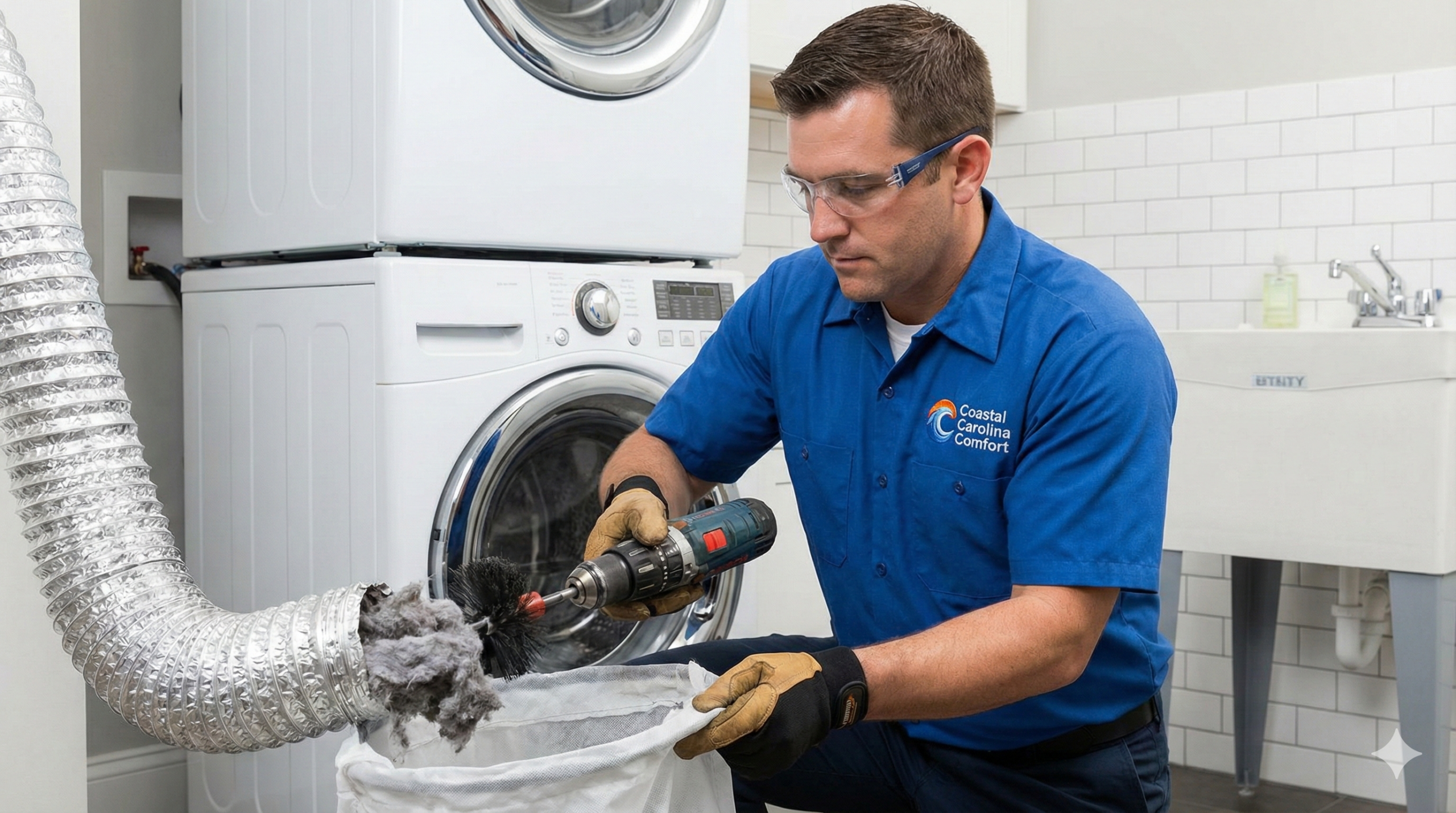
Using specialized rotating brushes and high-powered vacuums, technicians dislodge and extract lint from the entire length of the vent. This includes:
- The transition duct (flexible connector between dryer and wall)
- The rigid ductwork running through walls, floors, or ceilings
- Elbows and joints where lint accumulates
- The exterior vent cap and damper
Airflow Verification
After cleaning, technicians verify that airflow has been restored. You should notice a significant difference in how forcefully air exits the exterior vent when the dryer runs.
Recommendations
If technicians identify issues—damaged ductwork, improper materials, excessive vent length, or code violations—they’ll recommend corrections. Common issues include:
| Problem | Risk | Solution |
|---|---|---|
| Flexible vinyl or foil duct | Fire hazard (not code-compliant) | Replace with rigid metal duct |
| Crushed or kinked transition duct | Restricted airflow | Replace with semi-rigid metal connector |
| Vent terminating in attic or crawl space | Moisture damage, fire hazard | Extend to exterior |
| Missing or damaged vent cap | Pest entry, backdrafts | Install proper cap with damper |
| Excessive vent length | Lint accumulation, poor performance | Consider booster fan or dryer relocation |
DIY vs. Professional Dryer Vent Cleaning
Can you clean your dryer vent yourself? For simple configurations, yes—partially. But professional cleaning offers significant advantages.
What You Can Do Yourself
- Clean the lint trap after every load
- Vacuum the lint trap housing monthly
- Clean the first few feet of the transition duct
- Clear debris from the exterior vent cap
What Requires Professional Equipment
- Cleaning the full length of vents longer than a few feet
- Removing compacted lint from bends and joints
- Cleaning vents that run through walls, floors, or ceilings
- Addressing vents with multiple turns or vertical runs
The Professional Advantage
Professional-grade rotary brushes and vacuums reach areas that DIY tools can’t access. For vents longer than four feet or with any bends, professional cleaning removes significantly more lint than DIY methods.
How Often Should You Clean Your Dryer Vent?
The general recommendation is annual cleaning, but several factors may require more frequent attention:
Clean More Often If:
- You do more than five loads per week – Higher usage means faster lint accumulation
- You have a long or complex vent run – More surface area for lint to collect
- You dry heavy items frequently – Towels, blankets, and jeans produce more lint
- You have pets – Pet hair adds to lint volume
- Your dryer is gas-powered – Carbon monoxide risk makes maintenance more critical
- You notice any warning signs – Don’t wait for annual cleaning if symptoms appear
Summerville-Specific Considerations
Our humid climate can cause lint to clump and adhere to vent walls more stubbornly than in drier regions. Homes in flood-prone areas should have vents inspected after any water intrusion, as moisture can compact lint and promote bacterial growth.
Dryer Vent Safety Tips
Between professional cleanings, these practices keep your dryer operating safely:
Do:
- Clean the lint trap before or after every load
- Run the dryer only when you’re home and awake
- Keep the area around the dryer clear of flammable materials
- Use rigid or semi-rigid metal duct for the transition connection
- Ensure the exterior vent cap opens freely when the dryer runs
- Listen for changes in dryer performance
Don’t:
- Use plastic or foil accordion-style ducts (fire hazard)
- Vent your dryer into a garage, attic, or crawl space
- Overload the dryer (increases lint production and drying time)
- Ignore warning signs like extended drying times or excessive heat
- Dry items stained with flammable substances (gasoline, cooking oil, solvents)
Bundling Dryer Vent Cleaning with Duct Cleaning
Many Summerville homeowners schedule dryer vent cleaning alongside air duct cleaning. This makes sense for several reasons:
Convenience
Both services involve similar equipment and expertise. Scheduling them together means one appointment instead of two.
Cost Savings
Most HVAC companies offer discounts when you bundle services. You’ll typically save $25–$50 compared to scheduling separately.
Comprehensive Air Quality
Your dryer vent and HVAC ducts both affect your home’s air quality and safety. Addressing both at once provides peace of mind that your home’s ventilation systems are clean and functioning properly.
What Dryer Vent Cleaning Costs in Summerville
Professional dryer vent cleaning typically costs $100–$175 in the Summerville area. Pricing depends on:
- Vent length and complexity – Longer vents and those with multiple turns take more time
- Accessibility – Vents running through finished walls or ceilings may require more effort
- Condition – Severely clogged vents may need additional attention
- Add-on services – Transition duct replacement, vent cap repair, or booster fan installation
This is a small investment compared to the cost of a new dryer ($500–$1,500), fire damage repairs, or increased energy bills from an inefficient appliance.
How Coastal Carolina Comfort Can Help
At Coastal Carolina Comfort, we’ve been helping Summerville families stay safe and comfortable since 2005. Our dryer vent cleaning service includes:
- Full-length cleaning using professional rotary brushes and high-powered vacuums
- Inspection of your entire vent system for damage, code violations, or safety concerns
- Airflow verification to confirm proper exhaust function
- Honest recommendations if repairs or upgrades are needed
We also offer convenient bundling with our air duct cleaning service—one appointment, two essential maintenance tasks, and savings on both.
Don’t wait for warning signs—or worse, a fire. Schedule your dryer vent cleaning today and cross this critical safety task off your list.
Frequently Asked Questions
How long does dryer vent cleaning take? Most dryer vent cleanings take 30–60 minutes, depending on vent length and condition. If combined with air duct cleaning, expect the full appointment to take three to five hours.
Can a clogged dryer vent cause a fire even if I clean the lint trap? Yes. The lint trap catches only about 75% of lint. The rest accumulates in the vent over time, creating a fire hazard regardless of lint trap maintenance.
How do I know if my dryer vent is too long? Most dryer manufacturers recommend a maximum vent length of 25–35 feet, with deductions for each elbow or turn. If your dryer struggles to dry clothes efficiently despite a clean vent, excessive length may be the issue. A technician can assess whether a booster fan would help.
Is flexible dryer duct safe? Flexible vinyl and foil ducts are fire hazards and not code-compliant in most areas. Semi-rigid metal flex duct is acceptable for the short transition between the dryer and wall. Rigid metal duct is preferred for runs through walls and ceilings.
Should I clean my dryer vent if I live in an apartment or condo? Yes—possibly more urgently. Multi-unit buildings often have longer, shared vent runs that accumulate lint faster. Check with your property manager about maintenance schedules, and request cleaning if you notice warning signs.